What to Check After Driving on a Salted Road
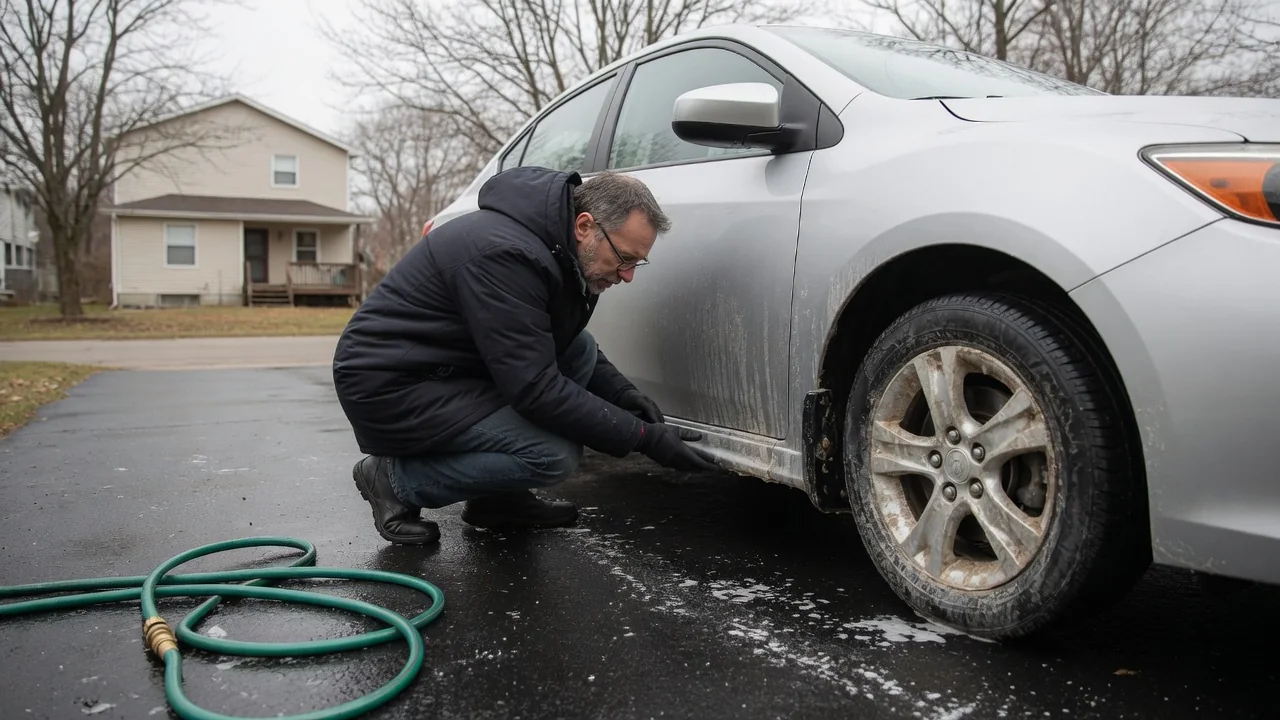
Road salt keeps winter pavement passable, but the brine it creates clings to metal, rubber, and painted surfaces long after the trip ends. Knowing what to check after driving on a salted road helps you spot buildup before corrosion takes hold. This guide walks through the underbody, wheel wells, and seals, then covers everyday observations and the point where a professional inspection makes sense.
Undercarriage
The undercarriage takes the heaviest exposure because tires throw salty slush straight up at it. Brine settles on frame rails, subframes, suspension arms, brake and fuel lines, exhaust hangers, and the seams where panels overlap. Salt speeds corrosion by keeping moisture conductive and in contact with steel, so damp, crusted deposits matter more than dry dust. With a flashlight, look for white or gray film, packed slush on ledges, and any orange staining around welds, brackets, and fasteners.
Cleaning works best as a thorough rinse rather than a blast. A car wash with an underbody spray, or a garden hose directed along the rails and crossmembers, dissolves and carries off residue; plain water does most of the work. Layouts vary widely: many newer cars and electric vehicles have plastic or composite shields covering much of the floor, which protect components but can trap wet grit above them, while body-on-frame trucks expose boxed frame sections with drain holes that should be kept clear.
Wheel wells
Wheel wells act as collection points, since each tire flings spray into the arch for the entire drive. Check the lip where the fender folds inward, because that hidden ledge holds salty mud against painted metal. Look behind the tire at the liner, the strut or shock body, the coil spring seats, and the brake hose and wheel speed sensor wiring that run nearby. Packed slush that freezes in the arch can also rub the tire or limit steering travel.
Rinse the arches from several angles, turning the front wheels to reach behind them, and run a hand carefully along the fender lip afterward to feel for leftover grit. Liner design differs by vehicle: some use hard plastic that sheds residue easily, while others use a felt-like fabric that absorbs brine and stays damp longer, so it needs a more patient soak. Mud flaps, rocker panel ends, and the lower corners of bumpers nearby deserve the same attention, since deposits gather wherever a shelf exists.
Seals
Seals deserve a look because salt residue is abrasive and dries out rubber over time. Door, trunk, and liftgate weatherstrips collect a white film along the lower edges, where slush drips off shoes and sills. Wipe them with a damp cloth and check for tears, flattened sections, or grit embedded in the surface. Door sills and the bottoms of doors have small drain openings as well; if these clog with salty debris, water sits inside the panel instead of running out.
Underneath, rubber boots matter just as much. Axle boots, steering rack bellows, and ball joint or tie rod covers keep grease in and salty water out, so a split or a greasy fling pattern nearby is worth noting for a technician. Rinsing these areas gently is wiser than aiming a narrow high-pressure jet at them, which can force water past a lip. Which boots are visible depends on drivetrain and suspension layout, and some are hidden behind shields, so the view differs between vehicles.
Everyday Use and Observations
Between washes, ordinary driving offers plenty of clues. A hazy white film on lower doors and the rear hatch shows how much spray the body is carrying. Brake rotors often show a light rust bloom after sitting wet with salt, and a brief scraping sound on the first few stops usually clears as the pads wipe the surface; noise or pulsation that persists deserves attention. Salt film on headlights, taillights, the windshield, and camera or parking sensor lenses reduces visibility and can interfere with driver assistance features.
Inside the cabin, salt arrives on boots and dries into white rings on carpet. Rubber floor mats that can be lifted out and rinsed keep that moisture from soaking the padding and reaching the floor pan from above. Timing matters too: corrosion progresses faster when temperatures rise above freezing and deposits turn wet, so rinsing during a thaw or before parking in a heated garage is more useful than waiting for spring. Topping up washer fluid rated for cold weather helps keep glass clear between cleanings.
Limits and Next Steps
A visual check has limits. Light surface rust on exhaust parts, bare fasteners, and cast suspension components is common and often cosmetic, but a driveway inspection cannot reveal what is happening inside boxed sections, behind shields, or under undercoating. Flaking, layered scale, bubbling paint along rocker panels and wheel arches, or wet spots on brake and fuel lines point to something beyond what rinsing addresses. A soft brake pedal, fluid drips, or a new warning light after winter driving calls for prompt professional evaluation rather than more washing.
Having the vehicle raised on a lift during routine service lets a technician examine lines, mounts, and seams that are difficult to see from the ground. If a warning light does appear, any stored fault code is a starting point for diagnosis, not proof that a specific part has failed, since corroded connectors or wiring can produce similar symptoms. Protective coatings and rust inhibitors are options in heavy-salt regions, though suitability depends on the vehicle and its condition, so follow the owner's manual and the manufacturer's guidance.