What Materials Are Car Engines Made Of? Metals, Alloys and Why They're Used
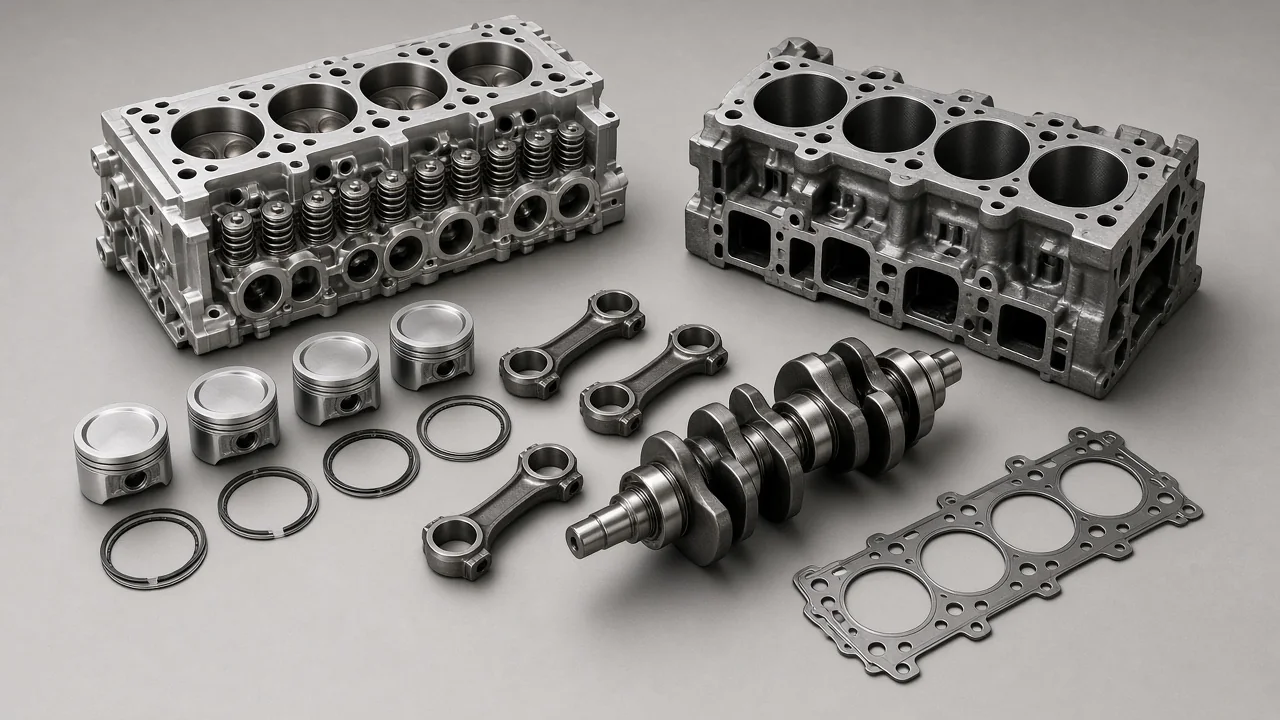
Car engine materials are chosen to balance extreme heat, pressure, and wear with weight and cost. From cast iron blocks to aluminum heads and forged internals, each metal and alloy serves a specific purpose. This guide explains why manufacturers select these materials for blocks, heads, pistons, crankshafts, and gaskets.
Why Material Choice Matters in a Car Engine
Engine parts operate under harsh conditions: combustion temperatures can exceed 2,000°F, cylinder pressures spike with every power stroke, and components vibrate and flex thousands of times per minute. Repeated heating and cooling cycles create thermal expansion stresses. Materials must withstand these forces without cracking, warping, or wearing excessively, while remaining manufacturable at reasonable cost.
Engineers weigh several properties when selecting materials. Strength resists mechanical loads, low weight improves efficiency, heat transfer pulls combustion heat away, and wear resistance keeps surfaces intact. Cost and ease of manufacturing matter for production. The main families used are cast iron and aluminum alloys for blocks and heads, steels for rotating parts, and composite or layered gaskets for sealing. Exact choices vary by manufacturer and engine design, so owners should consult vehicle documentation for specifics.
Engine Blocks: Cast Iron and Aluminum Alloy Construction
Cast iron has long been used for engine blocks because it is durable, dimensionally stable, and naturally wear-resistant in cylinder bores. Its dense structure also dampens vibration, reducing engine noise and harshness. Cast iron blocks handle high cylinder pressures well, making them common in heavy-duty and high-torque applications. However, their weight penalizes fuel economy and handling, prompting manufacturers to seek lighter alternatives.
Aluminum alloy blocks offer lower mass and superior heat transfer, helping engines warm up faster and cool more evenly. Bare aluminum cylinder walls would wear quickly, so most aluminum blocks use pressed-in cast iron cylinder liners or specialized bore coatings like nikasil or plasma-sprayed iron. Regardless of material, blocks are typically made by casting molten metal into a sand or die mold, allowing intricate internal coolant and oil passages too costly to machine from solid metal.
Cylinder Heads and Valvetrain Materials
Cylinder heads are commonly cast from aluminum alloy because they sit atop the combustion chamber and must shed enormous heat. Aluminum's high thermal conductivity pulls heat into coolant passages, reducing hot spots that cause detonation. Heads house valves and spark plugs, requiring precise machining after casting. Their lighter weight lowers overall engine mass and improves vehicle balance.
Since aluminum is relatively soft, heads incorporate harder inserts where wear concentrates. Valve seats, pressed into ports, are usually hardened iron or steel alloys to resist valve pounding. Valve guides keep valves aligned and are often bronze or sintered iron. Engine valves are typically forged steel; exhaust valves face harsher heat than intake valves because hot exhaust flows past them and they lack incoming air cooling, so they often use heat-resistant alloys or sodium-filled stems. Exact specifications vary and should be confirmed for a specific engine.
Pistons, Rings and Connecting Rods
Pistons are usually aluminum alloys because they must be light to reduce reciprocating mass and conduct heat efficiently. Cast pistons, formed by pouring molten aluminum into a mold, are inexpensive and adequate for many engines. Forged pistons are squeezed under high pressure from a solid blank, producing a denser grain structure that withstands higher pressures and temperatures, making them common in performance and turbocharged applications.
Piston rings seal the gap between piston and cylinder, control oil consumption, and transfer heat. They are typically cast iron, ductile iron, or steel, often with chrome, molybdenum, or plasma-sprayed coatings. Connecting rods link piston to crankshaft and must be strong yet light. Production rods are often forged steel or powdered metal compacted and sintered for near-net shape and cost efficiency; high-performance engines may use stronger alloys like titanium or chrome-moly steel.
Crankshafts, Camshafts and Bearings
Crankshafts convert linear piston motion into rotation, enduring bending and torsional loads. Cast iron crankshafts are inexpensive and adequate for many engines, but forged steel crankshafts are stronger and more fatigue-resistant, suiting high-output or heavy-duty use. Forging aligns metal grain flow along the crank's shape, improving durability. The choice often depends on cost targets and expected power levels.
Camshafts control valve timing and are typically cast iron or steel, with lobes hardened by induction or other heat treatments to resist wear. Engine bearings are plain journal bearings with layered construction: a steel backing provides strength, a softer intermediate layer (often copper-lead or aluminum alloy) and a thin overlay (like babbitt) embed dirt and conform. The soft bearing surface sacrifices itself to protect the harder crankshaft. A continuous oil film under pressure separates surfaces during operation, preventing metal contact and carrying away heat.
Gaskets and Seals: Holding Pressure and Fluids In
The head gasket seals the joint between cylinder head and block, containing combustion pressure, coolant, and oil. Modern engines often use a multi-layer steel head gasket, built from several embossed layers of spring stainless steel with elastomeric coatings. This design accommodates slight surface irregularities and resists scrubbing motion between aluminum heads and cast iron blocks while maintaining a tight seal under extreme conditions.
Other gaskets and seals use materials matched to their environment. Rubber compounds handle valve covers and oil pans; silicone or formed-in-place sealants fill irregular joints; composite materials may seal intake manifolds. Aluminum heads and iron blocks expand at different rates, so the head gasket must slide slightly while still sealing. These materials withstand specific chemicals and temperatures without hardening or leaking.
How Engine Materials Affect Care and Warning Signs
Aluminum engine parts are more sensitive to severe overheating than cast iron because aluminum expands more and loses strength at high temperatures. Overheating can warp or crack cylinder heads, leading to gasket failure. The correct coolant type matters for heat transfer and corrosion protection, as modern coolants are formulated for specific metals and gasket materials. Using the wrong coolant can cause electrochemical corrosion in the cooling system.
Safe-to-observe symptoms may indicate heat or sealing problems: a rising temperature gauge, unexplained coolant loss, white exhaust smoke (suggesting coolant entering combustion), or milky engine oil (indicating coolant contamination). Symptoms alone cannot confirm a warped head, failed gasket, or internal damage. Only pressure testing, compression or leak-down checks, and inspection by a qualified technician can diagnose. Never open a hot cooling system due to burn risk. Consult the owner's manual for correct fluids and maintenance.