What Makes a Station Wagon Practical? Long Roof, Loading, and Seating
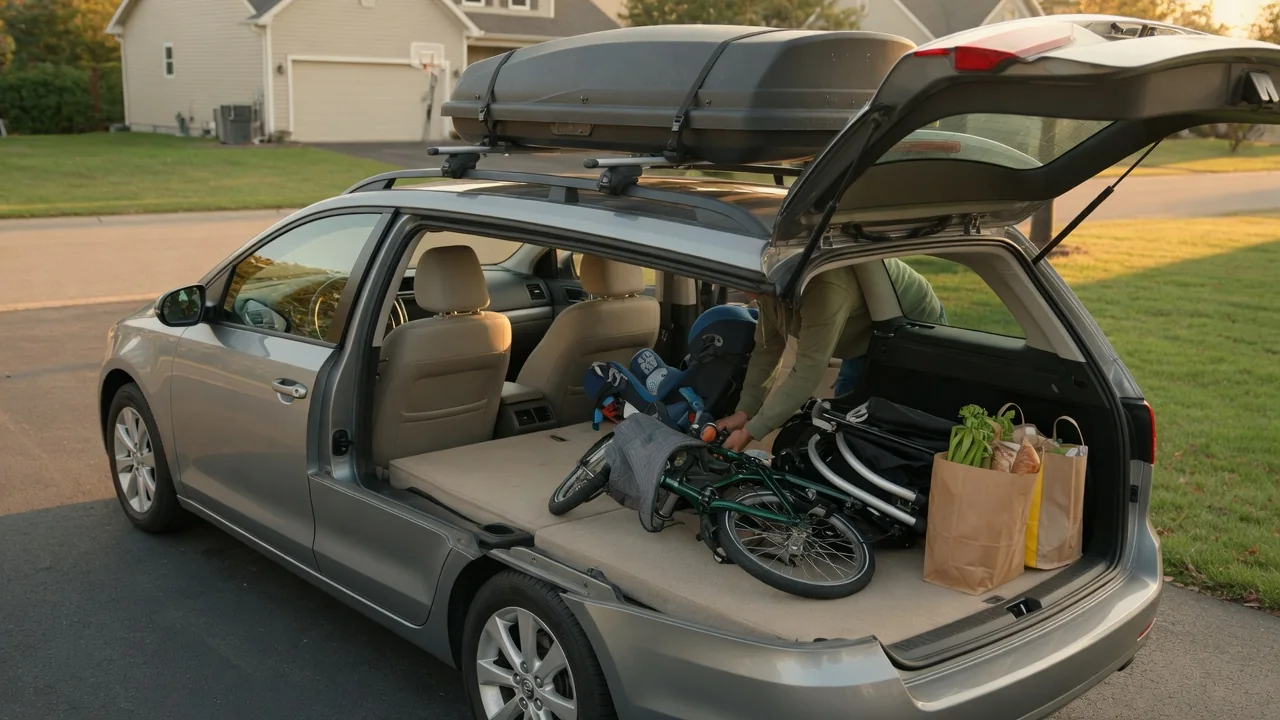
A station wagon keeps the driving position, ride height, and general footprint of a sedan, but it extends the roofline rearward to create a tall cargo area behind the rear seats. That combination changes how the car handles everyday hauling. What makes a station wagon practical comes down to three connected ideas: the long roof, the way cargo gets in and out, and how the seating shares space with luggage. Each one also comes with limits worth knowing.
The Long Roof and the Space It Creates
In a sedan, the roofline typically slopes down behind the rear passengers into a separate trunk with a fixed lid and a limited opening. In a wagon, the roof continues roughly level to the back of the car and ends at a near-vertical tailgate or liftgate. The result is cargo space defined by height as well as floor area. Boxes, coolers, strollers, and other tall items that would never fit through a trunk opening can stand upright. Because the cargo area is part of the cabin, usable space runs from the floor up to the headliner instead of being capped by a rear shelf.
The shape of that space matters as much as its size. A long roof tends to produce a squarer load area with fewer awkward slopes, which makes it easier to stack items and use every corner. A steeply raked rear window, common on fastback-style bodies, can cut into the upper rear of the cargo area even when the published volume figure looks generous. Cargo volume is also measured using different methods in different markets, so the shape of the space and the size of its openings are often a better guide to real usefulness than a single number.
The long, flat roof also gives a stable base for roof rails and crossbars, which can carry cargo boxes, bikes, or kayaks. Because a wagon usually sits lower than a typical SUV, reaching the roof is generally easier. Rail design and the permitted roof load vary by vehicle and are stated in the owner's manual.
Loading: Getting Cargo In and Out
Loading is where a wagon's design shows up most in daily use. Because a station wagon is usually built on a car platform with car-like ride height, the cargo floor tends to sit at a moderate height. That reduces how far heavy items such as luggage, groceries, or bags of soil must be lifted, and it makes sliding things in from the bumper less strenuous than hoisting them into a taller vehicle. The exact liftover height varies from vehicle to vehicle, but the general principle holds: a lower load floor means less lifting.
The rear opening is the other half of the equation. A wagon's tailgate or liftgate typically spans much of the width and height of the cargo area, so bulky objects go straight in rather than being angled through a narrow trunk lid. A wide, square opening with little intrusion from taillights or wheel wells can decide whether a large box fits at all. Some vehicles add features such as a power liftgate, a hands-free opening function, or separately opening rear glass, but availability depends on the specific vehicle and trim.
Inside, a flat floor makes a real difference for station wagon cargo use. When the rear seatbacks fold, many wagons create a load floor that is level or nearly level with the cargo area, so long items slide forward without catching on a step. Tie-down points, bag hooks, underfloor storage, and retractable cargo covers are common in the segment and help keep loads secure and out of sight. Securing cargo matters more in a wagon than in a sedan, because the load area is open to the cabin and unsecured items can move forward under hard braking.
Seating: Sharing One Cabin Between People and Cargo
A station wagon generally uses a two-row layout, with a rear bench that typically seats up to three people. What sets it apart is how the seats interact with the cargo area. With no fixed bulkhead between the rear seats and the load space, folding the rear seatbacks turns part of the passenger area into an extension of the cargo floor. Split-folding rear seats, often divided in 60/40 or 40/20/40 sections, let owners carry long items such as skis or flat-pack furniture while still seating one or two rear passengers.
This flexibility is the core of a wagon's practicality. On a normal day, the car can carry a full set of passengers with luggage behind them; on a weekend errand, one section of the seat can fold to make room for lumber or a rolled rug. A center pass-through, where fitted, lets long, narrow objects extend into the cabin without giving up both outboard seats. The car-like seating height also means occupants step in and out at a natural level rather than climbing up or dropping down, which many people find easier, especially when helping children or older passengers.
Some older wagons offered a small third row, often rear-facing seats in the cargo area. That arrangement has become uncommon, and where it exists it is usually intended for children and occasional use. For most wagons, the seating advantage is two flexible rows, not maximum passenger count.
Practical Implications and Limits
For many owners, the payoff is a single vehicle that handles commuting, family travel, and occasional bulky loads without the compromises of a taller body. A lower center of gravity than a comparable SUV generally helps stability in corners and crosswinds, and a smaller frontal area can benefit aerodynamics, although real fuel economy depends on the powertrain, tires, weight, and driving conditions. A lower overall height can also make garages, parking structures, and car washes easier to use. These are tendencies of the body style, not guarantees for any particular car.
There are trade-offs. A longer body can make parallel parking and tight maneuvering slightly more demanding, and rearward visibility depends on headrest design, glass shape, and the use of mirrors or a camera. Ground clearance is usually closer to a sedan than to an SUV, which limits rough-road and deep-snow capability unless a vehicle has a raised or all-wheel-drive variant. Filling the cargo area, the rear seats, and the roof at the same time also brings the vehicle closer to its payload limit, which is shown on the tire and loading information placard and in the owner's manual. Exceeding it can affect braking, handling, and tire wear.
How practical a wagon feels ultimately depends on how well it matches a specific routine. Before relying on one for regular hauling, it helps to measure the items carried most often, check the opening width and floor length with the seats both up and folded, and confirm how easily the rear seats fold and latch. Those checks reveal more about everyday usefulness than body style alone.