What Is Winter Blend Washer Fluid?
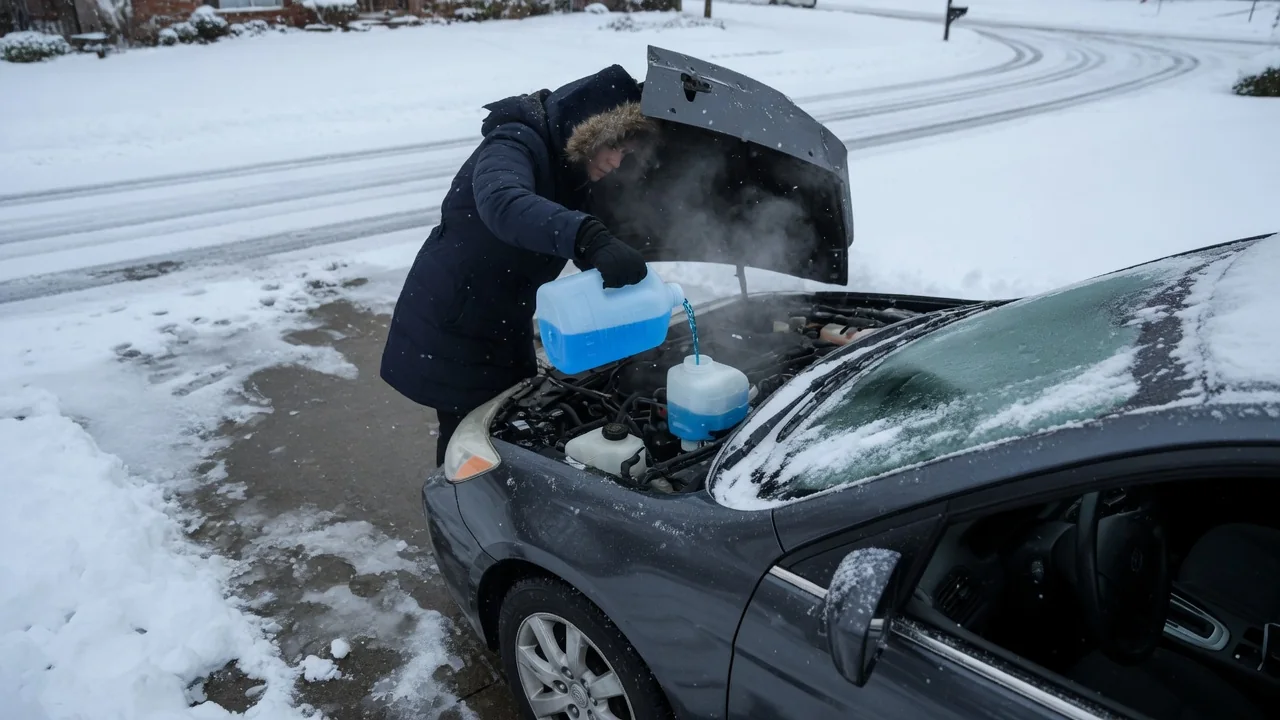
Drivers who ask what is winter blend washer fluid are usually looking at a shelf of similar blue jugs and wondering what separates them. Winter blend is windshield washer fluid formulated with a higher share of freeze-resistant alcohol, so it stays liquid in the reservoir, pump, and lines during cold weather. The temperature rating on the label tells most of the story.
Fluid properties
Winter blend washer fluid is mostly water mixed with an alcohol, commonly methanol, sometimes ethanol or another solvent, plus a small amount of detergent and dye. The alcohol lowers the freezing point of the mixture, and a higher concentration generally means protection to a lower temperature. That is the central difference from summer or all-season formulas, which lean toward bug and road-film removal and may carry far less antifreeze content. Color is not a reliable guide, because manufacturers dye their products differently.
The freeze-protection figure printed on the jug describes the temperature at which the fluid, used undiluted, is expected to remain liquid. Some winter products add de-icing claims, meaning the alcohol content is high enough to help loosen light frost on the glass. Many also carry methanol warnings, since it is poisonous if swallowed and flammable, so the jug belongs capped and away from children and pets. Headlamp washers and rear window jets, where fitted, rely on the same fluid, so these properties matter throughout the system.
Seasonal selection
Choosing a seasonal fluid starts with the lowest temperatures a vehicle realistically faces, including overnight lows and trips to higher elevations. A rating that matches only the average daytime temperature leaves little margin, because fluid sprayed onto a cold windshield at highway speed is chilled further by airflow and evaporation. Picking a product rated comfortably below the expected cold snap reduces the chance of the spray flash-freezing into a hazy film just when visibility is already poor.
Label reading matters more than the word winter on the front. Look for the stated protection temperature, whether the product is ready to use or a concentrate requiring dilution, and whether the dilution instructions list different ratios for different temperatures. Concentrates mixed with too much water lose protection quickly. In mild climates, an all-season product may be enough year-round, while drivers in regions with hard freezes often switch before the first frost rather than after the nozzles have already iced.
Fill correctly
The washer reservoir is usually identified by a cap marked with a windshield and spray symbol, but its location, capacity, and filler neck design vary by vehicle, so the owner's manual is the reliable reference. It should not be confused with the engine coolant or brake fluid reservoirs, which sit nearby on many vehicles and serve systems that can be harmed by the wrong fluid. Pouring slowly, with a funnel if the neck is narrow, keeps alcohol-based fluid off painted surfaces and drive belts.
What is already in the tank affects the result. Adding winter blend on top of a half reservoir of summer fluid or plain water dilutes it, so the real freeze point lands somewhere between the two and above the number on the jug. Running the level low before the season changes, then filling with winter fluid, gives a mixture closer to the label rating. Operating the washers for several seconds afterward pushes the new fluid through the pump, hoses, and nozzles, where the old fluid would otherwise remain.
Everyday Use and Observations
In daily driving, a well-matched winter fluid sprays in a normal pattern on a cold morning and wipes clear without leaving a frozen smear. Road salt and slush spray consume fluid quickly, so winter usage is often much higher than in summer, and a low-level warning, where fitted, may appear sooner than expected. Vehicles without a level sensor need an occasional visual check of the reservoir, though some tanks are tucked behind bodywork and show only the filler neck.
Certain observations hint that protection is inadequate. Slushy fluid visible in the filler neck, a pump that hums without producing spray, or a stream that freezes on contact with the glass all suggest the mixture is too weak for the conditions. A weak or uneven spray can also come from ice or debris at the nozzles themselves. Some vehicles have heated nozzles or heated wiper park areas that mask marginal fluid, so behavior differs between models even with the same product in the tank.
Limits and Next Steps
Winter blend has limits. It is not a substitute for scraping or defrosting heavy ice, and spraying it onto a thick frozen layer mostly wastes fluid. It also cannot compensate for worn wiper blades, which streak regardless of what is sprayed. Plain water or homemade mixtures are risky in freezing weather, because expanding ice can crack a reservoir or strain the pump and hoses. Some regions restrict certain formulations, so the products available on local shelves and their ratings can differ.
If the system stops working in the cold, a frozen mixture is one explanation, but not the only one. A blown fuse, failed pump, disconnected hose, or clogged nozzle produces similar symptoms, so it helps to see whether operation returns after the vehicle has warmed in a garage. Holding the switch while the lines are frozen is best avoided. When spray does not return with warmth, or fluid disappears without use, a leak or electrical fault is worth having inspected by a qualified technician.