What Is Variable Valve Lift? Lift Profiles, Control, and Driving Effect
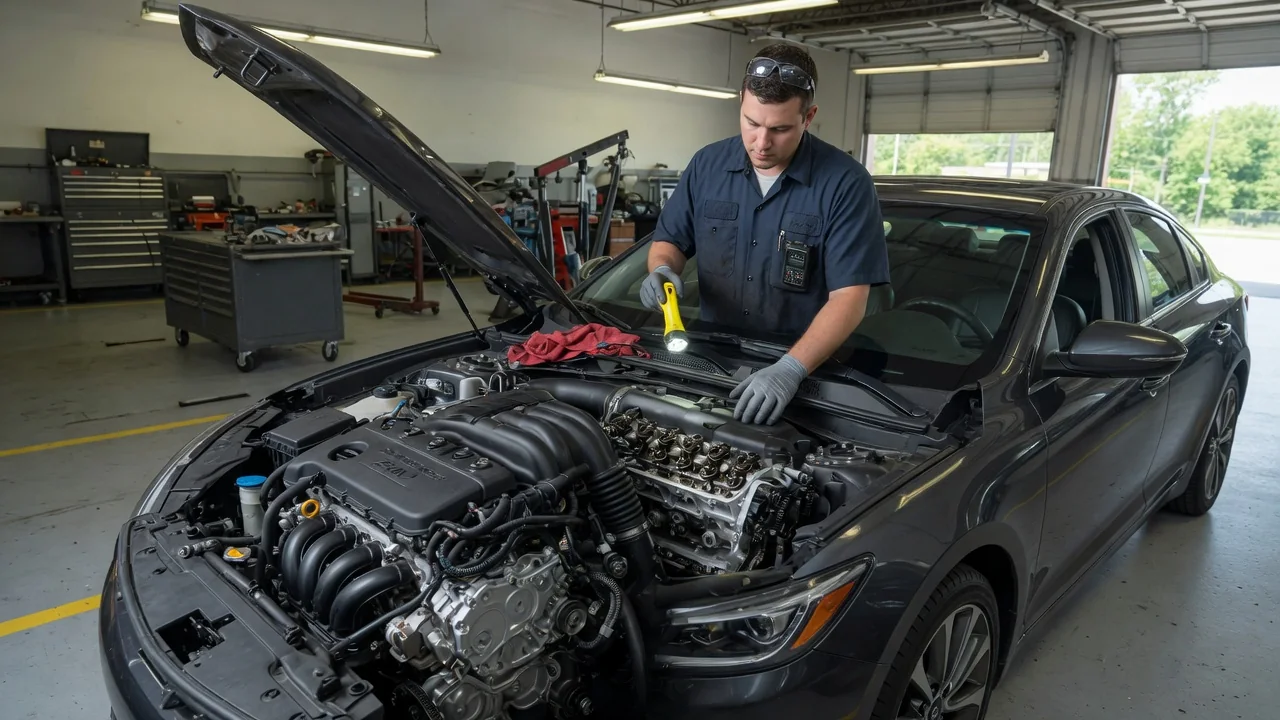
Variable valve lift is an engine technology that changes how far the intake valves, and in some designs the exhaust valves, open during each combustion cycle. A conventional valvetrain opens each valve to the same height every time, as set by a fixed camshaft lobe. A variable valve lift engine can instead change the lift amount with engine speed and load. The same engine can then breathe gently for efficient cruising and more freely when the driver asks for power.
Different lift profiles
Valve lift is the distance a valve moves away from its seat as it opens. Two related terms complete the picture. Duration is how long the valve stays open, measured in degrees of crankshaft rotation. The lift profile is the overall shape of that opening and closing motion. On a fixed camshaft, every lobe has one profile, and the engineer has to choose a compromise. A small, short profile keeps incoming air moving quickly at low engine speeds. That helps mix air and fuel and keeps combustion stable at idle and light load. A tall, long profile lets the cylinders fill more completely at high engine speeds, but it can make low-speed running less smooth and less efficient. Variable valve lift exists to avoid being locked into a single compromise.
Systems generally fall into two families. Stepped, or discrete, systems switch between two or sometimes three distinct profiles. A common approach places extra cam lobes beside the normal ones and uses locking pins to join or separate rocker arms or followers, so the valve follows whichever lobe is engaged. Another approach shifts a section of the camshaft sideways so that a different lobe lines up with the valve. Continuous systems add an intermediate mechanism between the camshaft and the valve, such as a lever moved by an eccentric shaft. That mechanism can vary lift smoothly across a range instead of jumping between fixed steps. In many continuous designs, lift and duration change together because the mechanism links them geometrically.
Variable valve lift is often confused with variable valve timing, but the two are different. Timing systems, usually cam phasers, shift when the valves open and close relative to the crankshaft without changing how far they open. Lift systems change the opening height itself. Many modern engines combine both to gain finer control over airflow. Some valvetrains can also hold the valves of certain cylinders fully closed, which is the zero-lift extreme behind cylinder deactivation. Having one feature does not mean an engine has the others, so the specific engine's documentation is the only reliable guide.
Control
The engine control module decides which lift profile to use, or how much lift to command, from its calibration maps. Typical inputs include engine speed and engine load. Load is estimated from throttle position, mass airflow, or manifold pressure. Coolant temperature, oil temperature, and oil pressure also feed the decision, and vehicle speed or the selected gear sometimes does too. Switching to a higher-lift profile is usually allowed only when conditions are suitable, such as a warm engine with adequate oil pressure. When the control module changes lift, it coordinates the change with fuel delivery and ignition timing to keep combustion steady.
The way that command becomes valve motion depends on the design. Stepped systems commonly rely on engine oil pressure. An electrically operated oil control solenoid directs pressurized oil to push locking pins into or out of engagement. Because of this, oil level, oil viscosity, and oil cleanliness directly affect whether switching happens correctly. Continuous systems more often use an electric motor to turn the eccentric shaft or similar adjuster, with a position sensor reporting the actual setting back to the control module. In some continuous designs, intake valve lift itself takes over much of the job of regulating airflow, so the throttle plate does less of that work.
Control systems also monitor themselves. The control module may compare the commanded state with feedback from position sensors, oil pressure switches, or changes in engine behavior. If the expected change does not occur, it may store a diagnostic trouble code, turn on the warning light, and fall back to a default profile. That fallback typically protects the engine at the cost of performance. The exact strategy and the codes involved vary between manufacturers and engines, so the vehicle's service information should be used for diagnosis.
Driving effect
The main benefit is a broader, more usable spread of engine performance. At low speeds and light loads, reduced lift helps keep idle smooth and response clean, and it can reduce the energy the engine spends drawing air past a partly closed throttle. That can help fuel efficiency and emissions in everyday driving. At higher engine speeds and heavier loads, increased lift lets the engine move more air. That supports stronger output toward the upper part of the rev range than a low-lift camshaft alone would allow. The engine does not have to give up one end of its operating range to serve the other.
How this feels from the driver's seat depends on the system type and calibration. With stepped systems, the changeover between profiles happens at defined conditions. On some engines it can be noticed as a change in intake or exhaust sound or a stronger pull as engine speed rises, while others are calibrated to blend the transition so it is hard to detect. Continuous systems adjust lift gradually, so their effect usually shows up as a steady, linear response rather than a distinct event. In both cases, the driver normally does nothing special. The system works automatically in the background according to how the accelerator is used.
Practical implications and limits
For owners, the most practical consequence is that a variable lift valvetrain adds parts that depend on good maintenance. Systems that switch hydraulically are sensitive to running low on oil, using an oil grade other than the one specified, or letting sludge build up. Small screens or passages in the oil supply circuit can restrict flow when oil is neglected. Electrically actuated systems add motors, sensors, and wiring that can fail like any other electronic component. Signs worth investigating include a lit check engine light, rough running, an unusual valvetrain noise, or a noticeable loss of power in a particular speed range. Following the oil specification and service intervals in the owner's manual is the simplest way to protect the system.
It also helps to keep expectations realistic. Variable valve lift improves how efficiently an engine uses the airflow its design allows, but it does not override limits set by displacement, intake and exhaust design, or fuel and ignition systems. It cannot compensate for worn valves, weak valve springs, or mechanical damage elsewhere in the engine. How much benefit a given engine gets depends on its overall design and calibration, so general descriptions cannot predict exact behavior for a specific vehicle. Software changes that alter switching points or lift commands can affect emissions compliance, durability, and warranty coverage. Manufacturers also use different names for similar technology, so confirming what a particular engine actually has means checking that vehicle's official documentation rather than relying on a marketing label.