What Is Variable-Ratio Steering? How It Works and How It Feels
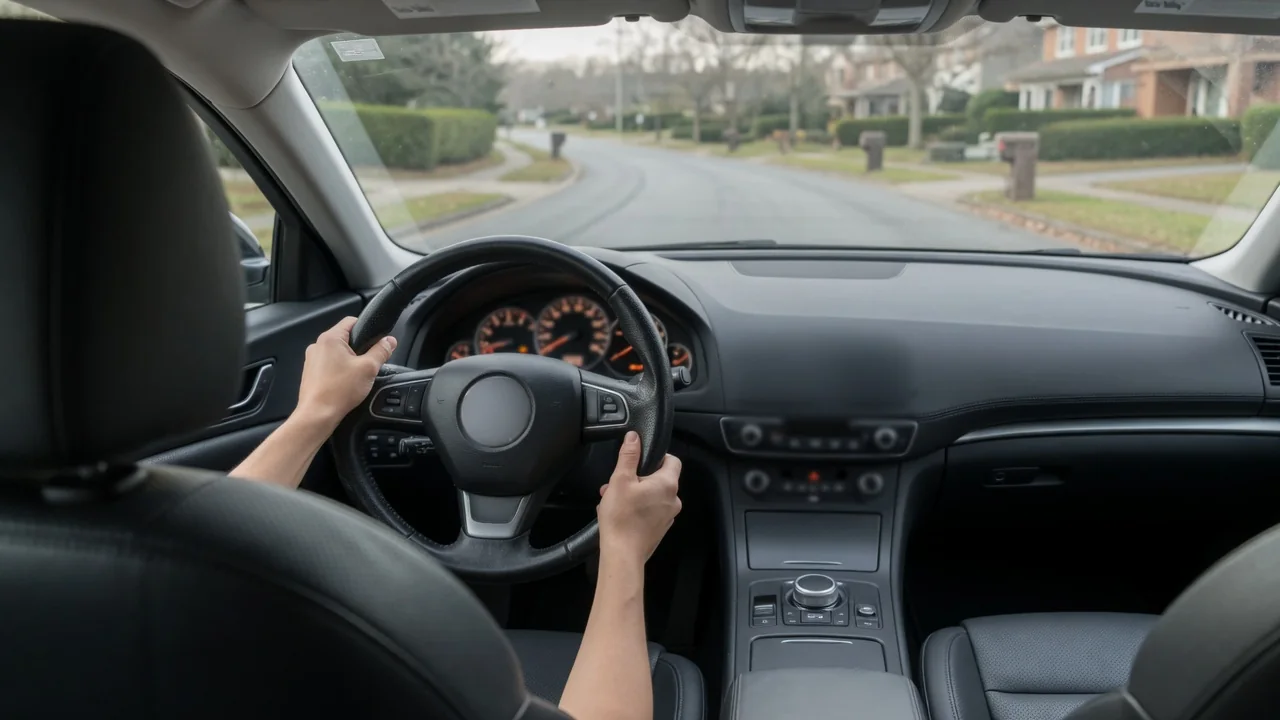
Variable-ratio steering is a steering design in which the relationship between steering wheel rotation and front wheel angle changes as the wheel is turned. Instead of producing the same road-wheel movement for every degree of input, the system usually responds more gently near the straight-ahead position and more quickly as the wheel moves toward lock. This article explains how that changing response works, how a variable ratio steering rack is shaped to create it, and what drivers can expect from it.
Changing response: what the ratio actually describes
Steering ratio is the number of degrees the steering wheel must turn to rotate the front wheels by one degree. With a ratio of 15:1, for example, fifteen degrees at the steering wheel produce one degree at the tires. In a constant-ratio system that relationship stays essentially the same across the full range of travel. The first quarter turn off center produces roughly the same change in wheel angle as a quarter turn taken near full lock.
A variable-ratio system deliberately breaks that uniformity. The most common arrangement uses a slower, numerically higher ratio around center and a quicker, numerically lower ratio farther out. Small corrections at highway speed then translate into modest changes in wheel angle. Large inputs for parking or tight turns reach the steering stops with fewer total turns lock to lock. The ratio does not usually switch abruptly between two values. It typically blends progressively, so the driver feels a smooth increase in responsiveness rather than a step.
Ratio is a separate thing from power assist. Hydraulic and electric power steering systems can vary how much effort the driver must apply, often according to vehicle speed. That changes the force needed to turn the wheel. It does not change the geometric relationship between steering wheel angle and road-wheel angle. Variable-ratio steering is about that geometry, although the two features are often tuned together and can be present on the same vehicle.
Rack geometry: how a variable ratio steering rack works
In a conventional rack-and-pinion system, a pinion gear on the end of the steering shaft meshes with teeth cut along a straight rack. Turning the pinion slides the rack sideways. Tie rods attached to the rack ends then push and pull the steering arms on the knuckles. When the rack teeth are uniform, each degree of pinion rotation moves the rack the same distance, which gives a constant ratio at the rack.
A mechanical variable ratio steering rack changes the shape of the teeth along its length. In the center section, the tooth profile makes the pinion act as if it had a smaller effective radius, so each degree of pinion rotation moves the rack a shorter distance. Toward the ends, the tooth form and pressure angle change so the contact acts at a larger effective radius, and the same pinion rotation moves the rack farther. The pinion itself is generally conventional; the variation is built into the rack. These non-uniform teeth have to be made precisely, because the mesh must stay smooth and free of binding through every transition along the rack.
Rack teeth are not the only geometric influence. Steering arm length, tie rod angles and the Ackermann layout of the linkage also affect how rack travel becomes wheel angle, so even a nominally constant-ratio rack can produce an overall ratio that drifts somewhat across its travel. Some vehicles create a variable ratio electronically instead, either with an actuator or gearset in the steering column that adds to or subtracts from the driver's input, or with a steer-by-wire system. Those systems can change the ratio with speed and other conditions. A mechanical variable rack always follows the same fixed curve, tied only to rack position.
Driver experience: what changes behind the wheel
On the road, the most noticeable effect of a slower center ratio is calm straight-line behavior. Small hand movements, bumps that nudge the steering wheel and minor lane corrections produce limited changes in direction. Many drivers find this less tiring on long highway stretches. The car can feel settled without the steering seeming vague, provided the rest of the system, including bushings, joints and alignment, is in good condition.
As the wheel is turned farther, the quickening ratio becomes apparent. Parking, U-turns and tight intersections take less hand-over-hand work because fewer turns are needed to reach full lock. Some drivers describe the response as progressive, building as they add more steering. Drivers used to a constant ratio may at first find the car turning a little more than expected partway through a corner, and they may need a short adjustment period to recalibrate their inputs. How pronounced any of this feels depends on the calibration the manufacturer chose, so two vehicles with variable-ratio steering can feel quite different.
Practical implications and limits
For owners, the main practical point is that a variable-ratio rack is a specific part, not a generic setting. If a rack is replaced, the new unit needs to match the original specification. A rack with a different ratio curve may bolt in yet change how the car responds and how many turns it takes to reach lock. Service information for the particular vehicle is the right reference for part numbers and procedures. During installation, the rack should be at its mechanical center when the steering wheel is centered, so the slower zone lines up with straight-ahead driving.
Wheel alignment matters for the same reason. If toe is set by adjusting one tie rod much more than the other, the steering wheel can appear centered while the rack sits off its center zone. Response may then feel uneven from left to right. Electronic variable systems add their own requirements. They may need steering angle sensor calibration after an alignment or component replacement, and warning lights or unusual steering behavior should be diagnosed using the procedures for that vehicle.
Variable-ratio steering also has clear limits. It does not change grip or braking. It does not shrink the turning circle either, because that is set by maximum wheel angle and wheelbase rather than by how quickly the driver reaches lock. It cannot compensate for worn tie rod ends, loose mounts or incorrect tire pressures, all of which still reduce precision. And it is a tuning choice rather than an upgrade in itself: whether it suits a driver depends on the calibration and on personal preference.