What Is Underfloor Cargo Storage in a Car?
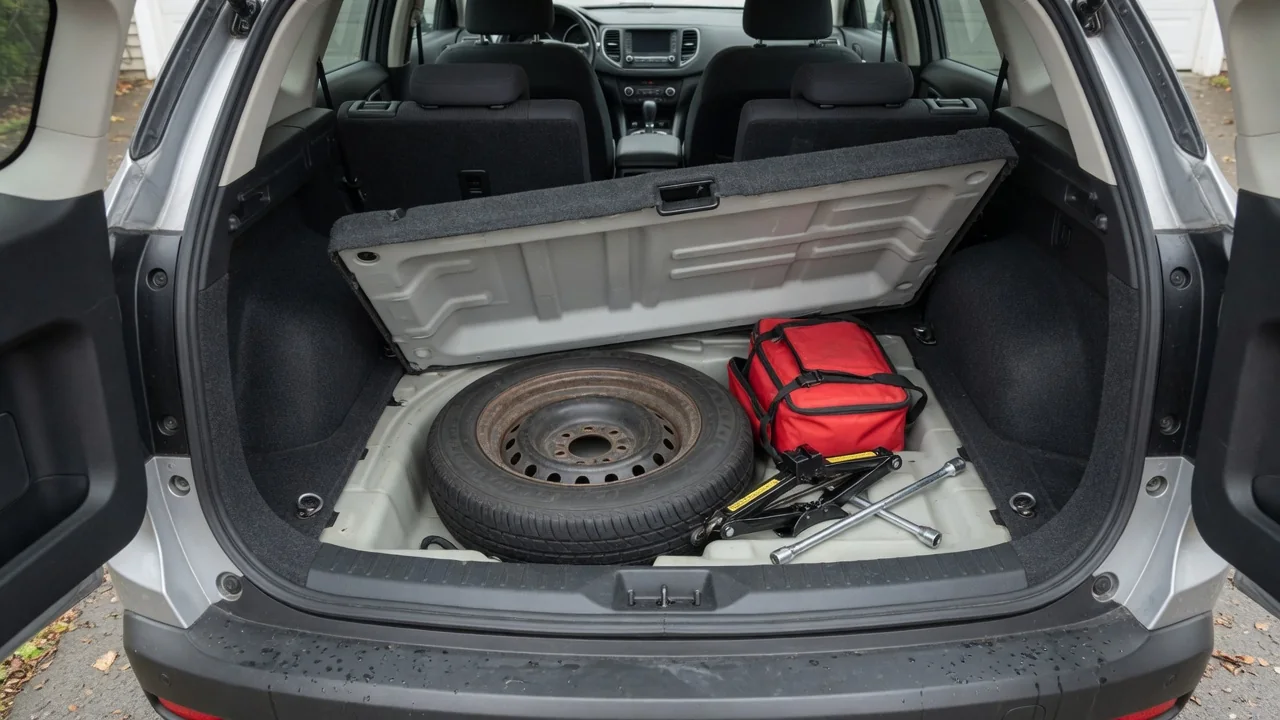
If you have wondered what is underfloor cargo storage in a car, the answer is simple: it is the compartment hidden beneath the main cargo deck, under the panel your luggage normally rests on. Automakers use this space for spare tires, tools, and small bins, and understanding how it works helps you pack smarter, protect your belongings, and avoid blocking equipment you might need in a roadside emergency.
Access
Reaching the space usually starts with the load floor itself. In many hatchbacks, crossovers, and SUVs, the carpeted panel behind the rear seats lifts by a recessed pull handle, a fabric strap, or a finger notch near the liftgate opening. Some panels hinge forward and stay propped by a hook or strut clipped to the weatherstrip, while others lift out entirely. Sedans often hide a similar well beneath the trunk carpet, reached by folding back a stiff floor board.
Designs vary considerably between vehicles. Certain models offer a two-position floor that can sit high for a flat load surface or drop lower for extra height, with the underfloor compartment shrinking accordingly. Minivans may have deep wells behind the third row, and some pickups and electric vehicles add lockable bins under the bed or cargo area. Hybrid and electric models sometimes give part of this region to battery or charging hardware, so the owner's manual is the best guide to what lifts and how.
Suitable items
The compartment suits items you want on board but rarely touch. Jumper cables, a tire inflator, a first aid kit, work gloves, a flashlight, a tow strap, and folded reusable grocery bags all fit the shallow, irregular shapes common to these wells. Electric vehicle owners often keep the portable charging cable here. Because the items sit below the deck, they stay out of sight of passersby and do not slide around the main cargo area during braking and cornering.
Some things belong elsewhere. Heavy objects can stress molded foam organizers or thin trim that was never designed as a structural shelf, and any load rating printed on the panel or in the manual should be respected. Liquids that might leak, such as motor oil or washer fluid, deserve sealed containers because spills can soak into sound insulation and are difficult to clean. Heat-sensitive goods, aerosol cans, and perishable food are poor candidates, since the space is often warm, poorly ventilated, and may sit close to exhaust components.
Keep spare access clear
On many vehicles the underfloor area doubles as the home of the spare tire, jack, and lug wrench, or of a tire sealant and compressor kit where no spare is fitted. These pieces are typically secured by a threaded hold-down, a strap, or shaped foam trays. Anything you add should sit beside or around that equipment without covering the fasteners, because a flat tire rarely happens at a convenient time, and digging through loose belongings on a dark shoulder adds stress and delay.
Think about the whole chain of access, not just the well itself. If the main cargo deck is stacked with luggage, the floor panel cannot be lifted until everything above is unloaded, so on long trips it helps to pack bags that can be removed quickly. Avoid wedging items against the jack or under the spare, where they can rattle loose or interfere with the retaining hardware. Vehicles that carry the spare beneath the body may still keep the lowering tool under the floor.
Everyday Use and Observations
Daily life with an underfloor compartment is mostly about organization. Drivers often notice that keeping emergency gear below frees the main deck for groceries, strollers, or sports equipment, and that a flat floor makes sliding heavy items in easier. Rattles are a common observation; a loose wrench or bottle tapping against plastic can sound like a suspension noise from the driver's seat. Wrapping tools in a cloth or using the molded pockets provided usually quiets the area.
The space also rewards occasional inspection. Lifting the panel every few months lets you check for dampness, a musty smell, or standing water, which may point to a leaking liftgate seal, tail lamp gasket, or blocked body drain rather than a spilled drink. It is also a chance to check spare tire pressure and confirm the jack and sealant kit are present, since used vehicles sometimes arrive missing pieces. Some compartments include a removable, washable tray suited to muddy boots or wet gear.
Limits and Next Steps
Underfloor storage has real limits. Capacity is modest and oddly shaped, the lid may not lock, and concealed is not the same as secure, so valuables are still better taken with you. The compartment sits within the rear crush zone on most vehicles, which is another reason to avoid dense, hard objects. On models with batteries, electronics, or subwoofers nearby, covers and vents in the area should never be blocked or removed to gain extra room.
A sensible next step is to open the floor in your own vehicle and see what is actually there, then compare it with the cargo and roadside emergency sections of the owner's manual. Note where the spare or inflator kit lives, how the panel is supported, and whether any weight limit is stated. If trim is broken, the panel will not sit flat, or you find moisture, a dealer or qualified repair shop can identify the cause and source the correct replacement parts.