What Is Transmission Kickdown?
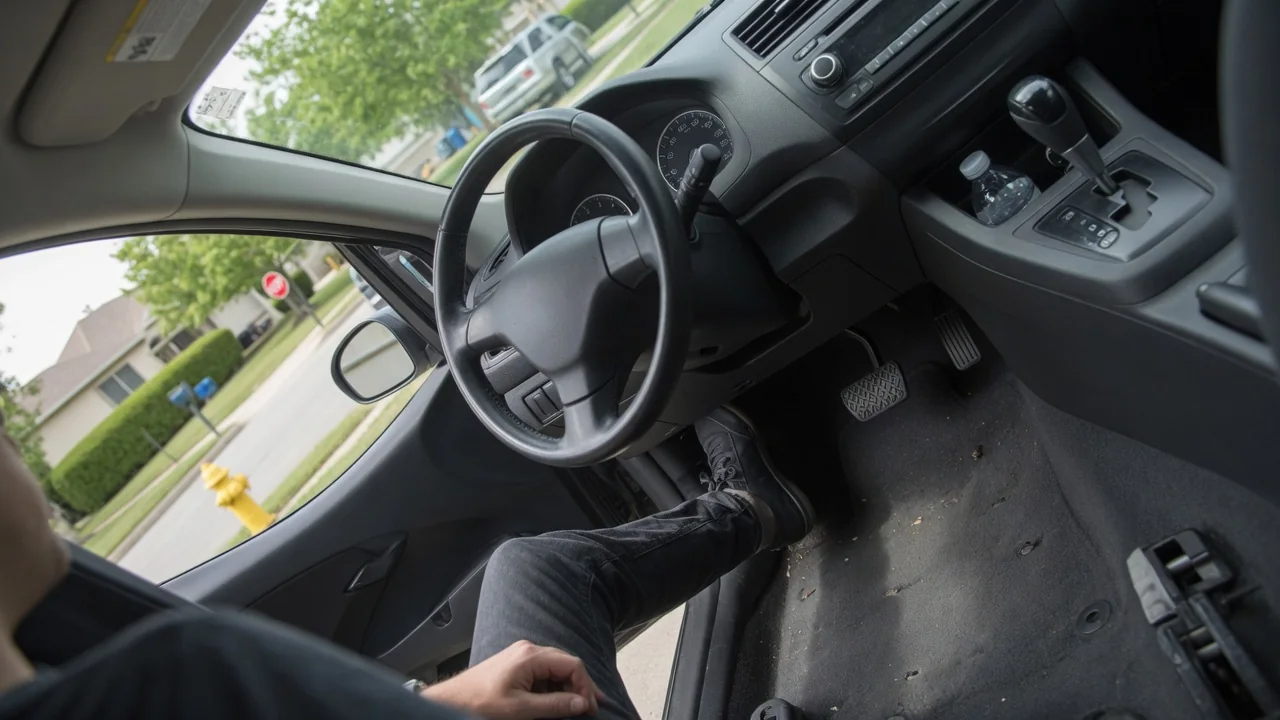
Press the accelerator hard in an automatic vehicle and the engine speed jumps as the car surges forward. That response answers the question of what is transmission kickdown: a deliberate downshift to a lower gear, triggered by a strong demand for acceleration, that lets the engine deliver more pulling force to the wheels than the higher cruising gear could provide.
Throttle input
Kickdown begins with the driver's right foot. During gentle cruising, an automatic transmission holds a high gear to keep engine speed low and fuel use modest. When the accelerator is pushed sharply or deeply, the control system reads that movement as a request for more acceleration than the current gear can supply. The amount of pedal travel and how quickly it is applied both matter, so a slow, moderate squeeze may only produce a gradual speed increase while a firm stab prompts a downshift.
How that request is sensed depends on the vehicle's age and design. Older automatics often used a cable or linkage connected to the throttle, or a switch under the pedal, to signal the transmission. Modern vehicles typically rely on an electronic pedal position sensor and a control module that weighs road speed, engine load and the selected drive mode. Some cars have a noticeable detent near the bottom of pedal travel, a firmer point that the driver pushes through to request maximum acceleration, while others have no distinct step at all.
Ratio change
Once the demand is recognized, the transmission selects a lower gear. A lower gear multiplies engine torque more strongly, so the same engine output produces more force at the drive wheels. It also raises engine speed, moving the engine closer to the range where it makes its strongest power. Passing a slow truck on a two-lane road is a typical example: the gearbox drops from its cruising ratio so the vehicle can gain speed quickly instead of laboring in a tall gear.
The size of the change varies. A light kickdown may drop a single gear, while a full pedal application at highway speed can skip several ratios at once, particularly in transmissions with many forward gears. In many automatics the torque converter clutch also releases, adding further engine speed rise. Continuously variable transmissions have no fixed steps, so they slide toward a shorter ratio instead, though some are programmed to imitate stepped shifts. The control logic will not select a gear that would push the engine beyond its safe speed.
Driver feel
From the driver's seat, kickdown is easy to recognize. The tachometer needle climbs abruptly, engine sound becomes louder and higher in pitch, and after a brief pause the vehicle pulls forward with noticeably more urgency. That short delay is normal, because the transmission must release one set of clutches and apply another before the lower gear is fully engaged. Once the driver eases off the pedal, the gearbox shifts back up and engine speed settles to its earlier cruising level.
The character of the shift differs widely between vehicles. Some transmissions respond almost instantly with a crisp, firm change, while others are tuned for smoothness and take a moment longer. Sport modes usually make kickdown happen sooner and with less pedal travel, and economy modes tend to resist it to save fuel. Turbocharged engines may add their own slight lag as boost builds. A healthy kickdown feels decisive and consistent; it should not involve harsh banging, shuddering or engine revs rising without matching acceleration.
Everyday Use and Observations
In daily driving, kickdown appears whenever a quick burst of speed is needed. Merging onto a freeway from a short ramp, overtaking on a rural road, or climbing a steep grade with a loaded vehicle are common situations. Towing a trailer makes it more frequent, since the extra weight means the higher gears run out of pulling force sooner. Cruise control can also trigger a downshift on hills when the system needs more power to hold the set speed.
Drivers can influence how often it happens. Smooth, progressive pedal inputs often let the vehicle accelerate in its current gear, which keeps the cabin quieter and reduces fuel consumption. Frequent full-throttle downshifts use more fuel because the engine runs at higher speed and load, though occasional use is what the system is designed for. Vehicles with manual shift modes or paddles let the driver choose a lower gear in advance, which can make a planned pass feel more immediate than waiting for the automatic response.
Limits and Next Steps
Kickdown has built-in limits. The transmission will refuse a downshift that would over-rev the engine, so at very high road speeds a hard pedal press may produce a smaller gear change than expected, or none. Cold fluid, a protective operating mode or a stored fault can also change shift behavior. If a warning light appears and a fault code is retrieved, that code is evidence pointing toward a system or circuit, not proof that a specific part has failed, and many codes are manufacturer-dependent and need vehicle-specific confirmation.
Changes in behavior are worth noting. A kickdown that becomes delayed, unusually harsh, absent altogether, or accompanied by flaring revs and weak acceleration suggests something needs attention, with possibilities ranging from fluid condition and sensor signals to internal wear. The owner's manual describes how the feature works on a particular model, including any pedal detent or drive mode effects. Recording when the symptom occurs, such as speed, temperature and load, gives a qualified technician useful information for an accurate diagnosis.