What Is Trailer Tongue Weight?
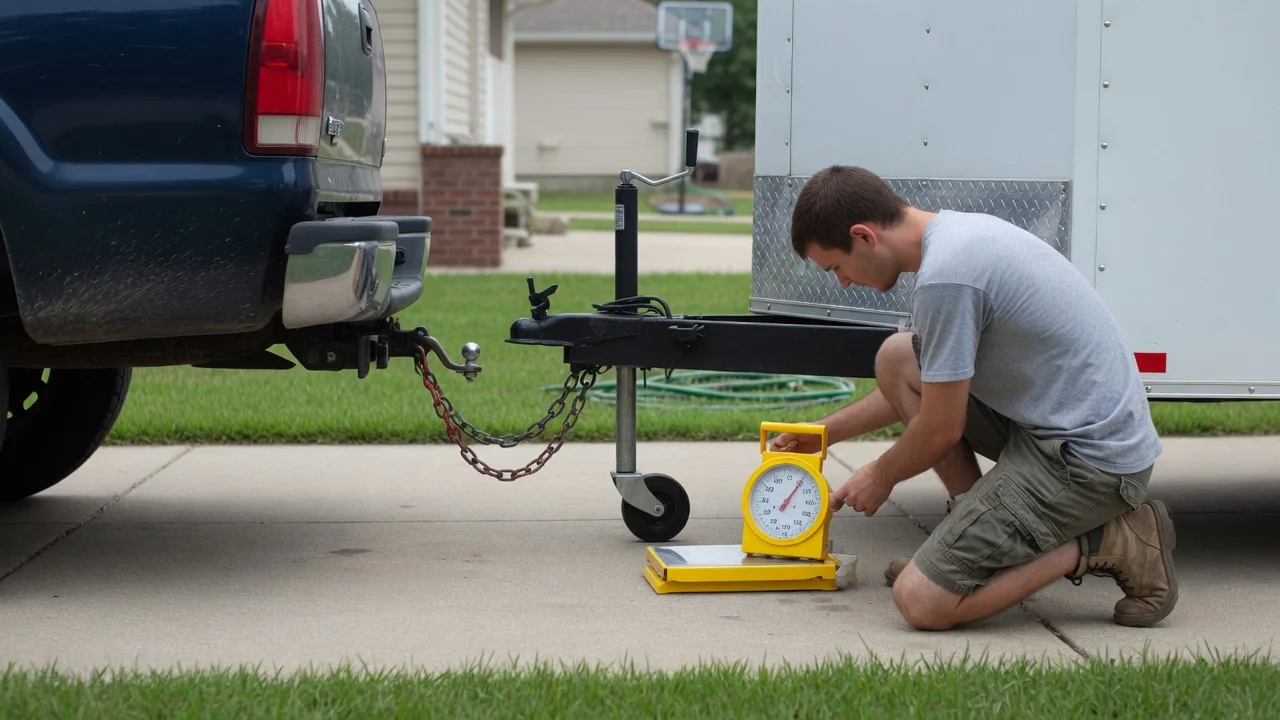
Anyone asking what is trailer tongue weight is really asking how much of a trailer's load presses down on the hitch ball of the tow vehicle. That downward force is a small share of the trailer's total weight, yet it shapes how the combination steers, brakes, and resists sway. Understanding it helps drivers load, measure, and tow with far more confidence.
Load distribution
A trailer balances on its axle like a seesaw, and the tongue is one end of that lever. Cargo placed ahead of the axle adds downward force at the coupler, while cargo placed behind the axle subtracts from it. Moving a heavy toolbox, a full water tank, or an ATV just a few feet forward or rearward can change tongue weight noticeably, even though the trailer's total weight on a scale has not changed at all.
A widely repeated guideline for conventional ball-mounted trailers puts tongue weight at roughly ten to fifteen percent of loaded trailer weight, though the trailer and vehicle manufacturers' guidance takes priority. Too little leaves the trailer tail-heavy and prone to swaying at highway speed. Too much pushes the rear of the tow vehicle down, lightens the front axle, and can reduce steering and braking grip. Tandem-axle trailers, boat trailers, and fifth-wheel designs each respond differently to the same cargo shift.
Vehicle rating
Every tow vehicle carries a maximum tongue weight rating that is separate from its towing capacity, and the two should not be confused. A truck may be able to pull a heavy trailer while still being limited in how much vertical load the hitch can carry. The receiver itself, the ball mount, and the hitch ball each have their own ratings as well, and the lowest number among those components governs the whole setup.
Tongue weight also counts against payload, because the vehicle carries it just like passengers and luggage. A family of four, a bed full of firewood, and a loaded trailer tongue all draw on the same allowance, and they add to the rear axle load in particular. Ratings typically appear on a door jamb label, on the hitch receiver, and in the owner's manual. Figures vary by engine, drivetrain, wheelbase, and towing package, so the specific vehicle's documentation is the only reliable reference.
Measurement approach
The most direct way to measure is with a dedicated tongue weight scale placed under the coupler or jack while the trailer sits level and loaded as it will travel. Some ball mounts have a gauge built in that displays the load whenever the trailer is coupled. Whatever tool is used, the reading only means something if the trailer is packed for the trip, including water, fuel, propane, and gear, since an empty measurement tells little about real conditions.
A public vehicle scale offers another approach. Weighing the tow vehicle alone and then again with the trailer coupled but its wheels off the platform shows how much weight the trailer adds to the vehicle, which approximates tongue weight. Weighing the trailer separately gives the total needed to calculate the percentage. Lighter trailers are sometimes checked with a household scale and a lever arrangement, but that method demands care and has limits, so a purpose-built scale is the safer choice.
Everyday Use and Observations
On the road, tongue weight reveals itself through the vehicle's stance and behavior. A rear end that squats visibly, headlights that aim high, and steering that feels light or vague suggest too much load on the hitch. A trailer that wags behind the vehicle after a passing truck or a lane change, and takes time to settle, often points to too little. Viewed from the side, a well-balanced combination sits close to level from the front bumper to the trailer's rear.
Tongue weight is not fixed between trips, or even during one. A camper's fresh water tank may sit ahead of the axle while its waste tanks sit behind, so the balance shifts as fluids move from one to the other. A boat trailer changes with fuel level and gear stowed in the stern. Utility trailers vary most of all, since each load of mulch, lumber, or equipment lands in a different spot. Checking again after any significant change in cargo is a sensible habit.
Limits and Next Steps
When a measurement falls outside the recommended range, the first remedy is usually repositioning cargo rather than buying hardware. Shifting heavy items forward raises tongue weight, and moving them toward or behind the axle lowers it, always with the load secured so it cannot slide. If tongue weight is appropriate for the trailer but still exceeds what the vehicle or hitch is rated to carry, the combination is simply mismatched, and lightening the trailer or choosing a more capable tow vehicle is the honest answer.
A weight distribution hitch can transfer some load back to the front axle and the trailer axles, restoring a level stance, but it does not raise the vehicle's ratings beyond what the manufacturer states for that equipment. Air springs and helper springs likewise level the ride without adding capacity. Drivers unsure about their numbers can have the setup weighed and reviewed by a trailer dealer or hitch installer, and should confirm every limit against the owner's manual before a long tow.