What Is Trailer Sway Control?
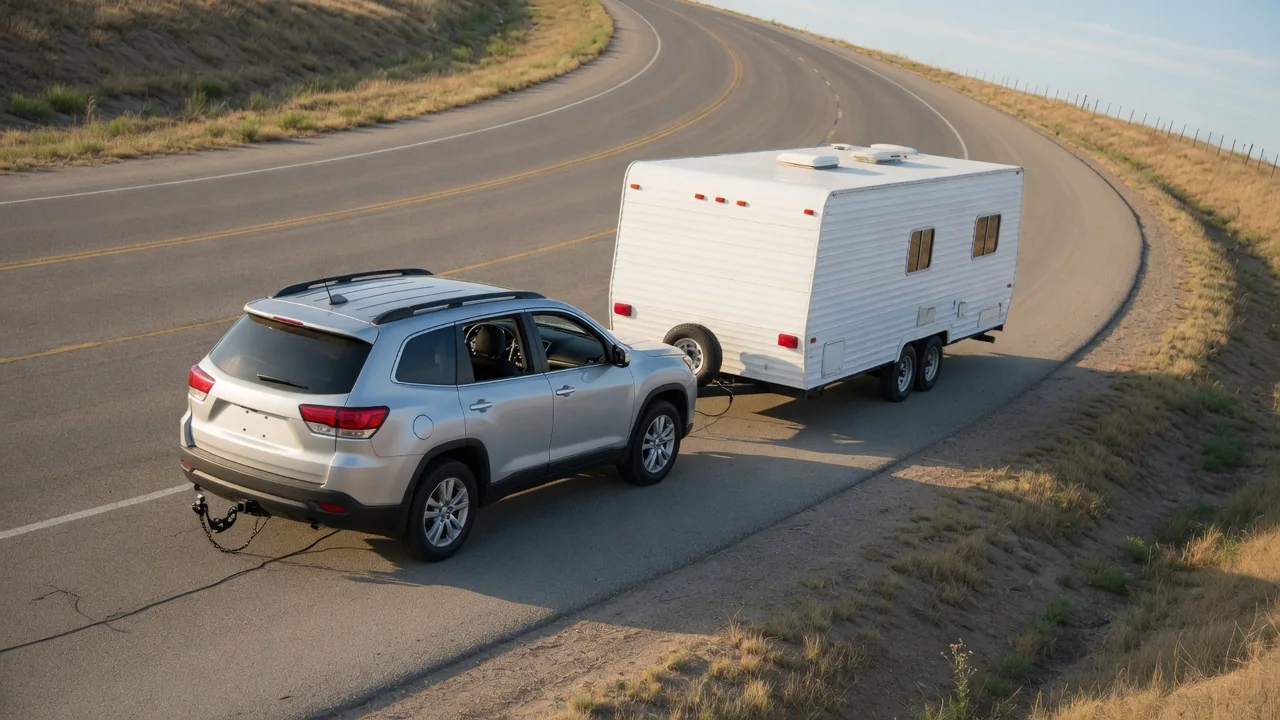
Anyone who has felt a trailer start to wag behind the tow vehicle tends to ask the same question: what is trailer sway control, and how does it actually help? The term covers two families of solutions, mechanical hardware built into the hitch and electronic logic built into the vehicle's stability system. Both aim to calm side-to-side oscillation before it grows into a loss of control.
Sway sources
Sway begins when a sideways force pushes the trailer off the path of the tow vehicle and the trailer pivots around the hitch ball. Crosswinds, the pressure wave from a passing semi truck, a sudden steering correction, or a dip in the road can all supply that push. A stable combination damps the motion within a swing or two. An unstable one lets each swing grow larger, and the trailer begins steering the rear of the tow vehicle.
Loading is the factor drivers most directly influence. When too little weight rests on the hitch, or heavy cargo sits behind the trailer axles, the trailer behaves like a pendulum with its mass in the wrong place and oscillation builds easily. Speed amplifies everything, since aerodynamic forces and the energy in each swing rise quickly as the combination goes faster. Soft or underinflated tires, a tall boxy trailer profile, and a short tow vehicle wheelbase can add to the tendency, though the mix varies by setup.
Control approaches
Mechanical sway control works at the hitch. A friction sway bar uses a sliding element clamped between the trailer frame and the hitch head, so any pivoting motion has to overcome resistance. Many weight distribution hitches build similar friction into their spring bar brackets, while others use cam or linkage designs that tend to hold the trailer centered or project the pivot point forward. In each case the hardware resists or redirects the rotation that sway depends on, working constantly rather than waiting for a problem.
Electronic trailer sway control lives in the tow vehicle's stability control software. Yaw rate and steering angle sensors watch for a rhythmic side-to-side motion that the driver did not command, which is the signature of a swinging trailer. When the system recognizes that pattern, it can brake individual wheels on the tow vehicle and reduce engine torque to slow the combination and counter the oscillation. Some vehicles with an integrated trailer brake controller can also apply the trailer's brakes, but that capability depends on the manufacturer and equipment.
Setup limits
Neither approach corrects a combination that is fundamentally mismatched or badly loaded. A friction device adds damping, but it cannot make up for inadequate tongue weight, an overloaded rear axle, or a trailer heavier than the vehicle and hitch are rated to pull. The ratings in the owner's manual and on the hitch and trailer labels define the envelope, and sway hardware is designed to work inside it. Some mechanical units also carry their own restrictions, such as guidance about backing up or use on slippery roads.
Electronic systems have a different kind of limit: they are reactive. The software can only respond once sway has already started and grown large enough to detect, and it works by slowing the vehicle rather than removing the cause. Tire grip sets the ceiling on what selective braking can accomplish, so wet pavement or worn tires reduce the margin. Availability also differs between models, trims, and tow packages, and some systems need the trailer wiring connected or a tow mode selected, so the owner's manual is the reliable reference.
Everyday Use and Observations
With a well-set-up mechanical system, the main thing a driver notices is absence. The trailer tracks more quietly behind the vehicle, passing trucks produce a nudge instead of a prolonged wag, and steering corrections on a breezy highway become smaller. Friction hardware often makes itself heard in tight, slow turns with creaks or groans from the hitch, which is usually the friction surfaces doing their job. Adjustment and maintenance requirements differ by design, so the hitch maker's instructions matter more than general rules.
When electronic sway control intervenes, the experience is more obvious. The stability control indicator typically flashes in the instrument cluster, some vehicles display a message about trailer sway, and the driver may feel pulsing brake applications and a brief loss of power. The event usually lasts only a few seconds. It is worth treating that flash as information rather than reassurance, because the system stepping in means the combination reached a point where it was no longer settling on its own.
Limits and Next Steps
Sway control of either type is a backup for sound towing practice, not a substitute. If the trailer starts to swing, the generally recommended response is to ease off the accelerator, hold the steering wheel steady, and avoid hard braking with the tow vehicle, letting speed fall gradually. Where a brake controller with a manual lever is fitted, many manufacturers describe applying the trailer brakes alone to help pull the combination straight. Afterwards, stopping somewhere safe to look for the cause is more valuable than simply continuing.
Repeated sway events point to something worth correcting. Sensible checks include how cargo is distributed, whether tongue weight falls within the range the trailer and vehicle makers recommend, tire pressures on both units, and whether the hitch height keeps the trailer level. A public scale can confirm actual weights against the ratings. If the setup checks out and the trailer still feels nervous, a hitch specialist or dealer can assess whether a different hitch design or adjustment suits that particular combination.