What Is Tire Rolling Resistance? Deformation, Energy Use, and Design
Tire rolling resistance is the force that opposes a tire as it rolls along the road. It is separate from aerodynamic drag and from braking. Put simply, it is the energy a vehicle spends to keep its tires turning and flexing. Every tire uses some of this energy. How much it uses depends on how the tire deforms, how its materials respond to that deformation, and how the tire was designed. This guide explains each of those mechanisms and what they mean for everyday driving.
Deformation: Where Rolling Resistance Begins
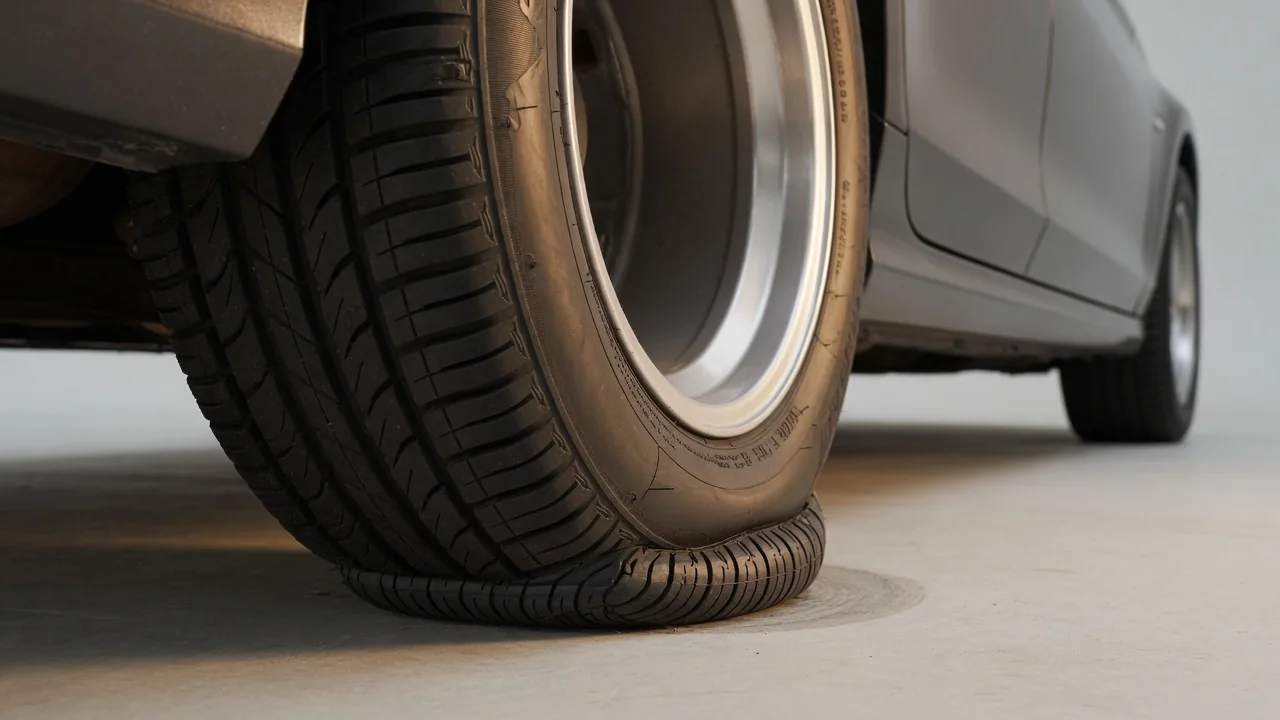
A pneumatic tire is not a rigid wheel. Where it meets the road, it flattens into a contact patch that carries the vehicle's weight. As the tire rotates, each section of tread, sidewall, and internal structure moves into the contact patch, where it is compressed and bent. It then recovers its shape as it rolls out the other side. The tread compresses and shears, the sidewall bulges, and the belt package bends from its curved shape to a flatter one and back again. This cycle repeats with every revolution, so at highway speed a tire flexes many times per second.
If rubber returned all of that deformation instantly and completely, a rolling tire would push back on the road evenly and would lose almost nothing. Real rubber recovers more slowly and less completely than it compresses. As a result, contact pressure is higher at the leading edge of the patch than at the trailing edge. That shifts the road's vertical reaction force slightly ahead of the axle centerline and creates a moment that resists rotation. Expressed as a force at the contact patch, this is rolling resistance. Engineers often describe it with a rolling resistance coefficient: the ratio of the resisting force to the load the tire carries. Because the coefficient is dimensionless, tires of different sizes can be compared under the same standardized conditions.
Several conditions change how much a tire deforms. A heavier load enlarges the contact patch and increases deflection. Lower inflation pressure lets the sidewalls and tread flex more on every rotation. A rough or soft road surface adds small-scale deformation of the tread rubber as it conforms to texture. Each of these factors increases the amount of material that is strained per revolution, and with it the resistance to rolling.
Energy Use: Where the Lost Energy Goes
The main reason deformation costs energy is hysteresis. Rubber is viscoelastic: it behaves partly like a spring and partly like a damper. When it is compressed and then released, it does not return all of the energy put into it. The difference becomes heat inside the tire. Hysteresis in the tread, sidewall, and other rubber components is generally regarded as the dominant source of rolling resistance in passenger tires. Smaller contributions come from micro-slip and friction between tread and road in the contact patch, and from air moving around the spinning tire.
Whatever powers the vehicle, whether an engine or an electric motor, must keep replacing this lost energy for as long as the vehicle is moving. Rolling resistance rises roughly in proportion to the load on the tires and changes relatively little with speed. Aerodynamic drag behaves differently: it grows rapidly as speed increases. That is why rolling resistance makes up a larger share of the total resistance at low and moderate speeds, such as in city and suburban driving, while aerodynamic drag dominates at sustained high speeds. In a gasoline vehicle the effect appears as fuel consumption; in an electric vehicle it appears as reduced driving range.
Temperature also matters. The heat generated by hysteresis warms the tire, and the properties of rubber change with temperature. As a tire warms up to its normal operating temperature, its rolling resistance generally decreases somewhat compared with a cold start. This is one reason standardized measurements include a warm-up period before readings are taken.
Design: How Engineers Reduce Rolling Resistance
The tread compound is one of the most important tools for controlling rolling resistance. Designers choose base polymers, reinforcing fillers, and additives to manage how much energy the rubber dissipates. Silica-based fillers combined with coupling agents are widely used because they can reduce hysteresis at the relatively slow, large deformations of ordinary rolling. At the same time, they help keep energy absorption at the faster, small-scale deformations involved in gripping a wet road. This frequency difference lets a compound be tuned to waste less energy while rolling without giving up all of its braking grip.
Construction matters too. Radial tires, with steel belts beneath the tread, keep the tread flatter and more stable in the contact patch than older bias-ply designs. They generally roll with less resistance as a result. Sidewall stiffness, belt layout, bead design, and overall tire mass all influence how much material flexes and how much heat builds up. Tread depth and pattern play a role as well. Deep, flexible tread blocks move and squirm as they enter and leave the contact patch, so stiffer block designs and tread shapes can reduce that movement. This also explains why a tire's rolling resistance often decreases as the tread wears down.
Lower rolling resistance always involves trade-offs. Tire engineers commonly balance rolling resistance against wet grip and treadwear, and also against noise, ride comfort, handling response, and load capacity. Improving one property can compromise another if the compound and structure are not developed carefully. Tires marketed as low rolling resistance reflect a particular set of priorities within that balance, not a free improvement in every area.
Practical Implications and Limits
For drivers, the factor most under their control is inflation pressure. Keeping tires at the vehicle manufacturer's recommended pressure, shown on the door-jamb placard or in the owner's manual and checked when the tires are cold, prevents the extra flexing and heat buildup that come with underinflation. Inflating above the recommended level is not a sound way to save energy, because it can reduce grip, change handling, and wear the tread unevenly. Removing unnecessary cargo lowers the load the tires carry. Correct wheel alignment prevents tires from scrubbing sideways, which adds resistance on top of the tire's own losses.
There are limits to what rolling resistance figures can tell you. Ratings and labels come from laboratory tests run under fixed conditions, typically on a drum at a set load, pressure, and speed. Real roads, temperatures, driving patterns, and vehicles all differ from those conditions. The effect of choosing one tire over another therefore varies from vehicle to vehicle and driver to driver, and it cannot be predicted from the rating alone.
When replacing tires, treat rolling resistance as one factor among several. The correct size, load index, and speed rating for the vehicle come first, followed by suitability for local weather and road conditions. Wet braking performance and expected tread life deserve equal attention. A tire that rolls easily but grips poorly in the rain is not a good trade for most drivers. Weighing efficiency alongside safety and durability leads to a choice that fits how the vehicle is actually used.