What Is Tire Cupping?
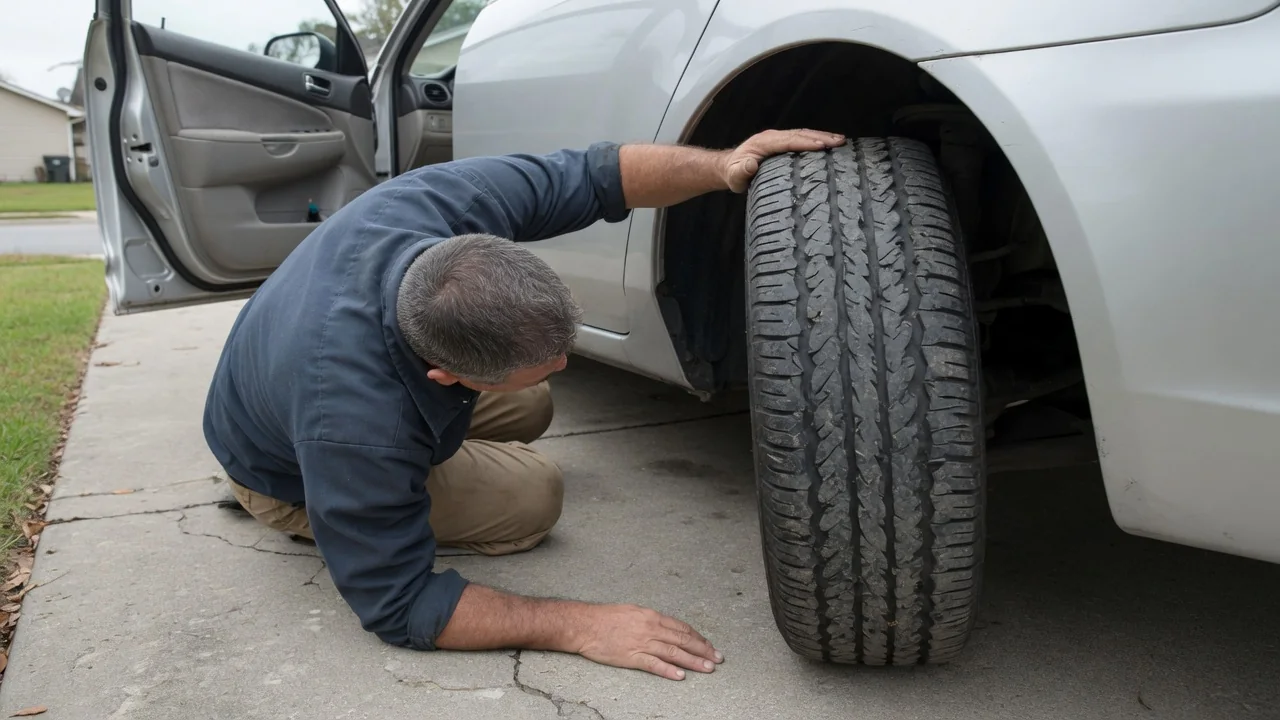
Drivers who ask what is tire cupping are usually looking at a tread that has worn into a series of dips rather than wearing down evenly. Also called scalloping, the pattern points to a tire that has been bouncing or wobbling instead of rolling smoothly, and it often traces back to worn suspension parts, imbalance, or alignment problems rather than the tire alone.
Spot pattern
Cupped tread shows a repeating series of scooped-out patches, each a few inches across, spaced around the circumference of the tire. Between the low spots, the tread stands closer to its original height, so the surface looks wavy when viewed from the side. The dips often appear along one shoulder or edge, though they can cross the center on some tires. Running a flat palm slowly around the tread usually reveals the high and low areas more clearly than looking, especially in poor light.
The pattern differs from other uneven wear. Smooth wear along a single edge suggests camber or toe settings, and wear down the center or both shoulders tends to follow inflation habits. Feathering leaves each tread block with one sharp side and one rounded side, while a single flat spot usually follows a locked wheel under hard braking. Cupping is distinguished by its repetition around the tire. Where it appears varies by vehicle, since drive layout, suspension design, and rotation history all influence which axle shows it first.
Noise
Cupped tires often announce themselves by sound before anyone inspects the tread. As the high and low patches strike the pavement in turn, they produce a rhythmic rumble, growl, or drone that rises in pitch and tempo with road speed. Many drivers describe it as a helicopter-like thumping at lower speeds that blends into a steady hum on the highway. The sound usually stays tied to vehicle speed rather than engine speed, so shifting gears or coasting in neutral does not change it much.
That same description fits a worn wheel bearing, which is why the two are frequently confused. A bearing noise often changes when the vehicle's weight shifts in a long, gentle curve, while tire noise tends to change with the road surface, sounding different on smooth asphalt than on coarse concrete. Rotating the tires and noting whether the noise moves to another corner is another clue technicians use. Cabin insulation and tire design vary widely, so the same degree of cupping may be loud in one vehicle and faint in another.
Service investigation
Because cupping is a symptom, a shop inspection focuses on why the tire stopped tracking the road smoothly. Worn shock absorbers or struts are a common suspect, since a damper that no longer controls spring movement lets the wheel hop after each bump, scrubbing rubber away wherever it lands. A technician will typically look for fluid leaking from the damper body, check mounts and bushings, and examine ball joints, tie rod ends, and control arm bushings for looseness that lets the wheel shift under load.
Wheel and tire assembly condition is checked as well. An out-of-balance assembly can bounce at certain speeds, a bent rim or out-of-round tire can do the same, and alignment angles outside the manufacturer's range add scrubbing that speeds the damage. Shops may spin the assembly on a balancer to watch for runout and measure alignment on a rack. The findings are evidence to weigh together; cupping on one tire does not by itself prove a particular part has failed, and specifications depend on the vehicle.
Everyday Use and Observations
In daily driving, cupping often shows up as vibration as well as noise. A shimmy in the steering wheel tends to point toward the front tires, while a tremor felt through the seat or floor suggests the rear, though this is a rule of thumb rather than a certainty. Drivers may also notice the vehicle continuing to bob after speed bumps or dips, feeling less settled over broken pavement, or seeming less composed in wet corners, all of which hint at tired damping.
Usage patterns shape how quickly the wear develops. Tires that stay in one position for a long time have more opportunity to form a pattern, which is why skipped rotations are often part of the story, particularly on the non-driven axle of front-wheel-drive cars, where lightly loaded rear tires can bounce more easily. Rough roads, heavy loads, and underinflation add stress. Tread design matters too, since aggressive block patterns on trucks and SUVs can wear unevenly and grow noisy sooner than a smooth highway tread under similar conditions.
Limits and Next Steps
Cupped tread does not grow back, and no adjustment restores rubber that has been scrubbed away. Once the underlying cause is corrected, mild scalloping may wear more evenly over time and become quieter, especially after the tire is moved to a different position, but that outcome is not guaranteed. Severe cupping reduces the amount of tread in contact with the road, which can affect wet grip and braking, and a professional may recommend replacement when the low spots approach the tread wear indicators.
The sensible order is to diagnose first and buy tires second, because new tires mounted on a vehicle with the same worn or misadjusted components can develop the same pattern. A visual check at home is useful for noticing the problem, yet it cannot measure alignment angles, balance, or joint play. Rotation schedules, inflation pressures, and alignment specifications differ by manufacturer, so the owner's manual and the door-jamb placard are the right references, and a qualified shop can confirm what applies to a specific vehicle.