What Is Tempered Automotive Glass?
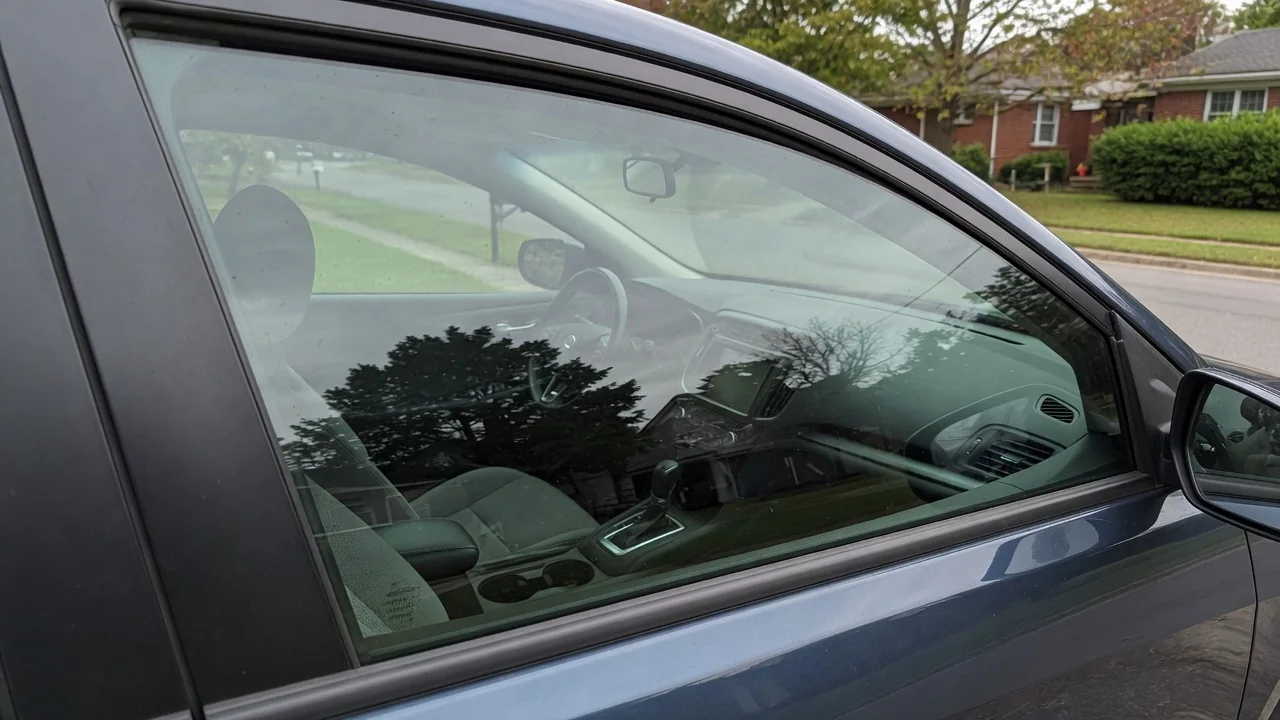
What is tempered automotive glass? It is a single sheet of glass that has been heat treated so it is stronger than ordinary glass and breaks into small, blunt pieces instead of long shards. Most vehicles use it for the side windows and the rear window, while the windshield is laminated. Understanding how it is made explains how it behaves when it fails.
Heat treatment
Tempering starts with a pane that has already been cut to its final outline, drilled for any mounting hardware, and edge-finished. The glass is heated in a furnace until it is close to softening, bent to the curve of the door or rear opening, and then cooled rapidly with jets of air. The outer surfaces harden first while the core is still hot. As the core cools and shrinks, it pulls on those rigid surfaces, locking them into compression while the center remains in tension.
That balanced stress pattern is what gives the pane its strength. A scratch or small impact has to overcome the surface compression before a crack can open, so a door glass tolerates slamming, vibration, and temperature swings far better than untreated glass of the same thickness. Drivers wearing polarized sunglasses sometimes notice a faint pattern of spots or bands on a rear window; these are quench marks left by the cooling air. Their visibility varies with the glass, tint, and viewing angle.
Fragmentation
The same stored stress determines how the glass breaks. Once a crack penetrates the compressed surface and reaches the tensioned core, the energy releases across the entire pane almost instantly. Instead of one crack creeping across the window, the whole sheet shatters into small, roughly cube-shaped granules, a pattern often called dicing. These pieces have comparatively dull edges, which reduces the risk of deep cuts compared with the long, knife-like shards produced by ordinary annealed glass.
After a break, owners typically find granules across the seats, carpet, and inside the door shell, or a rear window that has turned opaque white with a dense web of cracks before collapsing. A tempered pane cannot hold a single chip or a short crack the way a laminated windshield can. The fragments can still cause minor cuts and eye injuries, so they deserve care. Some vehicles use laminated glass in the front doors or elsewhere, which cracks but stays in one piece.
Replacement considerations
Because any damage that breaches the surface destroys the whole pane, tempered glass is replaced rather than repaired. Resin repairs used on windshield chips do not apply. Tempered glass also cannot be cut, drilled, or ground after treatment, so each replacement is manufactured to the exact shape of a specific opening. Body style, model year, tint level, and door position all affect which part fits, which is why a glass shop usually asks for vehicle identification details before ordering.
Rear windows carry more than glass. Defroster grid lines are commonly printed on the inner surface, and some designs include antenna elements, a wiper mount, or a brake light housing, all of which the new part has to match. Door glass attaches to a regulator inside the door, and a thorough job includes vacuuming fragments from the door cavity, channels, and drains so they do not rattle or scratch the new pane. Equipment varies, so confirm the features for the particular vehicle.
Everyday Use and Observations
A small marking etched or printed in a corner of each window, sometimes called the bug, usually identifies the manufacturer and the glass type, and it often states whether the pane is tempered or laminated. Looking at the top edge of a lowered door glass offers another clue: tempered glass appears as one solid layer, while laminated glass shows a thin line where the plastic interlayer sits between two sheets. Markings differ between manufacturers and markets.
In daily use, tempered glass handles ordinary knocks well, but its edges are the vulnerable area. A sharp impact on an exposed edge, or grit trapped in a window channel, can damage the surface enough to trigger a break later. Occasionally a window shatters with no obvious cause, which may trace back to earlier edge damage, installation stress, or a rare flaw within the glass. Surface scratches from worn window seals are usually cosmetic, though deep ones deserve a professional opinion.
Limits and Next Steps
Tempered glass has clear limits. It offers little resistance to a concentrated blow from a hard, pointed object, and once it breaks the opening is fully exposed to weather and theft. It also does little to keep an occupant inside the vehicle during a collision, which is one reason some manufacturers fit laminated side glass. That choice affects emergency escape as well, since tools designed to shatter tempered windows may not work on laminated ones.
If a window breaks, avoid operating the power window switch, since fragments in the door can jam or damage the mechanism. Wear gloves when clearing loose pieces from seats, and keep children and pets away until the cabin has been vacuumed. A temporary cover can keep rain out, but it should not block the driver's view. For the correct part and features, check the glass markings and owner documentation, then have a qualified glass technician confirm what the vehicle requires.