What Is Suspension Travel?
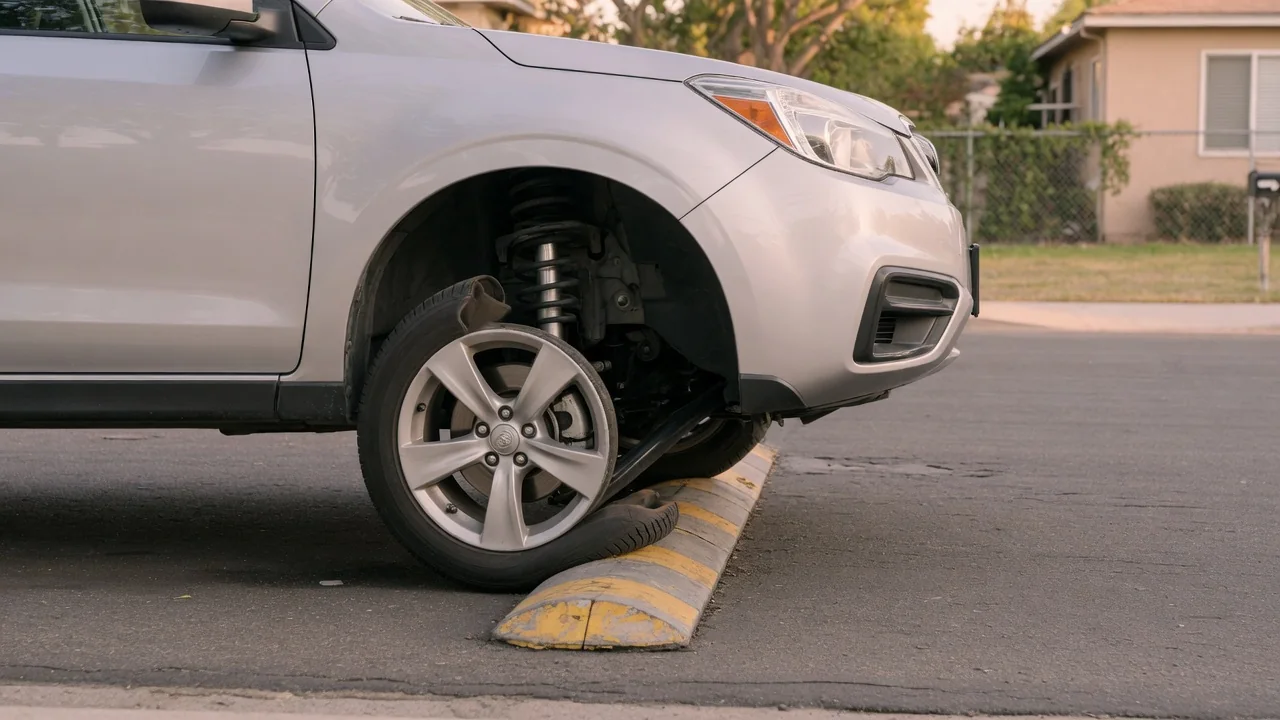
Anyone asking what is suspension travel is really asking how far a wheel can move up and down relative to the vehicle body before something stops it. That available distance determines how well a car or truck absorbs bumps, keeps its tires on the road, and stays composed when the surface turns rough. Understanding it helps explain ride comfort, handling, and durability.
Compression and rebound
Suspension travel is split into two directions. Compression, sometimes called bump travel, is the upward movement of the wheel toward the body as the spring shortens, such as when a tire rolls over a speed bump or the raised edge of a driveway. The spring stores the energy of that impact while the shock absorber slows the motion. Compression ends when the suspension contacts a bump stop, a rubber or foam cushion designed to prevent metal parts from striking each other.
Rebound, also called droop, is the opposite motion: the wheel extends downward away from the body as the spring lengthens. It matters when a tire drops into a pothole or the body rises after cresting a hump, because a wheel that can follow the surface keeps its grip. Extension is usually limited by the shock absorber's length or a strap or internal stop. The split between compression and rebound at normal ride height differs by vehicle design, so no single ratio applies to every model.
Clearance
Travel only works if there is physical room for it. As a wheel moves upward, the tire needs space inside the wheel well, away from the fender lip, inner liner, and frame or body structure. Ground clearance is related but separate: it describes the gap between the lowest part of the vehicle and the road. A vehicle can sit high off the ground and still have modest wheel movement, or sit low and use a carefully packaged amount of travel.
Changes to a vehicle often alter these relationships. Fitting larger tires or wheels with a different offset can bring the tread closer to bodywork, so the tire may rub at full compression or when the steering is turned while the suspension is compressed. Lowering a car reduces the distance to the bump stops, leaving less upward movement before contact. Signs worth noticing include polished or scuffed patches on the fender liner and a scraping sound over dips, though the exact contact points depend on the model.
Load effects
Weight changes where the suspension sits within its range. Passengers, cargo, or a trailer's tongue weight compress the springs, so the vehicle rides lower and part of the compression travel is used before any bump arrives. A loaded pickup or a sedan with a full trunk therefore has less upward wheel movement in reserve, and a dip that felt gentle when empty may push the rear suspension onto its bump stops. At the same time, the available droop increases slightly.
Drivers can often see this effect as a sagging rear end, a nose-high stance, or headlights aimed higher than usual. Some vehicles counter it with stiffer or progressive-rate springs, helper springs, or self-leveling air or hydraulic systems that restore ride height under load, but equipment varies widely between models and trim levels. The load ratings printed on the door jamb placard and explained in the owner's manual define what the suspension was engineered to carry, and staying within them preserves usable travel.
Everyday Use and Observations
On ordinary roads, most driving uses only a small portion of the total travel. The wheels move a short distance over expansion joints, patched asphalt, and manhole covers, and the body stays fairly level. Larger events, such as a deep pothole, a steep driveway entrance taken at an angle, or a railroad crossing, call on much more of the range. Off-road vehicles are generally designed with longer travel so each wheel can stay on uneven ground, while sports cars often trade distance for tighter body control.
A few simple observations reveal how a suspension is using its travel. A sharp thud or jolt over a large bump suggests the suspension reached its bump stop, known as bottoming out. A clunk as a wheel drops off a curb edge or into a hole can indicate it reached full extension, sometimes called topping out. Watching the gap between tire and fender as someone presses down on a corner of a parked car shows the motion directly, though how much movement is normal differs by vehicle.
Limits and Next Steps
More travel is not automatically better. Long wheel movement requires softer or longer springs, taller packaging, and geometry that can change camber and toe as the wheel moves through its arc, which may affect steering precision and body roll. Components such as axle shafts, brake hoses, ball joints, and shock absorbers also have their own working ranges that set practical limits. Manufacturers balance these factors against comfort, handling, and cargo needs, which is why a sedan, a crossover, and a truck end up so different.
If a vehicle bottoms out frequently under normal loads, sits noticeably lower than it used to, or bounces several times after a bump, the springs, shock absorbers, or bump stops deserve attention. These symptoms are clues rather than proof of a specific failed part, so an inspection by a qualified technician is the sensible next step. Anyone considering a lift, lowering kit, or different tire size should confirm fitment and clearance for their specific vehicle, since modifications change how much travel remains usable.