What Is Suspension Compression? Bump Travel, Stops, and Load Explained
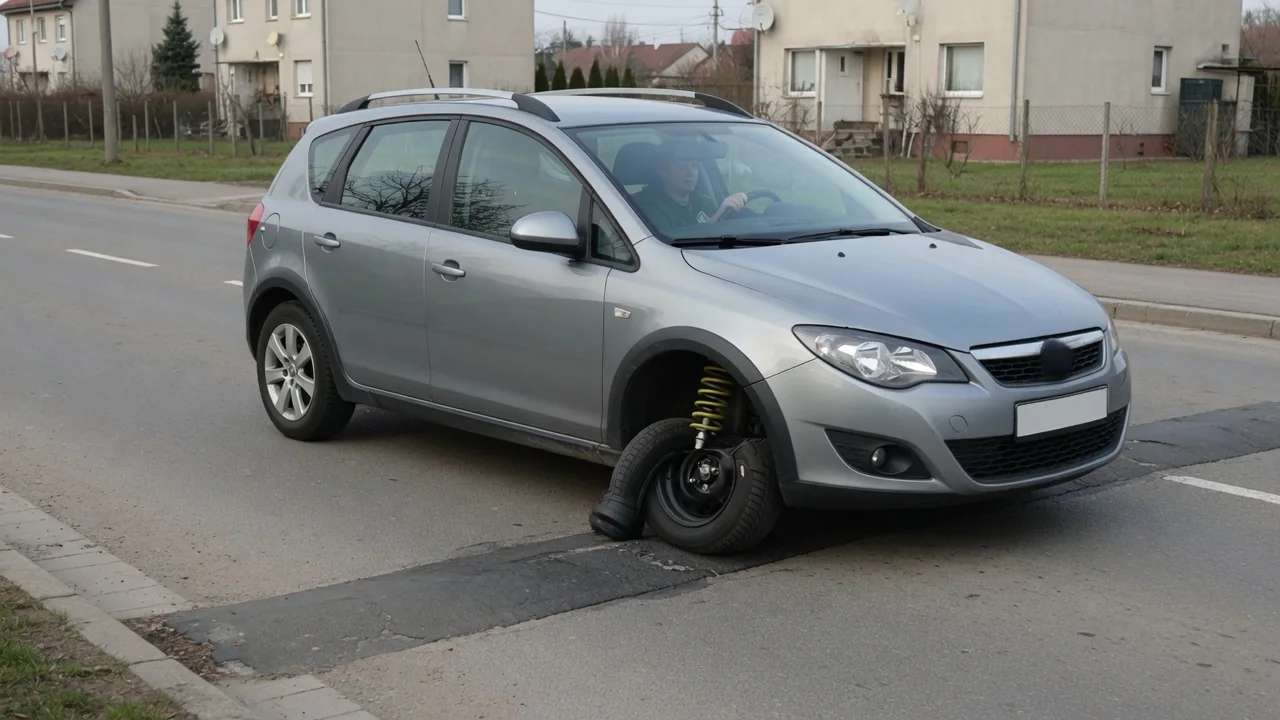
Suspension compression is the upward movement of a wheel and its suspension toward the vehicle body, which shortens the distance between the axle and the chassis. Engineers often call it jounce or bump travel. The opposite motion, when the wheel moves back down, is called rebound. A car compresses its suspension constantly as it meets bumps, carries weight, brakes and corners. Knowing how compression works, what limits it and how load affects it helps explain both ride comfort and handling.
Bump absorption: how compression soaks up the road
When a tire meets a raised surface such as an expansion joint, a speed hump or the far edge of a pothole, the wheel is pushed upward. The suspension does not pass that motion straight to the body. Instead, the control arms or axle pivot and the spring compresses, storing the energy of the impact. Cars use several spring types, including coil springs, leaf springs, torsion bars and air springs, but they share one principle: the further the spring compresses, the harder it pushes back. This lets the wheel follow the road surface while the body moves through a smaller and slower motion.
The spring alone would keep bouncing after a bump, so a damper, either a shock absorber or a strut, controls the speed of the motion. Compression damping resists how quickly the wheel moves upward, and rebound damping controls how quickly it returns. Most dampers force hydraulic fluid through valves and turn that motion into heat. Damping tuning is always a compromise. Too little compression damping can make the body feel loose and let the wheel use up its travel quickly on large bumps. Too much can pass sharp impacts into the cabin and make the ride feel harsh.
Compression is also a geometry event, which is why it belongs to suspension kinematics. As the wheel rises through its compression travel, the links move along arcs rather than straight lines, so wheel alignment angles can change. Depending on the design, camber may become more negative, toe may shift slightly (an effect known as bump steer), and the track width or roll center height may move. Engineers shape these changes on purpose to keep the tire working well as the suspension compresses, and the exact behavior differs from one suspension layout to another.
Stops: what limits suspension compression travel
Compression travel is finite. The end of upward wheel movement is usually defined by a bump stop, also called a jounce bumper or bump rubber. It is commonly a block of rubber or microcellular polyurethane foam fitted on the damper shaft, on the body or frame, or on the axle. Its main job is to prevent metal-to-metal contact between suspension parts and the chassis. It also helps keep the tire from striking the wheel arch or inner fender when the suspension reaches full compression.
Many modern bump stops are progressive. They make contact some distance before the absolute end of travel and stiffen as they are squeezed, which adds spring rate during the final part of the stroke. In some designs the bump stop is a deliberate part of the suspension tuning and engages during fairly ordinary driving, so contact alone does not mean something is wrong. Hitting the stop hard is called bottoming out, and it is usually felt as a sharp jolt or heard as a thud. A separate rebound stop limits travel at the other end of the stroke.
The compression travel actually available in daily driving is the distance between normal ride height and the point where the stop takes over. The dampers must also have enough internal stroke not to bottom out before the stop does, so manufacturers match springs, dampers and stops as a set. When one element is changed on its own, for example by fitting shorter springs, the remaining travel shrinks unless the other parts are adjusted to suit.
Load: how weight changes compression
Even a parked car has compressed suspension. The weight of the body, engine and other components presses the springs down to the normal ride height, and this initial compression is often called sag. Adding passengers, luggage or the tongue weight of a trailer compresses the springs further, which lowers the body and reduces the compression travel left for absorbing bumps. That is why a heavily loaded vehicle may bottom out on a dip that it crosses easily when empty. The spring rate determines how far the suspension compresses for a given added weight.
Load also moves around while the car is driving. Under braking, weight transfers forward and compresses the front suspension, which produces nose dive. Under acceleration, many vehicles compress at the rear and squat. In a corner, the outside wheels compress while the inside wheels extend, and this produces body roll. Some suspension geometries include anti-dive or anti-squat characteristics that reduce these motions. Anti-roll bars resist the difference in compression between the left and right wheels on the same axle.
Some vehicles counter load-related compression directly. Self-leveling systems, often based on air springs, can restore ride height after cargo is added. Helper springs or progressive-rate springs, which are common on vehicles designed to carry or tow, stiffen as load increases. Whether a particular vehicle has any of these features depends entirely on its design and equipment level.
Practical implications and limits
For owners, compression problems often show up as symptoms rather than obvious failures. Frequent bottoming, clunks over bumps, scraping on driveways, a body that sits lower than usual, or continued bouncing after a dip can point to worn dampers, tired springs, damaged bump stops or simple overloading. Bump stops and dust boots are routine inspection items, and cracked, crumbling or missing pieces are worth noting. Noises can come from many parts, though, including bushings, ball joints and sway bar links, so a symptom alone does not identify the cause. A proper inspection is the reliable way to find the source.
The general mechanisms described here apply broadly, but the details do not. The amount of travel, the design and engagement point of the bump stops, the spring rates and the permitted load all differ from one vehicle to another. The owner's manual and the door-jamb label give the payload, towing limits and tire load information for a specific vehicle. Staying within those limits preserves the reserve of travel that the suspension was designed to keep. Modifications such as lowering springs, lift kits or much larger wheels and tires change how compression travel relates to the stops and the bodywork. Wheel alignment specifications also assume a correct ride height, so sagging springs can affect both alignment readings and tire wear.