What Is Solar-Control Automotive Glass? Coatings, Heat and Replacement Fit
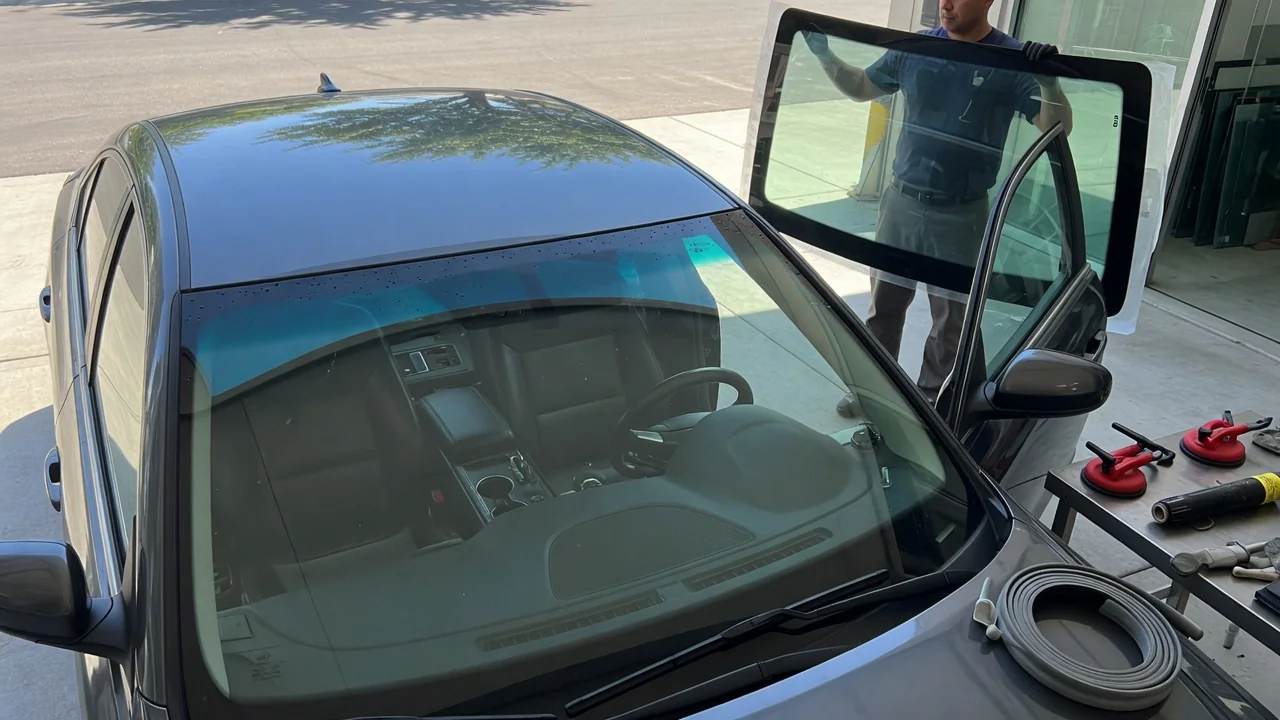
Solar-control automotive glass is vehicle glazing designed to limit how much of the sun's energy passes into the cabin while still letting the driver see clearly. It does more than darken the glass. It targets the invisible infrared part of sunlight, which carries a large share of solar heat. Knowing what solar control car glass is, how it works and how it affects replacement helps explain why two windshields that look almost identical can behave very differently.
Coatings and Tints That Manage Solar Energy
Solar-control glass works in two broad ways: it absorbs solar energy or reflects it. The simplest absorbing approach is body-tinted glass. During float glass production, the batch is adjusted so the glass itself takes on a tint, commonly a light green produced by iron oxide. That tint absorbs a meaningful portion of near-infrared radiation while passing most visible light. Because the tint runs through the full thickness of the glass, it cannot wear off or be scratched away. It is also the reason many automotive windows have a faint green edge when viewed from the side.
The reflective approach uses extremely thin multilayer coatings, typically built from metal oxides and one or more layers of a metal such as silver. These layers are commonly deposited by sputtering in a vacuum chamber, and each layer is far thinner than a human hair. Such coatings are delicate, so in windshields they are usually placed on an inner surface of the laminate, sealed against the plastic interlayer and protected from weather and wipers. Another option is an infrared-reflective polymer film or interlayer embedded within the laminate. Reflective coated glass can show a subtle bluish, purplish or greenish sheen when viewed at an angle, which is often the easiest visual clue that a coating is present.
Metallic coatings are electrically conductive. Some manufacturers use that property to create heated windshields that clear frost and fog without visible wires. The same conductivity can also block or weaken radio signals, which becomes important when the glass is replaced.
How Solar-Control Glass Handles Light and Heat
Sunlight reaching a car includes ultraviolet radiation, visible light and near-infrared radiation. Visible light is what the driver needs to see. Near-infrared radiation cannot be seen, yet it accounts for roughly half of the solar energy arriving at ground level and contributes heavily to the warm feeling on skin and dashboard surfaces. The engineering goal of solar-control glass is spectral selectivity: keep visible transmission high while cutting infrared transmission as much as possible.
Selectivity matters because the windshield cannot simply be made darker. In the United States, safety standards require the windshield and other windows needed for driving visibility to transmit at least 70 percent of visible light. Glass makers therefore describe performance with separate values, such as visible light transmittance and total solar energy transmitted. A well-designed solar-control windshield can stay above the visibility threshold while rejecting considerably more heat than plain clear glass.
Absorbing and reflecting glass behave differently once the sun hits them. Absorbing glass warms up, and part of that heat is later re-radiated or conducted into the cabin, although airflow over a moving car carries some of it away. Reflective coatings send much of the infrared energy back out before it is absorbed, which is why they generally reject more heat for the same level of visibility. Ultraviolet control is a separate matter. The plastic interlayer in laminated glass blocks most ultraviolet radiation regardless of whether a solar coating is present, while the UV performance of tempered side and rear glass depends on its specific composition.
Replacement Fit: Matching the Right Glass
A single window opening on one vehicle can accept several different glass versions depending on trim level, market, model year and installed options. Two windshields may share the same outline and curvature yet differ in tint, coating, interlayer type and attached hardware. A correct shape alone does not mean a correct fit. Useful identification sources include the printed marking in a corner of the glass, which shows the manufacturer and the applicable safety standard designation and sometimes indicates special features, as well as the original part number and the vehicle identification data that glass suppliers use to look up factory-installed equipment.
Coated windshields often include deliberately uncoated areas, sometimes called communication or transponder windows, where electronic toll tags, GPS receivers or other devices can send and receive signals. Many windshields also carry brackets for cameras and sensors, heating elements, acoustic interlayers or a special wedge-shaped interlayer for head-up displays. Installing uncoated glass where a coated part belongs gives up heat rejection. Installing coated glass without the correct uncoated zone can interfere with devices mounted on it. On vehicles with driver-assistance cameras behind the windshield, calibration after replacement is commonly required, following the vehicle manufacturer's procedure.
Practical Implications and Limits
In daily driving, solar-control glass is a reduction tool, not a cooling system. It can make sun-facing surfaces feel less hot and ease the workload on the air conditioning, but a car parked in direct summer sun will still become uncomfortably warm. Overall cabin heat also depends on the side windows, rear glass and any glass roof, which may or may not share the windshield's level of solar control. Interior color, exterior paint, ventilation and parking orientation add further variables. Expectations should be framed around the whole vehicle, not the windshield alone.
Owners who plan to add aftermarket window film should treat factory solar-control glass as part of the equation. Tint laws regulate the combined light transmission of glass and film, so a film that is legal on clear glass may push already tinted glass below a state's limit. Stacking a strongly absorbing film onto absorbing glass increases the heat the glass itself holds, and film manufacturers publish compatibility guidance for that reason. Metallized films can also introduce the same signal-blocking issues as metallic coatings, potentially affecting toll tags or phone reception.
Whether a particular car has solar-control glass, and on which windows, is vehicle-specific information rather than something to assume from general descriptions. The owner's manual, the glass markings and the vehicle's build records are the reliable references. Because coatings are made during manufacturing and usually sealed inside the laminate, they cannot be added to existing glass later, but they also do not require special cleaning products. When replacement is needed, insisting on glass that matches the original specification is the most dependable way to keep the same heat performance, device compatibility and sensor behavior.