What Is Seating Capacity on a Vehicle Specification?
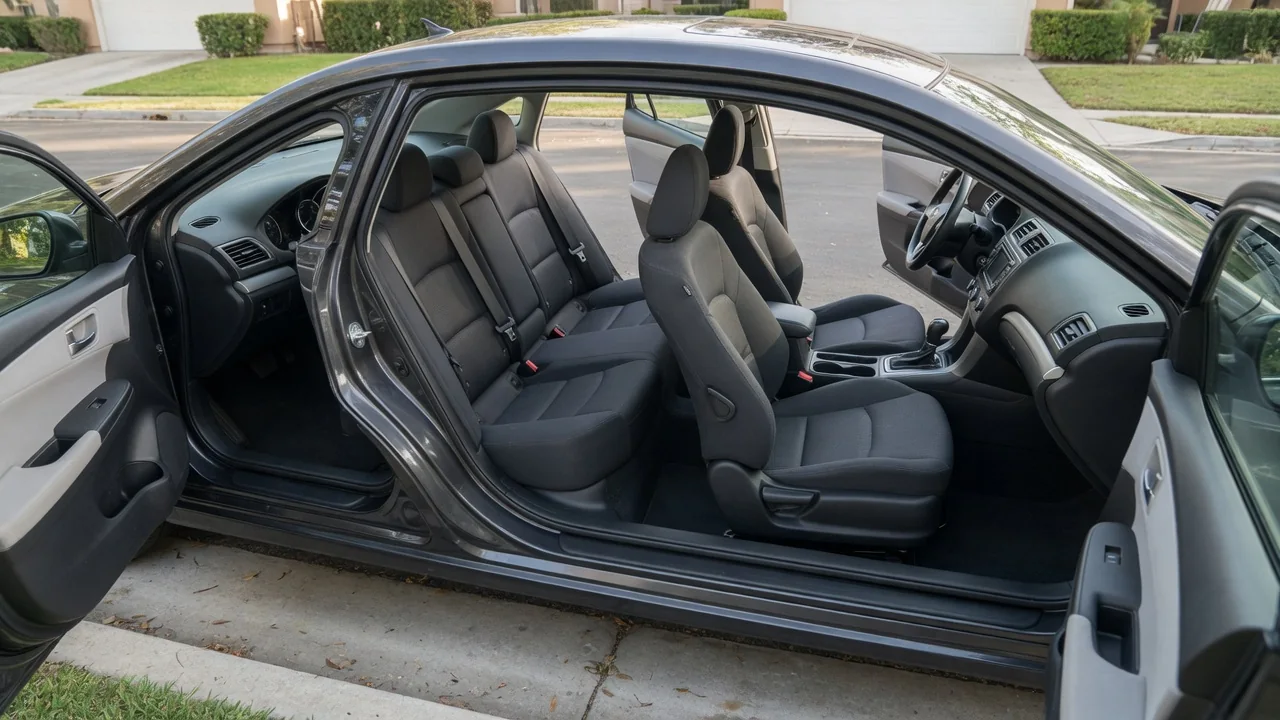
Shoppers who ask what is seating capacity on a vehicle specification usually expect a simple answer, and the number itself is simple: it counts the designated seating positions the manufacturer built into the cabin. What that figure does not tell you is how comfortably those positions work for real adults, child seats, and luggage on an ordinary trip.
Seat belts
The capacity figure on a specification sheet is tied to seat belts. Each designated seating position is a spot the manufacturer intends a person to occupy while the vehicle is moving, and each one comes with its own belt. A sedan listed for five therefore has two front belts and three rear belts, even if the rear center spot is narrow. Counting buckles in the cabin is the quickest way to confirm that the listed number matches the vehicle in front of you.
Belt design varies between positions, and that affects usefulness. Outboard seats typically have a shoulder belt anchored to the pillar, while a center belt may drop from the roof or emerge from the seatback, depending on the model. Look at where the buckles sit, too: when two buckles crowd together next to a child seat, a passenger may struggle to latch in. Child seat anchor locations also differ by vehicle, so the owner's manual is the reliable reference for which positions accept which restraints.
Cabin width
Cabin width determines whether the stated capacity feels honest. Specification sheets often list shoulder room and hip room for each row, and those measurements describe how much side-to-side space passengers share. Three rear positions in a compact car divide a much smaller span than three positions in a full-size pickup or large SUV, yet both are described in the same terms. The capacity number treats those positions as equal; the width figures reveal that they are not.
Shape matters as much as raw measurement. A rear bench sculpted with two deep outboard bolsters leaves the middle rider perched on a raised, firmer cushion, and a tall driveline tunnel on the floor can take away foot space in that same spot. Door armrests, sloping side glass, and intruding wheel arches in a third row narrow the usable area further. Sitting in every position, with other people beside you where possible, shows what the dimensions alone cannot, and results vary by trim and seat configuration.
Cargo tradeoff
Seating capacity and cargo space draw from the same interior volume, so using one often reduces the other. This is most obvious in three-row SUVs, where raising the third row can leave only a shallow strip of load floor behind it. A vehicle advertised for seven or eight may carry that many people or a generous amount of luggage, but rarely both at once. Published cargo figures are commonly given separately for seats up and seats folded, and it helps to compare the two.
Configuration choices shift the balance as well. Second-row captain's chairs usually lower the count by one compared with a bench while opening a walk-through aisle to the back. Split-folding seatbacks let you trade a single position for long items such as skis or lumber. Weight is the other half of the tradeoff: the payload rating on the door-jamb placard covers passengers and cargo together, so a full cabin leaves less allowance for gear. That limit is specific to each vehicle and worth checking before loading up.
Everyday Use and Observations
In daily driving, the practical capacity depends on who is riding. A five-seat crossover may handle four adults comfortably and a fifth only on short hops, while the same cabin fits three children easily until bulky child seats enter the picture. Two wide child restraints can leave the center position unusable for anyone. Families often discover that a listed capacity of five works as four, and that a third row described as seating three is realistically a space for two smaller passengers.
A few observations during a test drive reveal a great deal. Notice how easily you can climb into the rearmost row, whether your knees rise above hip level once seated, and how much head clearance remains beneath a sloping roofline or panoramic sunroof. Check whether front seats must slide forward to give rear riders legroom, and whether rear occupants get air vents and usable footwells. Legroom and headroom numbers on the specification sheet support these impressions, but measuring methods and seat adjustments differ, so the sit test carries real weight.
Limits and Next Steps
The stated capacity is a firm ceiling, not a suggestion. Carrying more people than there are belted positions leaves someone unrestrained, and sharing a belt is never a safe workaround. Capacity also does not promise that every seat suits every occupant; small third-row seats, for example, may be intended by the manufacturer for shorter passengers. Different trims of the same model can carry different counts, so a figure from a brochure or listing should be matched against the actual vehicle.
For next steps, start with the documents specific to the vehicle you are considering. The owner's manual explains each seating position, its restraint, and any child seat guidance, while the tire and loading placard shows the occupant count and the combined weight limit. Then bring the people and equipment you actually carry, including child seats, strollers, or sports bags, and load the cabin the way you would on a typical day. If the fit is tight at the dealership, it will be tighter on a long drive.