What Is Plug-and-Charge for an EV? How Automatic Authentication Works
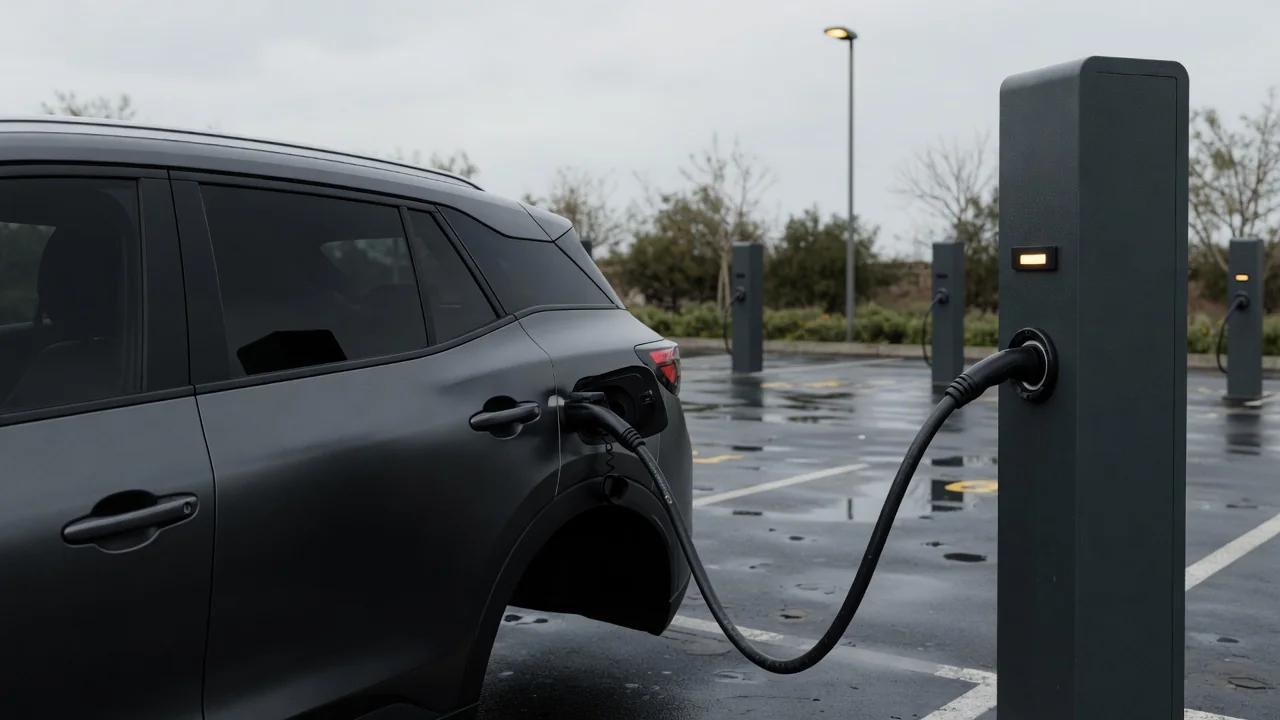
Plug-and-Charge lets you start and pay for an EV charging session just by connecting the cable. You don't tap a card, scan a code, or open an app. The vehicle and the charger exchange digital credentials, and the session is authorized automatically. What Plug-and-Charge means for an EV comes down to three questions: how the car proves who it is, how payment is linked to it, and where the system stops working.
Vehicle identity
Plug and charge authentication is built on the ISO 15118 family of standards, which defines high-level digital communication between a vehicle and a charging station. With combined charging system style connectors, this communication travels as a data signal over the control pilot circuit using power line communication. It runs alongside the basic analog signaling that chargers use for safety and current limits. Over this data link, the car and the station set up an encrypted session using Transport Layer Security before any account information is exchanged.
The identity takes the form of digital certificates rather than a simple serial number. A vehicle that supports the feature typically carries a provisioning certificate placed by the manufacturer. That certificate identifies the vehicle as a genuine product that is allowed to request charging credentials. The vehicle can also store one or more contract certificates, which tie it to a specific charging account. Every certificate is signed within a public key infrastructure, a chain of trusted certificate authorities. That chain lets a charger verify that a credential is authentic and has not been altered or copied.
Simpler schemes, sometimes called autocharge, work differently. The station recognizes a car by an identifier such as the MAC address of its communication module. That identifier is not cryptographically protected, so it is easier to imitate. Plug-and-Charge as defined in ISO 15118 relies on signed certificates and private keys held by the vehicle, which is why it is considered the stronger form of automatic authorization.
Payment setup
A certificate alone does not pay for anything. It must be linked to a contract with an e-mobility service provider, the company that bills the driver. Setup usually happens once, through the provider's or the vehicle manufacturer's app or account portal. There, the owner accepts terms, adds a payment method, and confirms which vehicle should receive the contract. The provider then has a contract certificate issued with a unique contract identifier, often called an EMAID.
The contract certificate then has to reach the car, and the route depends on how the manufacturer and provider implement the system. It may be delivered through the manufacturer's backend over the vehicle's own connectivity. It may also be installed during a charging session, through the charger's connection to its backend. Either way, the vehicle's provisioning certificate proves that the contract is going to the right car, and the new credential is stored in the vehicle's protected memory.
At a public station, the vehicle presents its contract certificate and the charger checks the signature chain against the trusted root certificates it holds. The charge point operator then forwards the contract identifier to the service provider. When the operator and provider are different companies, this often happens through a roaming platform. Once the provider confirms the account is valid, the charger starts delivering energy, and the session record later flows back to the provider for billing.
Limits
Both sides must support the feature. The vehicle needs hardware and software that implement ISO 15118 Plug-and-Charge. The station needs compatible firmware, a backend that can handle certificate-based authorization, and trust in the same certificate authorities. A charger that uses high-level communication to control charging does not automatically support certificate-based payment, and older equipment may need upgrades. Different versions of the standard, such as ISO 15118-2 and ISO 15118-20, also need matching implementations on both ends.
Commercial agreements set another boundary. Even when the technology matches, a session can only be authorized if the station operator accepts contracts from the driver's service provider, either directly or through roaming. Without such an agreement, the charger may reject the certificate. The driver then has to use another method, such as an app, an RFID card, or a payment terminal.
Certificates also have limited lifetimes. Contract and provisioning certificates expire, and they can be revoked, for example when an account is closed or a credential may have been compromised. If a renewed certificate does not reach the vehicle, authorization can fail until the vehicle is updated. Whether one vehicle can hold several contracts, and how it chooses between them, also varies by implementation.
Practical implications and limits
Owners should confirm support in the vehicle's owner's manual or the manufacturer's app. The type of charging port alone does not tell you whether a car supports Plug-and-Charge. Because the feature depends on software, a manufacturer may add it, change it, or limit it to certain markets through updates, and the details differ between manufacturers. It also helps to note which provider holds the contract, since that company handles questions about charges and disputes.
When a session does not start automatically, the cause is often outside the car. Common causes include a station without the feature enabled, a missing roaming link, or a temporary backend problem. Keeping a backup method such as a provider app or RFID card prevents being stranded. Unplugging and retrying may help if communication drops. Repeated failures at one operator usually point to an agreement or configuration issue rather than a fault in the vehicle.
Ownership changes need attention too. Because the contract certificate links the car to a billing account, a seller should remove or deactivate it before handing over the vehicle, and a buyer should confirm that no previous contract remains active. Drivers should also check pricing in the provider's terms. Automatic authorization means less on-screen confirmation at the charger, and tariffs may differ between payment methods.