What Is Payload Capacity?
Anyone asking what is payload capacity is really asking how much weight a vehicle can carry on top of its own. The figure covers everything added after the vehicle leaves the factory ready to drive, including passengers, luggage, tools and accessories. Understanding it properly means looking at how the rating is defined, what counts against it and where the number for a specific vehicle is published.
Weight difference
Payload capacity is the gap between two weights. The first is curb weight, meaning the vehicle as it sits empty with a full fuel tank and the fluids it needs to operate. The second is the gross vehicle weight rating, the maximum total the manufacturer allows the loaded vehicle to weigh. Whatever lies between those two figures is the allowance for people and cargo. It is a rating set by engineering limits, not a measure of how much physically fits inside.
That difference reflects what the frame, suspension, axles, tires and brakes were designed to handle together. Two trucks that look nearly identical can have noticeably different allowances because a heavier engine, four-wheel drive hardware, a larger cab or luxury equipment all raise curb weight without raising the gross rating by the same amount. A well-equipped trim may therefore carry less than a basic work version of the same model, which is why a brochure figure cannot stand in for the individual vehicle.
Included loads
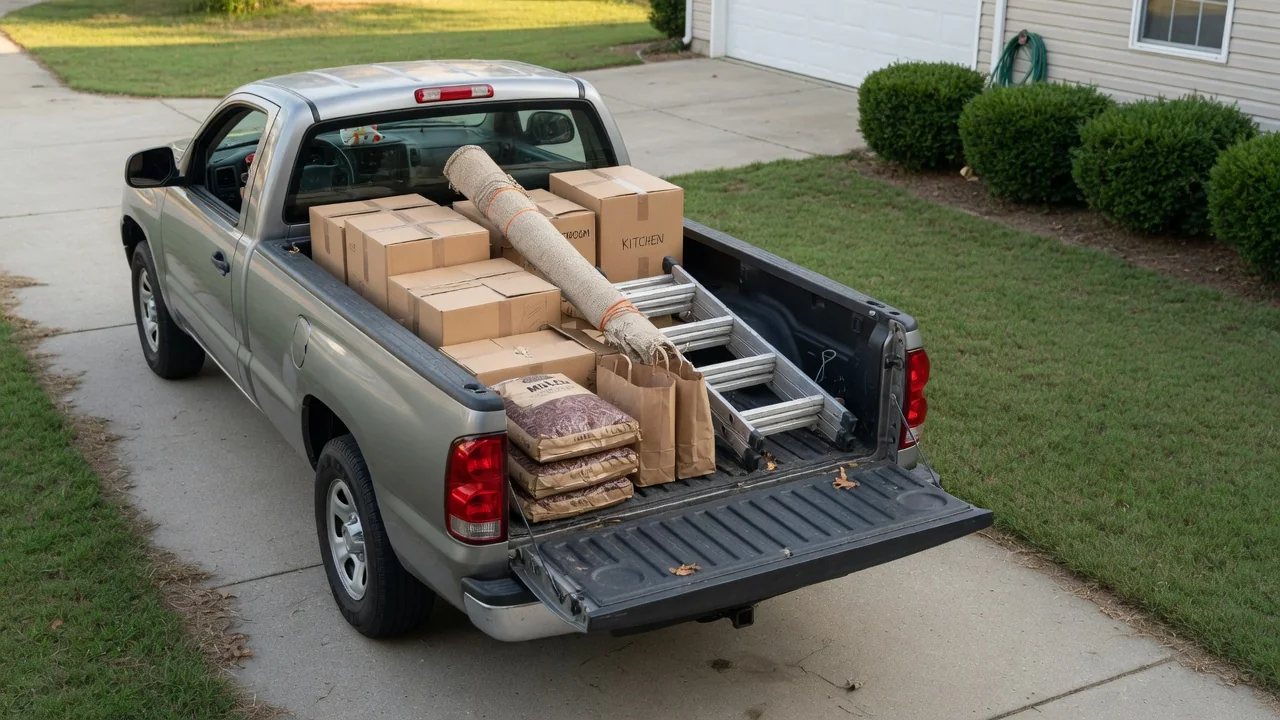
Everything placed in or on the vehicle counts toward the allowance. The driver and every passenger are part of it, along with child seats, pets, groceries, luggage, coolers and whatever rides in a pickup bed or cargo area. Items mounted outside count as well, so a roof box, bike carrier or ladder rack and the things carried on them draw from the same total. No separate budget exists for people and another for cargo; they share one figure.
Less obvious loads matter too. Accessories added after purchase, such as a bed liner, toolbox, camper shell, running boards or a winch bumper, stay on the vehicle permanently and reduce what remains for daily use. When towing, the downward force a trailer puts on the hitch, known as tongue weight, also counts as payload even though the trailer rolls on its own wheels. Drivers who tow with a full cabin often find this is where the allowance runs short first.
Placard
The most reliable number for a particular vehicle appears on the tire and loading information placard, usually found on the driver's door edge or door jamb. It states that the combined weight of occupants and cargo should never exceed a stated amount, shown in both kilograms and pounds. Because that figure is tied to the vehicle as built, it accounts for factory options that a general specification sheet or advertisement cannot reflect.
A second label nearby, the certification label, typically lists the gross vehicle weight rating and the gross axle weight ratings for front and rear. These explain why total weight is not the only concern: a load can sit under the overall limit and still overload one axle if it is concentrated far behind the rear wheels. The placard also lists original tire size and recommended pressures, which matter because the rating assumes properly inflated tires of the specified type. Label layout and location vary by manufacturer and model year.
Everyday Use and Observations
In daily driving, the allowance gets used up faster than many owners expect. A family SUV carrying several adults, a week of vacation luggage and a loaded roof carrier may be closer to its limit than a pickup hauling a few bags of mulch. Dense materials are the usual culprit in trucks, because gravel, pavers, wet soil or firewood can reach the rating long before the bed looks full. Volume and weight are separate questions, and only a scale answers the second with certainty.
A heavily loaded vehicle tends to give signals. The rear may sit visibly lower, headlights may aim higher than normal, steering can feel lighter, and braking distances grow. The suspension may bottom out over bumps, and the body may sway more in corners or crosswinds. These signs suggest the load deserves attention, but their absence does not prove the vehicle is within its rating, since some suspensions stay level under weight they were never rated to carry.
Limits and Next Steps
Exceeding the rating places extra stress on tires, brakes, springs, wheel bearings and driveline parts, and it can lengthen stopping distances and reduce stability in an emergency maneuver. Overloaded tires build heat, which raises the risk of failure at highway speed. Aftermarket helper springs, air bags or stiffer shocks may level the ride, yet they do not change the manufacturer's rating, because the limit depends on the weakest component in the whole system rather than on ride height alone.
The practical next step is to read the placard on the actual vehicle and compare it with what is realistically carried, counting people, gear, accessories and any hitch load together. When the answer is uncertain, a public scale at a truck stop or landfill can weigh the loaded vehicle, and some provide separate axle readings. The owner's manual gives loading guidance specific to the model, and a dealer can clarify ratings when labels are missing or the vehicle has been modified.