What Is Paint Orange Peel on a Car?
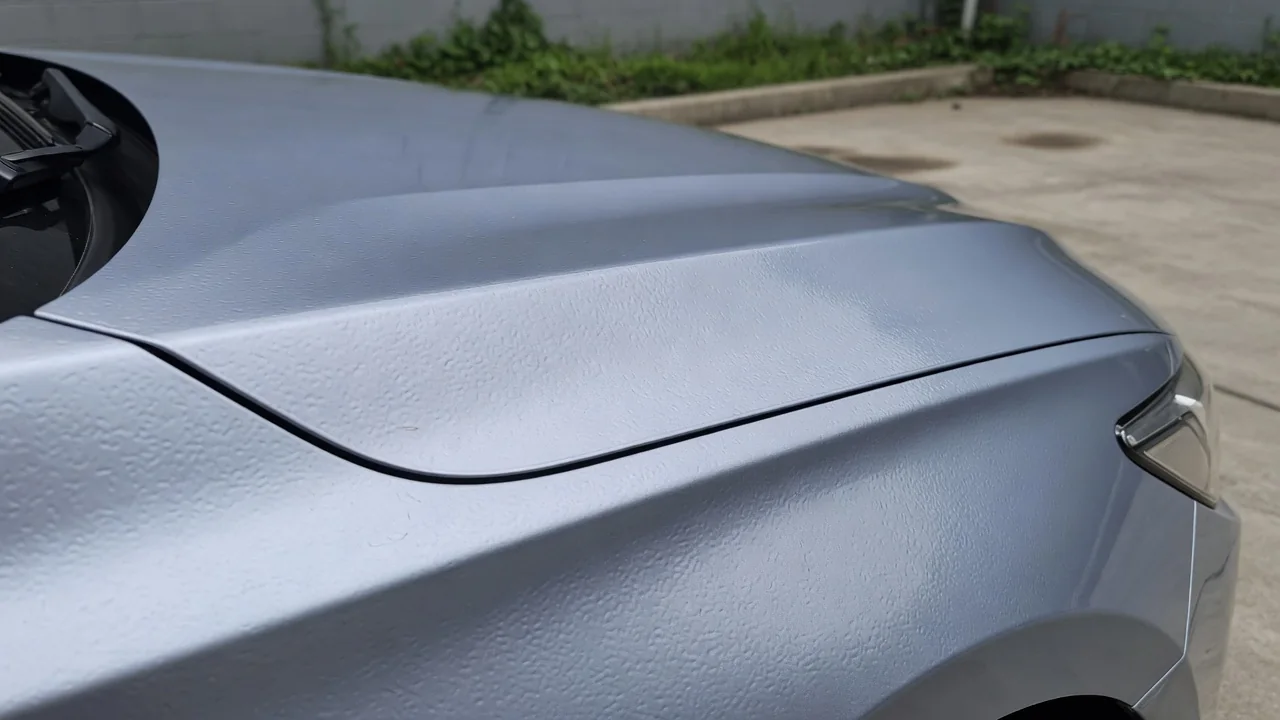
Orange peel is a texture in automotive paint that makes a glossy surface look faintly dimpled, much like the skin of an orange. It is one of the most common finish characteristics on both factory and refinished vehicles. In mild form it is often considered normal rather than a defect. It helps to understand what orange peel car paint texture is, why it forms, when it becomes noticeable, and how far it can safely be corrected. That lets owners judge their finish realistically.
Surface texture
Automotive paint lands on a panel as countless tiny droplets. Ideally, those droplets merge and level into a smooth, continuous film before the solvents evaporate and the coating begins to cure. Orange peel forms when that flow-out is incomplete. The surface sets with a pattern of gentle peaks and valleys. The result is a soft, wavy texture rather than distinct pits or scratches. On most modern cars the visible texture sits mainly in the clear coat, the transparent top layer over the color coat. Single-stage paints, which combine color and gloss in one layer, can show it as well.
Several general factors influence how much texture remains. These include paint viscosity, spray equipment setup, air pressure, gun distance and speed, film thickness, temperature, humidity, and how quickly the solvents flash off. If the material dries too quickly or the droplets are too coarse, they do not have time to flatten out. Factory paint lines and body shops balance these variables differently. As a result, the amount of texture can vary between vehicles, between panels on the same vehicle, and between original and repaired areas.
It is important to separate orange peel from other paint issues. Runs and sags are areas where too much material flowed downward. Dust nibs are particles trapped in the film. Solvent pop shows up as tiny blisters or pinholes. Orange peel, by contrast, is a fairly uniform, rolling texture spread across the surface. A certain level of it is common on production vehicles and is generally not treated as a failure of the paint's protective function.
When it is visible
Orange peel is easiest to see in reflections. Look at a straight-edged object reflected in a panel, such as a fluorescent tube, a window frame, or the edge of a building. The texture shows up as wavy or blurred outlines instead of crisp lines. Viewing the panel at a low angle, along its length, exaggerates the effect. Bright point lighting can sometimes hide the texture. Diffuse overhead lighting, like that found in many garages, often makes it more apparent.
Paint color and gloss level also matter. Dark, high-gloss finishes, especially black, reflect their surroundings almost like a mirror, so texture stands out. Lighter colors and metallic or pearl finishes scatter light differently. They can make the same amount of texture harder to notice. Large flat or gently curved panels such as hoods, roofs, doors, and trunk lids show it more clearly than small, sharply shaped areas. Texture can also differ between vertical and horizontal surfaces. It may differ as well between metal panels and plastic parts such as bumpers, which are often painted separately.
Owners often notice orange peel only after a paint correction, a fresh coat of wax, or a body repair. Cleaning and polishing increase clarity, which can make the underlying texture more obvious. A repaired panel placed next to an original one can also reveal a difference in texture, even when the color itself matches well.
Correction limits
Orange peel is part of the shape of the paint surface, not something sitting on top of it. For that reason, it cannot be removed by washing, waxing, or a light polish. Correction normally means leveling the clear coat. The usual method is to wet sand the high points carefully with very fine abrasive until the surface is flat. The panel is then compounded and polished to restore gloss. Some machine-compounding approaches can reduce mild texture, but they still work by removing material.
The main limit is the amount of clear coat available. Every leveling step removes part of the protective layer, and that material cannot be put back without refinishing. Clear coat thickness varies by vehicle, panel, and repair history. It is typically thinnest on edges, body lines, and previously corrected areas. For this reason, professionals generally measure film thickness with a paint thickness gauge before and during the work rather than guessing. Cutting through the clear exposes the color coat, which creates visible damage and usually means the panel needs repainting.
Complete removal is not always the goal. Many finishers aim to reduce texture enough to improve reflection clarity. They also leave a safety margin of clear coat for future polishing and continued UV protection. Some situations may be better addressed by refinishing than by aggressive sanding. These include heavy orange peel, thin clear coat, and panels with an uncertain repair history. On freshly painted surfaces, the paint system and its cure stage affect when sanding is appropriate. The guidance of the paint manufacturer or the shop that applied it applies in those cases.
Practical implications and limits
For most owners, mild orange peel is a cosmetic characteristic rather than a durability problem. A finish with moderate texture still protects the panel, and many people never notice it in daily use. Whether correction is worthwhile depends largely on expectations. A show vehicle, or a dark car kept under bright garage lighting, may justify leveling. A vehicle used mainly for commuting may gain little from giving up protective material.
Some products are marketed in ways that suggest they smooth paint. Waxes, sealants, and ceramic-type coatings add thin layers that can improve gloss and make cleaning easier. However, they generally follow the existing surface contour rather than filling it in. A coating applied over orange peel preserves the texture underneath. If leveling is planned, any coating should go on only after the correction work is finished.
Texture also matters when evaluating body repairs. A refinished panel that is much smoother or much rougher than the surrounding factory paint can stand out. For that reason, shops often try to match the existing texture rather than make one panel perfectly flat. On a newer vehicle, sanding the factory finish may raise questions under paint warranty terms, which differ by manufacturer. Checking the applicable warranty documentation before any correction is sensible. In every case, two questions are answered panel by panel rather than by a single rule: how much texture is acceptable, and how much clear coat can be removed safely.