What Is Paint Delamination on a Car? Layers, Causes, and Repair Limits
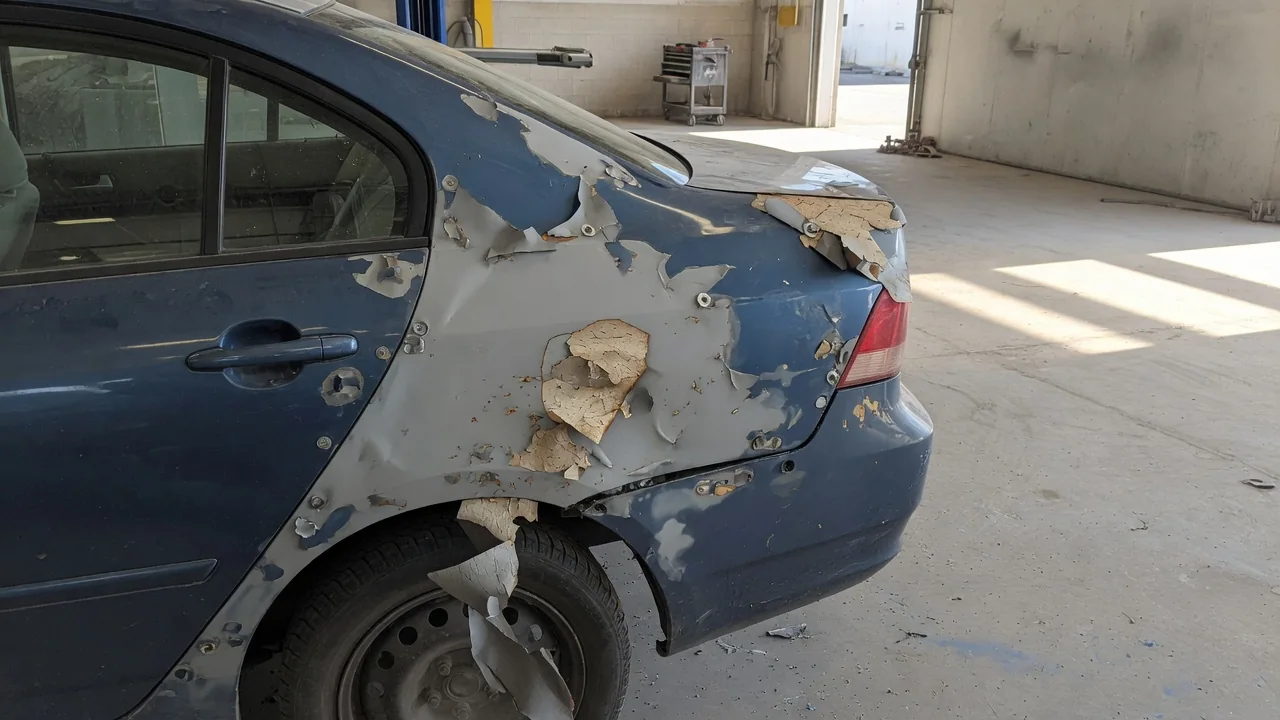
Paint delamination on a car is a loss of adhesion between layers of the finish, so one layer lifts away from the layer beneath it. It usually appears as peeling, flaking, or sheets of clear coat or color lifting from a panel. Unlike scratches or dull oxidation, delamination is a bonding failure, and that fact shapes both why it happens and what it takes to fix it properly.
Layer separation: how a car finish comes apart
A typical modern automotive finish is a stack of distinct coatings. On steel or aluminum body panels, the metal is usually pretreated and covered with an electrocoat primer for corrosion protection, followed by a primer surfacer that smooths the surface and helps later coats bond. Next comes the base coat, which carries the color and any metallic or pearl effect, and finally the clear coat, which provides gloss and most of the resistance to weather and ultraviolet light. Plastic parts such as bumper covers use a different underlying system, but the principle of bonded layers is the same. Exact chemistry and thickness vary by manufacturer, plant, and era.
Delamination happens at an interface between two of these layers. The most familiar form is clear coat separating from the base coat: the clear turns cloudy or whitish in patches, then lifts and flakes away, exposing color underneath that often looks flat and chalky. Separation can also occur lower in the stack, with base coat and clear lifting together off the primer, or the entire finish releasing from the electrocoat or bare substrate. Where the break occurs matters, because it points toward a likely cause and determines how deep a repair must go.
It helps to distinguish delamination from look-alike problems. Oxidation and UV chalking make paint dull or powdery, but the film stays attached. Stone chips are small impact losses without lifting around their edges. Peeling car paint layers that come off in flakes, curl at their borders, or pull away when tape is pressed on and removed indicate that the bond itself has failed.
Causes of paint delamination
Weathering is the most common general driver of clear coat separation. Clear coats contain additives that absorb or block ultraviolet radiation, protecting both the clear and the base coat beneath it. Over years of sun exposure, that protection gradually degrades. Once enough UV light reaches the boundary between clear and base, it can break down material at the interface and weaken the bond. Heat cycling, moisture, and chemical exposure add further stress. Horizontal surfaces such as the roof, hood, and trunk lid generally receive the most direct sun, which is why failure often appears there first. How quickly a given finish ages depends on its formulation and the conditions it faces.
Adhesion can also be compromised when the finish is applied. In refinish work, common contributors include surface contamination such as wax, silicone, oils, or fingerprints; inadequate sanding that leaves too little mechanical key for the next coat; incompatible products from different systems; incorrect flash or recoat times between coats; excessive film build; and missing adhesion promoter on plastics that require it. Factory finishes are applied under controlled conditions, but intercoat adhesion defects are not impossible. Whether a specific failure comes from the original finish or from earlier bodywork usually requires inspection rather than assumption.
Physical damage can start or accelerate separation. A chip or scratch that breaks through the film gives water, road salt, and cleaning chemicals a path under the edge. On steel panels, corrosion that forms at an exposed spot can spread beneath intact paint and lift it from below. Flexing of plastic panels and repeated freeze-thaw cycles can also pry at a weakened bond. These factors rarely act alone; delamination often reflects aging combined with a local entry point.
Repair boundaries: what can and cannot be fixed
The central limit is that a delaminated layer cannot be reattached. Once clear coat or paint has lost adhesion, no polish, wax, sealant, or coating will bond it back down. Polishing may briefly soften the look of an edge, but it removes material and can make thin, failing clear coat worse. Ceramic coatings and touch-up clear are not fixes for an area that is already lifting, because they sit on top of a layer that is no longer properly attached.
A durable repair starts by removing all loose and weakly bonded material until the edges are firmly attached, then sanding and feathering those edges so the transition is smooth. Repair depth follows the failure. If only the clear has separated, the exposed base coat is often degraded as well, so refinishing usually means fresh base coat and clear rather than clear alone. If the failure reaches primer or bare material, the area needs proper substrate preparation, including treatment of any corrosion on metal, the correct primer system, and adhesion promoter on plastics where the product system calls for it. The repaired area then typically needs blending into adjacent paint for a color match.
Because surrounding paint has usually aged under the same conditions, a small spot repair can fail at its margins if the neighboring finish is also weakening. When a whole panel shows early clouding or poor adhesion, refinishing the full panel is often more reliable than patching only the visible flakes. A painter can check adhesion around the damage before deciding how far the repair should extend.
Practical implications and limits for owners
For everyday ownership, the key consequence is that delamination tends to progress rather than stabilize. Lifted edges catch airflow at speed and trap water, so a small patch can grow, although the rate depends heavily on climate, storage, and care, and no general timeline applies. Until repair, gentle hand washing, leaving loose flakes alone, and garage or covered parking where available may slow the spread. None of these measures restores adhesion.
Cost and outcome depend on how many panels are affected, how deep the failure goes, the color and effect of the paint, and local labor rates, so a written estimate from a body shop is the only reliable way to judge an individual car. Aerosol products can cover small areas, but matching factory color, texture, and gloss across a panel is difficult without proper spray equipment and a controlled environment. Coverage under a vehicle or paint warranty depends on the manufacturer, the vehicle's age, and the specific terms, so owners should check their own documentation rather than assume either way.
When evaluating a used car, cloudy or flaking clear coat on upper surfaces is worth noting, since it signals likely refinishing in the future. Uneven texture or overspray can suggest earlier repaint work, which a shop will want to know about before planning repairs. An in-person inspection in good light gives a far better picture than photos alone.