What Is Paint Correction on a Car?
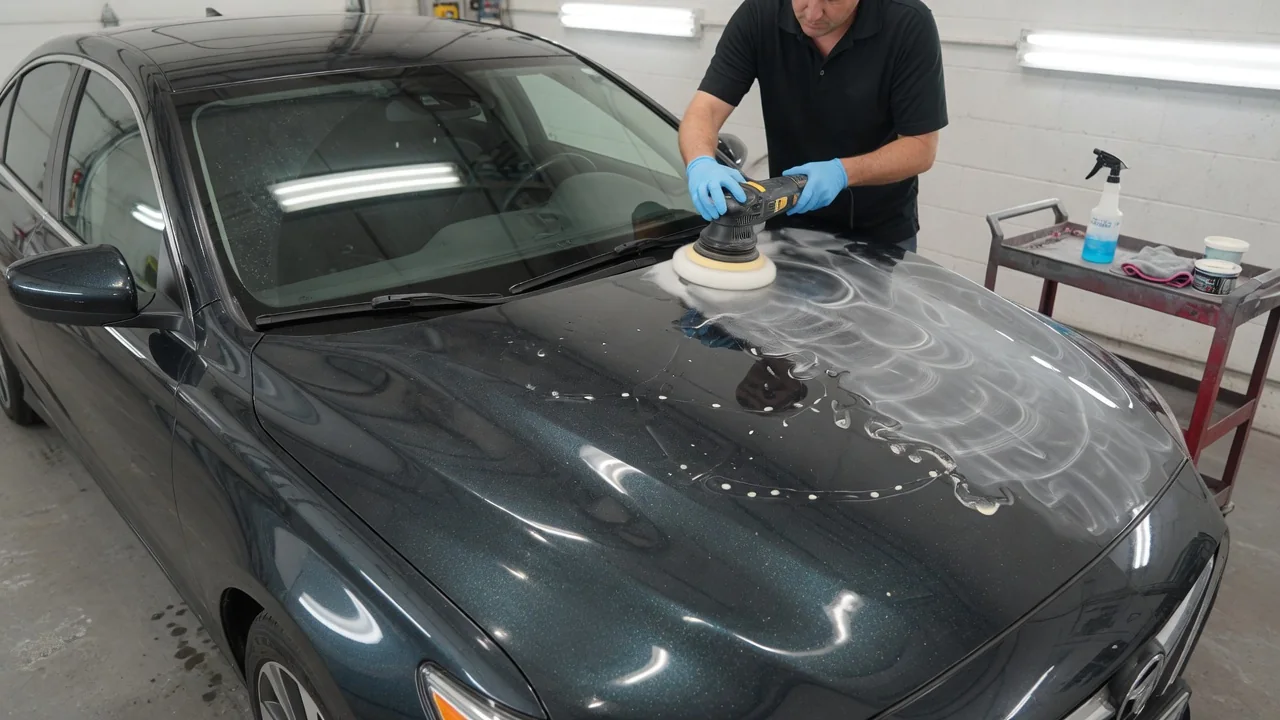
Drivers who ask what is paint correction on a car are usually looking at swirl marks, haze, or dull patches and wondering whether they can be fixed without repainting. Paint correction is the controlled machine polishing of a vehicle's finish to level away shallow surface defects, restoring clarity and gloss rather than simply hiding flaws under wax or filler.
Assess clear coat
Most modern vehicles wear a base color layer topped with a transparent clear coat, and nearly all correction work happens within that top layer. Before any machine touches the panel, a detailer washes and decontaminates the surface, then studies it under strong directional lighting. Swirl marks appear as fine circular webs around a light source, while water spot etching, oxidation, and random isolated scratches each show a different pattern. Identifying the defect type determines how aggressive the polishing approach needs to be.
Thickness matters as much as appearance. Professionals often use a paint depth gauge to take readings across each panel, looking for areas that measure noticeably thinner than the rest, which can indicate earlier polishing or a repainted section. Clear coat hardness and thickness vary between manufacturers, model years, and even panels on the same vehicle, so a process that suits one car may be too harsh for another. Edges, body lines, and plastic bumpers typically carry less material and deserve extra caution.
Compound and polish
Correction works by abrasion. A compound contains relatively coarse abrasives that shave a microscopic amount of clear coat, lowering the surrounding surface until it sits level with the bottom of a shallow scratch. Once the surface is flat again, light reflects evenly and the defect disappears from view. Compounding is usually paired with a firmer foam, microfiber, or wool pad on a dual action or rotary polisher, and it tends to leave its own fine haze behind.
Polishing is the refining stage. A finer abrasive and softer pad remove the haze left by compounding and bring out depth, sharp reflections, and gloss. Shops often describe the work in stages: a single stage uses one product to improve moderate defects, while multi-stage correction separates heavy cutting from finishing. A careful detailer begins with a small test spot using the least aggressive combination, then steps up only if the results fall short, since soft and hard paints respond very differently.
Limits of correction
Polishing can only remove defects that sit within the clear coat's safe working depth. A common rough check is to drag a fingernail lightly across a scratch; if the nail catches, the damage probably runs too deep to level out safely. Scratches that reach the color layer or primer, stone chips, cracked or peeling clear coat, and failed paint showing white, flaky patches all call for touch-up or refinishing rather than abrasive correction.
Because every pass removes material that cannot be put back, the amount of correction a vehicle can tolerate over its life is finite. Clear coat also contains much of the finish's ultraviolet protection, so thinning it excessively can shorten the life of the paint beneath. For that reason, a responsible detailer may improve a deep scratch by rounding its edges and reducing its visibility instead of chasing complete removal. Repainted panels, single-stage finishes on older vehicles, and matte paints follow different rules altogether.
Everyday Use and Observations
Owners usually notice the need for correction in specific conditions. Direct sun or a gas station canopy light at night reveals cobweb-like swirls, especially on black and other dark colors, where contrast makes every mark stand out. Lighter shades such as white and silver hide the same defects well, though the finish may still look flat. Hazy trails called holograms can point to earlier rotary polishing done poorly, and chalky, faded horizontal panels often indicate oxidation from long sun exposure.
Many of these marks come from routine care rather than accidents. Automatic brush washes, dirty wash mitts, dry wiping dust off a panel, and drying with coarse towels all drag grit across the surface. After correction, the difference shows in the reflections: overhead lights appear as crisp points instead of blurred halos, and color looks deeper and wetter. How long that result lasts depends heavily on washing habits, storage, climate, and how soft the vehicle's particular clear coat happens to be.
Limits and Next Steps
Correction restores the surface but adds no protection of its own, and freshly polished paint is just as vulnerable to new marring as before. The usual next step is a protective layer, whether a wax, a synthetic sealant, a ceramic coating, or paint protection film on high-impact areas. Each offers different durability and maintenance demands, and none makes the finish scratch-proof. Gentle washing with clean mitts, plenty of lubrication, and soft drying towels does the most to preserve the result.
Deciding between a do-it-yourself attempt and a professional service comes down to the paint's condition and the owner's comfort with the risk. A dual action polisher with a mild polish is relatively forgiving on healthy factory paint, while heavy compounding, thin readings, or unknown repaint history are better left to an experienced detailer with measuring tools. Asking for a test spot and a realistic description of expected improvement helps set expectations, since outcomes depend on the specific vehicle and its finish.