What Is One-Pedal Stop Hold? How EVs Stop and Stay Put
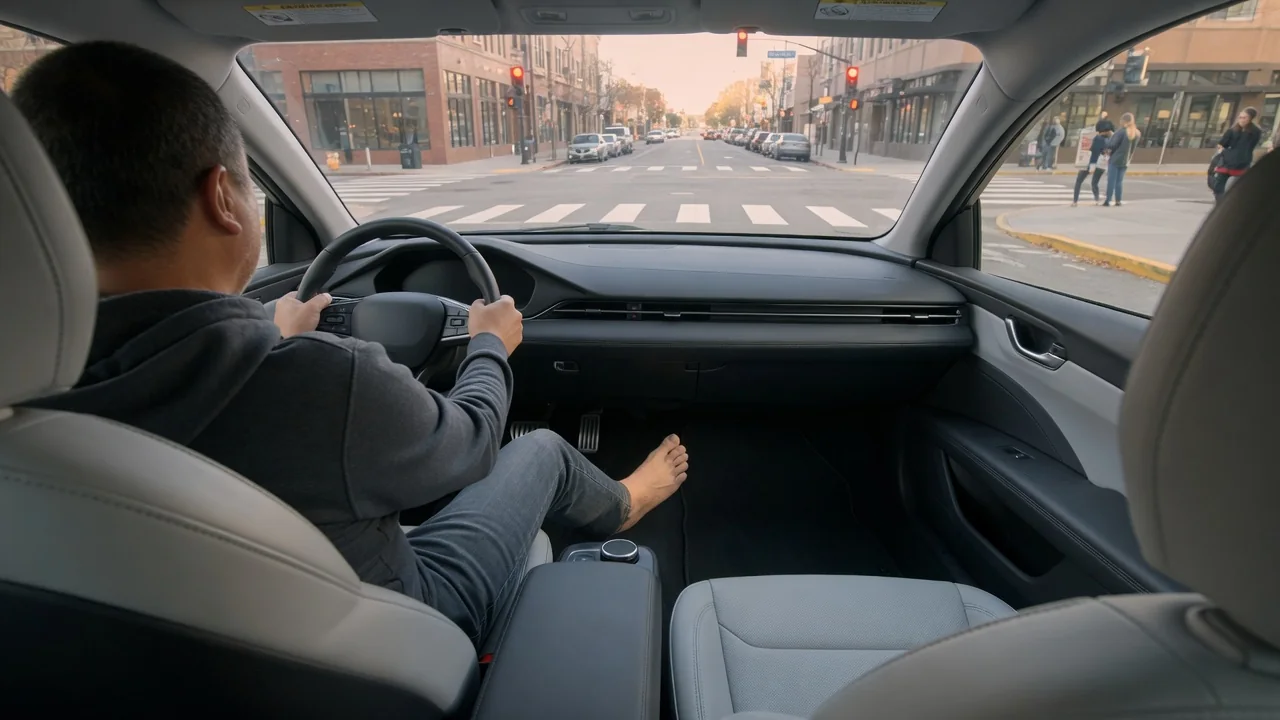
One-pedal stop hold is a feature in many electric and some hybrid vehicles that lets the driver slow the car to a complete stop and keep it stationary simply by lifting off the accelerator. It extends one-pedal driving, where releasing the pedal triggers strong regenerative braking, all the way down to zero speed. Understanding how EV one-pedal stop hold works explains how the car behaves in traffic, on hills, and in conditions where the feature may be limited.
Low-Speed Braking: Bringing the Car to a Full Stop
In one-pedal driving, lifting off the accelerator tells the drive system to request negative torque from the electric motor. The motor then works as a generator. It converts some of the vehicle's kinetic energy into electricity that flows back to the battery, and the resistance this creates slows the car. At typical road speeds, regenerative braking can handle much of everyday deceleration without the driver touching the brake pedal. How strongly the car slows depends on the manufacturer's calibration and often on the regeneration level or drive mode the driver has selected.
Regenerative braking becomes less effective as speed drops. A motor acting as a generator produces less braking force as its rotational speed approaches zero, and at walking pace there is little kinetic energy left to recover. A car relying only on regeneration would tend to coast or crawl over the final distance instead of stopping cleanly. To deliver a predictable stop, one-pedal systems typically blend in the conventional friction brakes during the last part of the deceleration, or use carefully controlled motor torque to finish it. The vehicle's brake control software manages this handoff, and it is usually designed so the driver feels one smooth, continuous slowdown to a halt.
Because deceleration is tied to accelerator position, the driver chooses the stopping point by easing the pedal up gradually rather than releasing it all at once. A partial lift produces gentle slowing. A full release produces the strongest one-pedal deceleration the system allows. That maximum is generally lower than what the friction brakes can deliver in a hard stop, so the brake pedal remains the primary control in an emergency.
Stationary Control: How the Vehicle Stays Put
Once the car reaches zero speed, the hold part of the feature takes over. A conventional automatic car creeps forward at idle, but a car in stop hold stays stationary with the accelerator released. In most designs, the electronic brake system does this by maintaining hydraulic pressure at the wheel brakes, similar in principle to an auto-hold or hill-hold function. The driver does not need to keep a foot on the brake pedal, and the vehicle is intended to resist rolling on moderate inclines as well as on level ground.
There is a practical reason to hold the car with the friction brakes rather than the electric motor. Holding a car still with motor torque alone would require continuous current while nothing moves and no energy is recovered, which wastes energy and heats the motor and power electronics. Friction brakes can hold a stationary load without drawing on drive energy. Some systems may use motor torque briefly during the transition, but the exact strategy varies by manufacturer.
Pressing the accelerator releases the hold and the vehicle moves off. If the car stays stopped for an extended period, many systems hand the job over to the electric parking brake. Under certain circumstances, such as the driver leaving the seat, some vehicles shift into Park automatically. The timing and triggers for these handovers are vehicle-specific and are described in the owner's manual.
Conditions: When One-Pedal Stop Hold Works
One-pedal stop hold is not active in every situation. Typically the driver must select a one-pedal mode or the highest regeneration setting, and the transmission must be in Drive. Some vehicles offer stop hold as a separate setting, while others include it automatically in a one-pedal mode. Other common prerequisites include a closed driver's door, a fastened seat belt and no active system warnings, though the exact list depends on the vehicle.
Several conditions can reduce regenerative braking. A battery at or near full charge cannot accept much additional energy, and a very cold battery has a limited ability to absorb charge. Some systems compensate by blending in friction braking so deceleration feels consistent. Others simply provide less one-pedal deceleration and display a notice to the driver. On slippery surfaces, traction and stability control may reduce regenerative torque to keep the driven wheels from locking or skidding. Steep grades, heavy loads and towing can also exceed what the system is calibrated to manage, and in those cases the driver needs to use the brake pedal.
A fault in the brake system, sensors or drive unit generally disables stop hold, usually with a warning message. The vehicle then reverts to more conventional behavior, and the driver must stop and hold the car with the brake pedal.
Practical Implications and Limits
In daily driving, stop hold mainly reduces workload in stop-and-go traffic. The driver moves between pedals less often, which can make congested commutes less tiring. More of the slowing that happens before the friction brakes engage is also recovered as electrical energy. Over time, relying on regeneration for much of the deceleration may reduce wear on brake pads and rotors, although the friction brakes still do part of the work, especially in the final stop and while holding.
There are trade-offs. Drivers who switch between a one-pedal vehicle and a conventional car may need a moment to readjust, because lifting off the accelerator produces very different results in each. Low-speed maneuvering, such as parking or edging into a tight space, can feel abrupt until the driver learns to modulate the pedal. Many drivers choose a lower regeneration setting or a creep mode for these situations if the vehicle offers one. Automatic car washes, towing and other situations where the car must roll freely usually call for a specific mode described in the owner's manual. Friction brakes that see little use can also develop surface corrosion, so a manufacturer may recommend occasional firm brake applications or routine inspection.
Stop hold is a convenience and efficiency feature. It is not a safety system and does not replace driver attention. The driver remains responsible for stopping distances, which can be longer when relying on one-pedal deceleration than in a firm brake-pedal stop. Whether the brake lights come on during one-pedal deceleration depends on the vehicle's design and applicable rules, so following drivers may not always see the same cue. When leaving the vehicle, Park and the parking brake remain the proper way to secure it. Because availability, settings and behavior differ widely, the owner's manual is the authoritative guide for any specific car.