What Is One-Pedal Driving?
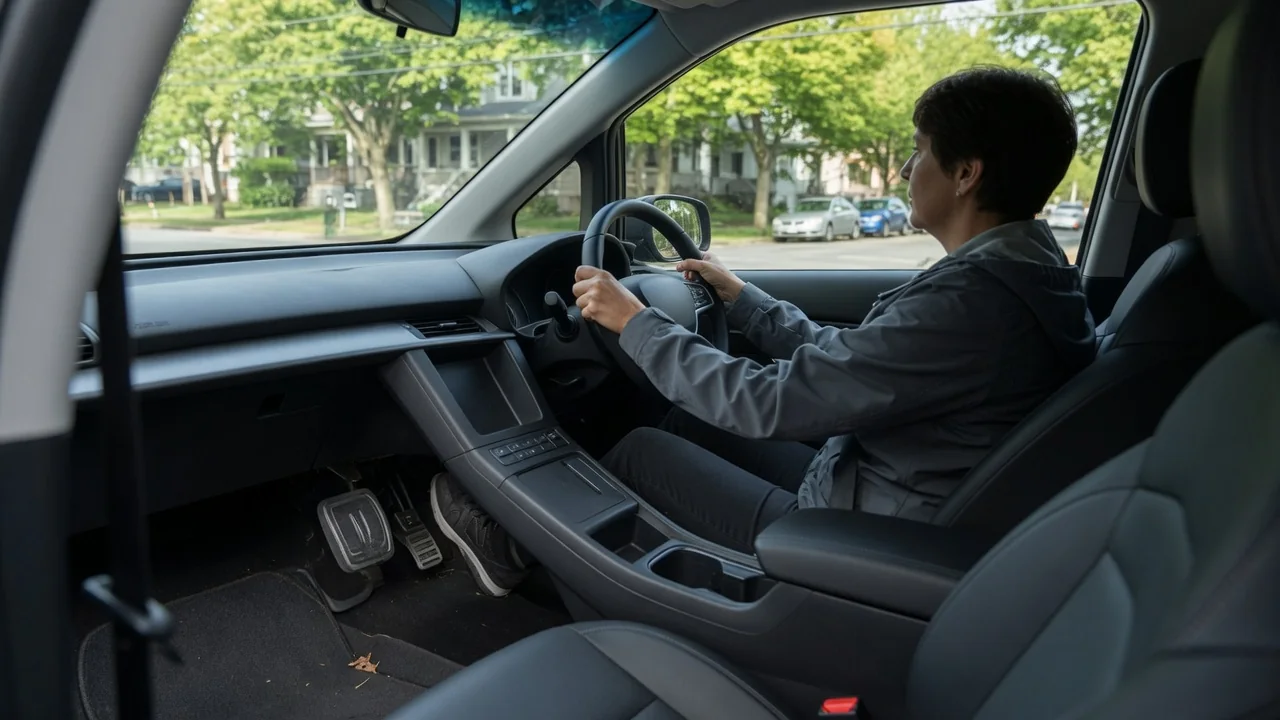
Anyone new to electric or hybrid vehicles eventually asks what is one pedal driving. It is a mode in which the accelerator controls both speeding up and slowing down: pressing it draws power from the battery, and easing off makes the motor act as a generator that slows the car and recovers energy, while the conventional friction brakes remain ready as a backup.
Pedal response
In a conventional car, lifting off the accelerator lets the vehicle coast with only mild engine braking. With one-pedal driving active, the same movement commands regenerative deceleration, so the car slows noticeably as soon as the foot rises. The pedal effectively has three zones: pressing deeper adds drive torque, a middle position holds a steady speed with little energy flowing either way, and anything lighter than that asks the motor to resist the wheels and send current back to the battery.
The strength of that response depends on how the manufacturer has tuned it. Some vehicles offer a single on-or-off setting, others provide several regeneration levels chosen through a menu, a selector position, or steering wheel paddles. Drivers usually notice that small, smooth changes in foot pressure matter more than they did before, because an abrupt lift produces an abrupt slowdown. Most vehicles illuminate the brake lights when regenerative deceleration is strong enough, although the threshold for that is set by the vehicle's own software.
Stops
Whether the car can come to a complete halt on the accelerator alone varies by design. Regenerative braking weakens as speed falls, because a slowly turning motor generates little resistance. Some vehicles compensate by blending in the hydraulic brakes automatically during the final few feet, then holding the car stationary without any pedal input. Others slow to a crawl and continue creeping, which means the driver must press the brake pedal to finish the stop and keep the car in place.
A driver can learn which behavior applies by trying a gentle stop in an empty parking lot and watching what happens at walking pace. If the car settles to a standstill and stays there on a slight grade, a hold function is working in the background. If it rolls or creeps, the brake pedal is part of every stop. The owner's manual describes the intended behavior, and it is worth reading because settings such as creep mode can change the result.
Conditions that change feel
Regenerative deceleration is not constant, because the battery has to be able to accept the recovered energy. A battery charged close to full has little room for incoming current, so the car may slow far less than usual when the pedal is released. Cold weather has a similar effect, since a chilled battery accepts charge more slowly. In both cases the vehicle may show a warning or a reduced-regeneration indicator, and some systems add friction braking to keep the deceleration feel consistent.
Road surface matters as well. On ice, snow, or wet pavement, strong regeneration acting through the driven wheels could upset traction, so stability and antilock systems may reduce it or hand the work to the friction brakes. Drivers sometimes feel this as a brief change in the rate of slowing over a bump or slick patch. Long downhill grades can also alter the feel as the battery fills, and many drivers choose a lower regeneration setting in slippery conditions for smoother, more predictable control.
Everyday Use and Observations
In stop-and-go traffic, one-pedal driving reduces how often the foot moves between pedals. Slowing for a light becomes a matter of easing off early and timing the release so the car arrives at the right spot. Energy that would otherwise turn into heat at the brake rotors goes back into the battery, which can extend range in city driving. On the highway the benefit is smaller, because steady cruising involves little braking, and some drivers prefer coasting there instead.
Because the friction brakes are used less, pads and rotors typically wear slowly, but light use brings its own issue. Rotors that seldom get scrubbed by the pads can develop surface rust, especially in damp or salted-road climates, and a faint scraping noise on the first firm stop is a common sign. Some vehicles periodically apply the brakes to clean the surfaces. Passengers may also notice more head-nodding until the driver learns to modulate the pedal gently.
Limits and Next Steps
One-pedal driving does not replace the brake pedal. Regeneration provides only moderate deceleration, well short of what the hydraulic brakes deliver in a hard stop, so an emergency always calls for the brake pedal, pressed firmly. The friction system, antilock braking, and stability control remain fully functional whatever regeneration setting is chosen. Keeping the right foot ready to move across, and leaving normal following distances, is the habit that keeps the mode from encouraging late reactions.
A driver trying the feature for the first time does best starting on quiet streets, with the mildest setting if several are offered, then increasing strength as the timing becomes familiar. If regenerative deceleration becomes unexpectedly weak or uneven in mild weather with a partly charged battery, or if a brake or powertrain warning appears, the vehicle deserves a professional inspection. Any stored fault code is a starting point for diagnosis that needs vehicle-specific confirmation, not proof that a particular component has failed.