What Is On-Center Steering Feel? Small Corrections, Feedback and Diagnosis
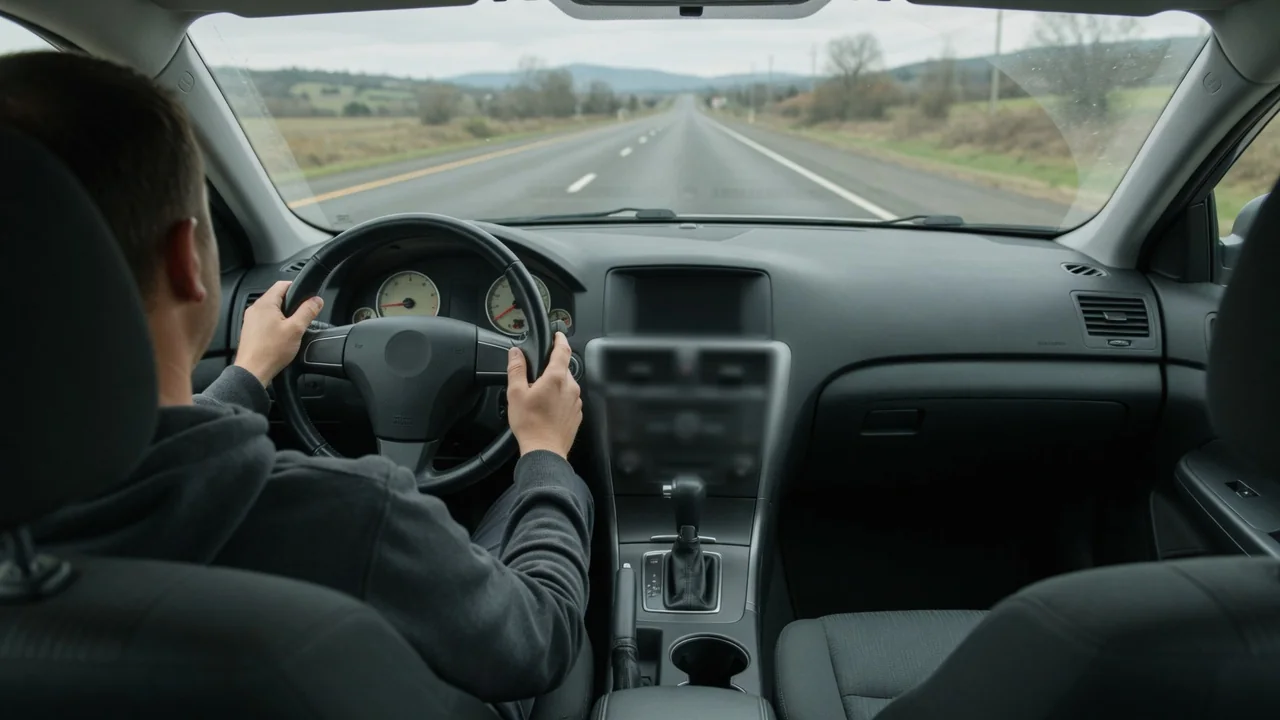
On-center steering feel describes how a car's steering behaves in the narrow range around straight ahead, where most highway driving happens. It covers how much effort the first few degrees of wheel movement require, how quickly the car responds, whether the wheel settles back to center, and how clearly the road communicates through the rim. When drivers ask what is on center steering feel, they usually mean something they notice at steady speed: a car that tracks calmly, or one that wanders and demands constant attention.
Small corrections
On a straight road, the driver rarely holds the wheel perfectly still. Crosswinds, road crown, uneven pavement and slight inputs from the driver's own posture all nudge the car off its line, so the driver makes a steady stream of small corrections, often only a few degrees of wheel angle. On-center feel is largely about how those tiny inputs feel and how the car answers them. Engineers commonly break this into several qualities: the effort needed to start turning the wheel away from center, how steering torque builds as angle increases, how promptly the vehicle begins to change direction, and whether the response stays proportional to the input.
Two characteristics tend to stand out. One is a dead zone, a small range where turning the wheel produces little noticeable change in effort or direction. A modest amount can make a car feel relaxed; too much makes it feel vague and invites overcorrection. The other is friction and hysteresis, where the wheel feels sticky leaving center or does not come back smoothly. A steering system with low friction and a clear, progressive torque buildup lets the driver make precise corrections without thinking about them. Return-to-center behavior matters as well: after a small correction, a well-set-up car tends to settle back toward straight ahead rather than staying wherever the wheel was left.
Road feedback
Much of what the driver feels on center comes from forces generated at the tires and transmitted back through the steering linkage. When a tire rolls with a slight slip angle, the contact patch produces a self-aligning torque that tries to straighten the wheel. Suspension geometry shapes this force. Positive caster places the steering axis ahead of the contact patch, creating mechanical trail that helps the wheels return to center and builds effort as they turn. The tire adds pneumatic trail, which depends on its construction, inflation and load. Together these effects give the driver a sense of where center is and how much grip the front tires are using.
The steering system then filters that information. Hydraulic and electric power assistance reduce effort, and the way assistance is tuned around center strongly influences whether the wheel feels connected or numb. Electric power steering uses software to shape assist, damping and return behavior, so on-center feel in many modern cars is partly a calibration choice rather than a direct result of geometry alone. Rubber bushings, steering column joints and rack mounts also absorb vibration and small force changes. The usual goal is to pass along useful information, such as a change in surface or a loss of grip, while suppressing harshness and kickback.
Road surfaces add their own signals. Pavement crown can make a car drift toward the edge of the road, ruts can cause the tires to follow grooves, an effect often called tramlining, and wide or stiff-sidewall tires can make this more noticeable. These are normal interactions, but they can be mistaken for a steering fault if the driver only experiences them on certain roads.
Diagnosis
When a car's steering on-center feel changes or seems poor, the useful first step is to describe the symptom precisely. Wandering, where the car needs constant small corrections, points in a different direction than a steady pull to one side, a wheel that sits off center while driving straight, a notchy or sticky feel near center, or a wheel that does not return after a turn. Noting whether the symptom depends on speed, road surface, braking or recent work such as a tire change or alignment helps narrow the cause.
Tires are the simplest place to start. Uneven inflation, mismatched tires, irregular wear and internal tire damage can all create pull, wander or vague feel. Wheel alignment is the next common factor. Incorrect toe often produces wandering or an off-center wheel, while side-to-side differences in caster or camber can cause pull. A steering wheel that is crooked after an alignment may mean the toe was set without centering the wheel, and on some vehicles the steering angle sensor used by stability control or electric assist may need recalibration afterward, depending on the manufacturer's procedure.
Wear in the steering and suspension creates free play that shows up first around center. Worn inner or outer tie rod ends, loose rack mounts, a worn intermediate shaft joint, tired control arm bushings and worn ball joints can all add looseness or clunks. A technician typically checks for this by watching the linkage while someone rocks the wheel slightly with the car on the ground, and by inspecting components for movement as the service procedure directs. Binding, such as a sticky column joint, a seized strut bearing or a fault in the power steering system, tends to cause poor return or a notchy feel rather than looseness.
Practical implications and limits
For everyday driving, good on-center feel mainly reduces workload. A car that holds its line with minimal input is less tiring on long highway trips and makes it easier to notice when something genuinely changes, such as a slippery surface or a developing tire problem. Poor on-center behavior is not always a safety defect, but a sudden change in feel deserves attention because it can be the first sign of wear, damage or incorrect adjustment.
There are also limits to what an owner can expect. On-center feel varies by design, and two correctly maintained vehicles may feel quite different because of steering ratio, tire choice, suspension tuning and assist calibration. Restoring factory alignment specifications and replacing worn parts can bring a car back to its intended behavior, but it will not make it feel like a different vehicle. Aftermarket tires, wheels with a different offset, lowered or lifted suspension and modified alignment settings can change on-center behavior for better or worse. When a car feels different after such changes, comparing its measured settings against the manufacturer's specifications and the relevant service information is a more reliable guide than subjective impressions alone.