What Is Motorsport Scrutineering? A Guide to Race Car Technical Inspection
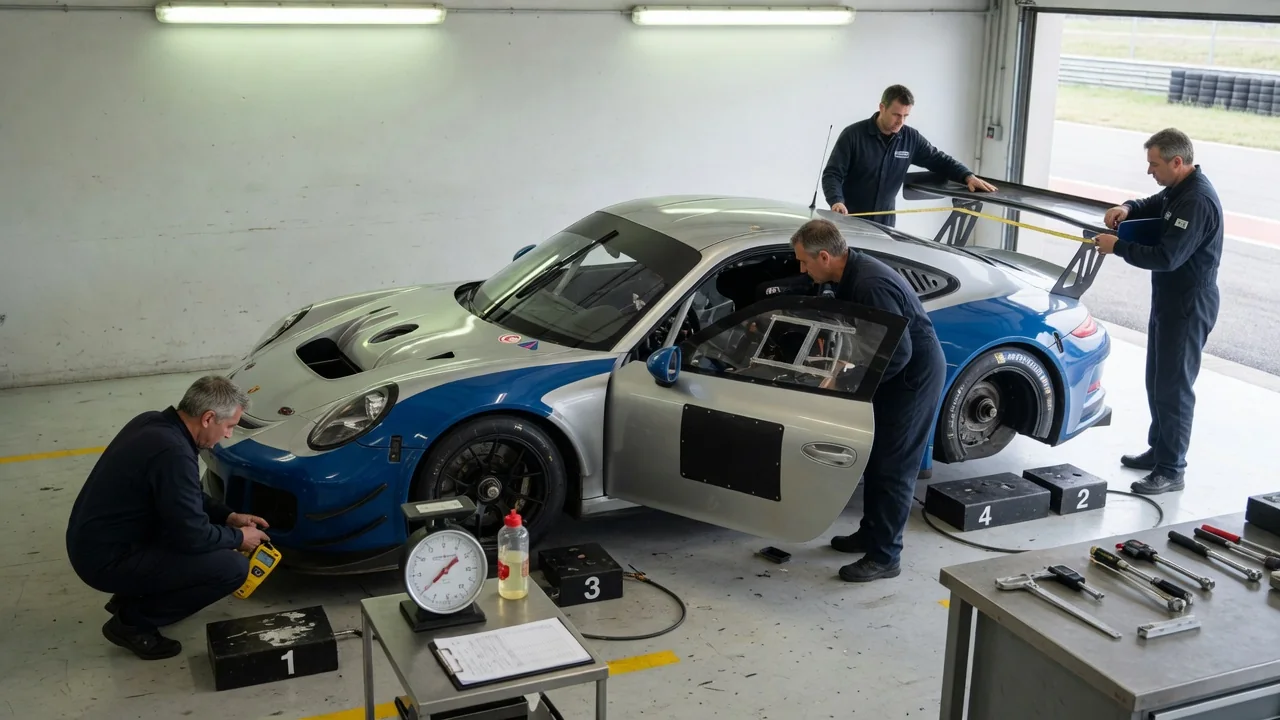
Motorsport scrutineering is the technical inspection that a race car and its driver's safety gear go through before, and sometimes after, competition. Officials called scrutineers or technical inspectors confirm two things. The vehicle must be safe to run on track, and it must conform to the rules of the class it is entered in. Scrutineering and race car technical inspection are two names for the same process, which aims to reduce avoidable risk and keep the competition fair.
Equipment checks
The most visible part of scrutineering is the check of safety equipment. Inspectors typically examine the roll cage or roll bar for secure mounting, sound welds and obvious damage or corrosion. They check the seat and its mounts, the safety harness and its anchor points, and the condition of webbing, buckles and adjusters. Many rulebooks also call for several other items. These can include an on-board fire extinguisher or plumbed extinguishing system, an electrical cut-off switch that marshals can reach from outside the car, and clearly marked towing points. The exact list depends on the event, but the principle stays the same. Anything that protects the occupant or helps rescuers must be present, fitted correctly and in serviceable condition.
Scrutineers also assess general mechanical integrity. Common items include a securely mounted battery and fuel and oil lines that are protected and free of leaks. Inspectors also look for a firmly attached throttle return mechanism, wheel nuts or studs in good condition, and working brakes, including brake lights where the rules require them. Loose objects in the cabin are usually removed or secured. Body panels must be fastened well enough that they are unlikely to come off at speed. At most events the inspection is visual and hands-on rather than a full teardown. It looks for evident problems and does not certify the car's overall engineering.
Driver equipment is part of the same process. Inspectors usually check helmets, fire-resistant suits, gloves, shoes and underwear for a label showing an accepted certification standard, and for wear or damage. Frontal head restraint devices are checked as well where the rules require them. Certification standards for these items are updated periodically and often have validity limits. For that reason, inspectors frequently examine labels and dates as closely as they examine physical condition.
Class rules context
Safety is only half the job. The other half is eligibility, meaning confirmation that the car belongs in the class it is entered in. Technical regulations define each class and may limit things such as: • engine displacement and induction type; • minimum weight; • tire size or compound; • aerodynamic devices and ride height; • fuel type; • permitted modifications; A perfectly safe car can still be ineligible, for example if it carries an unapproved part or weighs less than the required minimum.
How closely officials check eligibility varies widely. At grassroots events the focus may be mostly on safety, with class compliance handled through competitor declarations and protests. In more tightly controlled series, scrutineers may weigh cars, measure dimensions with templates or gauges, or take fuel samples. They may also seal components such as engines, gearboxes or electronic control units so that any change can be detected. Some series limit parts to a list of approved, or homologated, components. In those series, eligibility checking becomes partly a matter of matching the parts on the car to the paperwork.
Eligibility checks are not limited to the start of an event. Many organizers inspect selected cars after qualifying or the race, often paying particular attention to cars near the top of the results. Post-event inspection can be more detailed than the initial check. It confirms that the car competed in a legal state, not just that it arrived in one.
Documentation
Paperwork is a formal part of scrutineering. Depending on the organizer and the level of competition, competitors may need to show a valid competition license, an entry confirmation, and a technical declaration or inspection form listing the car's specification. Many sanctioning bodies issue a vehicle logbook or technical passport that stays with the car. This document records the car's identity and class, along with previous inspections, accident damage and required repairs. Scrutineers can use this history to decide whether a car needs extra attention.
Cars built to homologated specifications may need homologation papers or approved-parts documentation showing that their components match the approved specification. Documentation for safety equipment matters too. Certification labels on seats, harnesses, helmets and restraint devices count as evidence in their own right. A missing, painted-over or unreadable label can therefore cause problems even when the item looks fine. Once a car passes, officials commonly mark it with a sticker or stamp, or record the result in the logbook, and that record is what allows the car onto the track.
Practical implications and limits
For competitors, scrutineering should be the final step of preparation, not the place where problems are discovered. The governing documents are always the specific rulebook and supplementary regulations for the event. These take precedence over general advice, past practice at other events, and whatever other competitors are running. Requirements can differ between organizers, between countries, and even between seasons of the same series, so equipment that passed elsewhere is not automatically acceptable. Reading the current regulations, checking label dates and arriving with documents organized usually makes the process quicker for everyone.
It is just as important to understand what a pass does not mean. Scrutineering is a snapshot taken under time pressure, usually without taking the car apart. It cannot verify every weld, internal engine component or hidden fastener, and it does not shift responsibility for the car's condition to the officials. In most rule systems the competitor stays responsible for keeping the car safe and compliant throughout the event, including after any repair or adjustment made between sessions. A car damaged on track may have to return for re-inspection before it can continue.
Finally, scrutineering for competition is separate from road vehicle inspection. A car prepared for racing may meet competition requirements without being road legal. A road-legal car may still fail a race car technical inspection if it lacks required safety equipment. Owners considering track days, sprints or club racing should find out what kind of inspection, if any, their specific event requires. Both the depth of checking and the expected equipment vary considerably from one format to another.