What Is Magnetic Ride Control and How Does It Work?
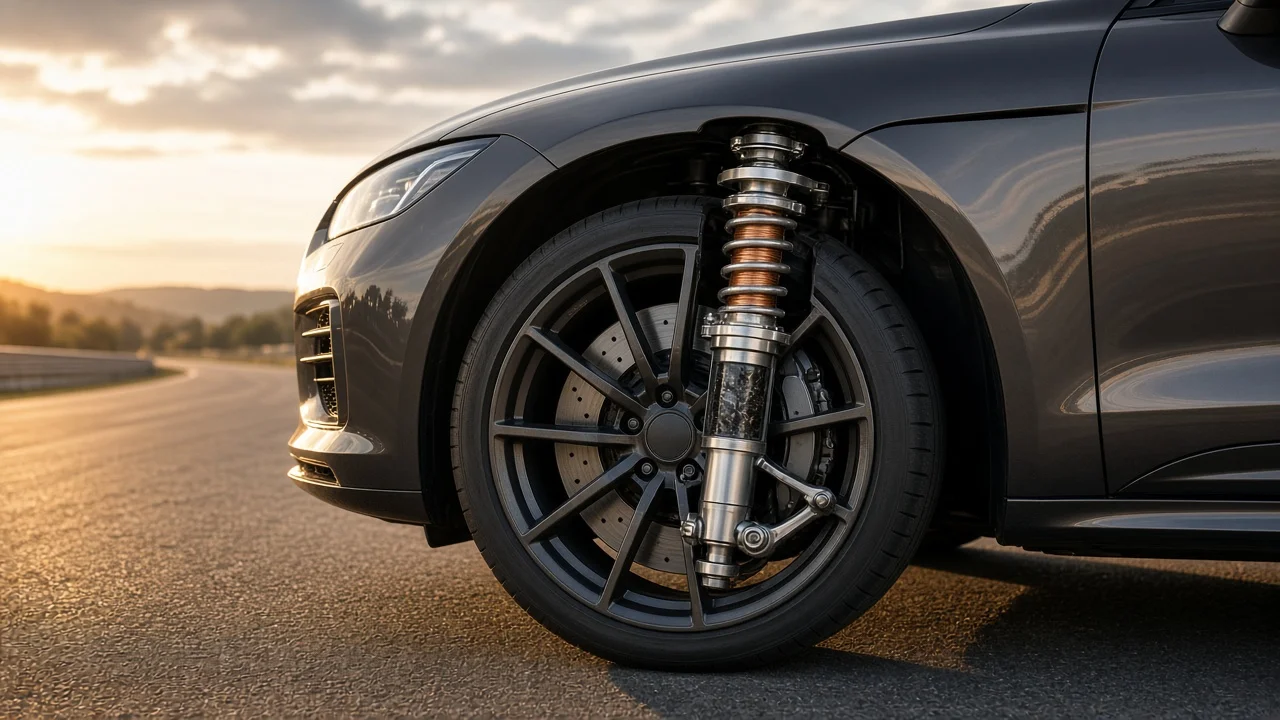
Magnetic ride control is GM's adaptive damping system. It changes how firm the shock absorbers are, continuously, while you drive. A conventional damper uses valves with fixed settings. A magnetic damper instead uses a fluid that thickens when a magnetic field is applied. This lets a vehicle ride comfortably on rough pavement and still stay controlled in corners and under braking. This guide explains what the system does, how it works, how it differs between Chevrolet, GMC and Cadillac models, and what an owner can check.
What magnetic ride control is
Magnetic Ride Control, also known as MagneRide, is a semi-active suspension damping system. It does not replace the springs, raise or lower the vehicle, or steer the wheels. Its only job is to control how quickly the suspension compresses and rebounds. It adjusts that resistance at each corner many times per second, based on the road and how the vehicle is being driven. GM first offered it in the early 2000s on Cadillac models. Since then it has appeared on performance cars such as the Corvette and Camaro, and on full-size SUVs and pickups from Chevrolet, GMC and Cadillac. Other manufacturers have also licensed versions of the technology.
In practice, the system reduces the compromise built into ordinary shocks. A conventional damper is tuned once at the factory, so it is set either softer for comfort or firmer for control. A magnetic damper can stay fairly soft over small bumps and then firm up quickly when the body starts to roll, pitch or bounce.
How magnetic ride control works
Each damper is filled with magnetorheological fluid, which is a synthetic oil carrying fine iron particles. The damper piston contains an electromagnetic coil. As the suspension moves, fluid passes through small passages in that piston. With no current in the coil, the particles stay scattered and the fluid flows easily, so the damper feels softer. When the controller sends current to the coil, the magnetic field lines the particles up into fiber-like chains across the flow path. This thickens the fluid and increases resistance. Changing the amount of current changes the firmness smoothly, rather than in a few fixed steps. Because there are no mechanical valves to move, the change happens within milliseconds.
A dedicated suspension control module decides how much current each damper gets. It reads position sensors at each corner of the suspension. It also uses information from other vehicle systems, such as speed, steering input, braking and body motion. From that data it works out what each wheel and the body are doing and recalculates damping continuously. GM has described this as happening up to about a thousand times per second. As a result, when a front wheel hits a pothole, the system can prepare before the rear wheel reaches the same spot.
What changes how the system behaves
The drive modes you select change the control strategy. On many models, Tour or Normal mode favors comfort. Sport or Track mode keeps the body flatter and the damping firmer. Off-road or towing modes adjust for loose surfaces or heavy loads. The names and number of modes depend on the model, year and trim, and so does whether magnetic ride control is fitted at all. The owner's manual and build information confirm what a specific vehicle has.
On the Chevrolet Tahoe and Suburban, GMC Yukon and Cadillac Escalade, magnetic ride control is often paired with an air suspension that raises and lowers the body. The two are easy to confuse. Air suspension controls ride height, while the magnetic dampers control motion. If one corner sits low, look at the air or spring side, not the dampers. On certain Sierra and Silverado pickup trims, and on cars like the Corvette and Camaro, the magnetic dampers usually work with conventional coil or leaf springs. On those vehicles, ride height stays the same in every mode.
Modifications also change how the system behaves. The controller is calibrated for factory tire sizes, suspension travel and vehicle weight. Lift or lowering kits, different wheels and tires, and heavy loads can therefore change how it feels. Changes that move the position sensors or alter their travel can cause odd behavior or warning messages.
Signs of a problem and what owners can check
Most faults show up in one of three ways: a warning message such as Service Suspension System, a stored trouble code, or a noticeable change in the ride. A failed damper often feels floaty, bouncy or harsh at one corner. If the system detects an electrical fault, it may fall back to a fixed setting, which can change how the whole vehicle feels. Oily residue running down a damper body means it is losing fluid. Damaged wiring or a corroded connector at the top of a damper is a common cause of electrical codes, especially on vehicles exposed to road salt.
An owner can make several useful checks with little more than a flashlight. Note when the warning appears and whether it clears after restarting the engine. At each corner, look for leaks, torn wiring, loose connectors and damaged sensor links. Remember that a clunk or a tendency to wander may not come from the dampers at all. Worn bushings, ball joints or tie rod ends with excessive joint play can cause the same symptoms, as can loose mounting points. If you need to look underneath, support the vehicle on jack stands on firm, level ground. Never rely on a jack alone.
A scan tool that reads chassis codes, not just engine codes, is the most useful starting point. Suspension module codes usually identify the affected corner. They also show whether the fault is in a damper circuit or a sensor.
Repair options and their trade-offs
Magnetic dampers cost more than conventional shocks, and the replacement procedure depends on the model. On some vehicles the front units are strut assemblies that carry spring load. That means the job involves compressing the spring safely, and it can affect wheel alignment, so have the alignment checked after front strut work. Tighten all fasteners to the specification in the service information for that vehicle. Bushed joints are commonly given their final tightening with the suspension at normal ride height. Some repairs also need a calibration or sensor learn procedure, which requires a capable scan tool.
For some models, aftermarket kits are available that replace the magnetic dampers with conventional shocks. These kits lower parts cost, but they remove adaptive damping and can change how the vehicle handles. Some also need an electronic module or resistor setup to prevent warning messages. Weigh that trade-off against how you use the vehicle, and confirm that any kit is listed for your exact model and year.
Limitations and when to get professional help
This article explains how the system works in general. It does not replace the service information for your vehicle. Sensor locations, damper designs, calibration steps and torque values all differ between generations. Get professional help in any of these situations: a warning keeps coming back, codes point to the control module or wiring harness, a damper is leaking, the vehicle pulls or handles unpredictably, or the job involves strut assemblies under spring tension. Unpredictable handling is a safety issue, so avoid fast driving and towing until the cause is found. A shop with dealer-level diagnostics for GM chassis systems can confirm whether the fault lies in a damper, a sensor, the wiring or another part of the suspension.