What Is Long-Term Fuel Trim? Learned Adjustment, Patterns and Diagnosis
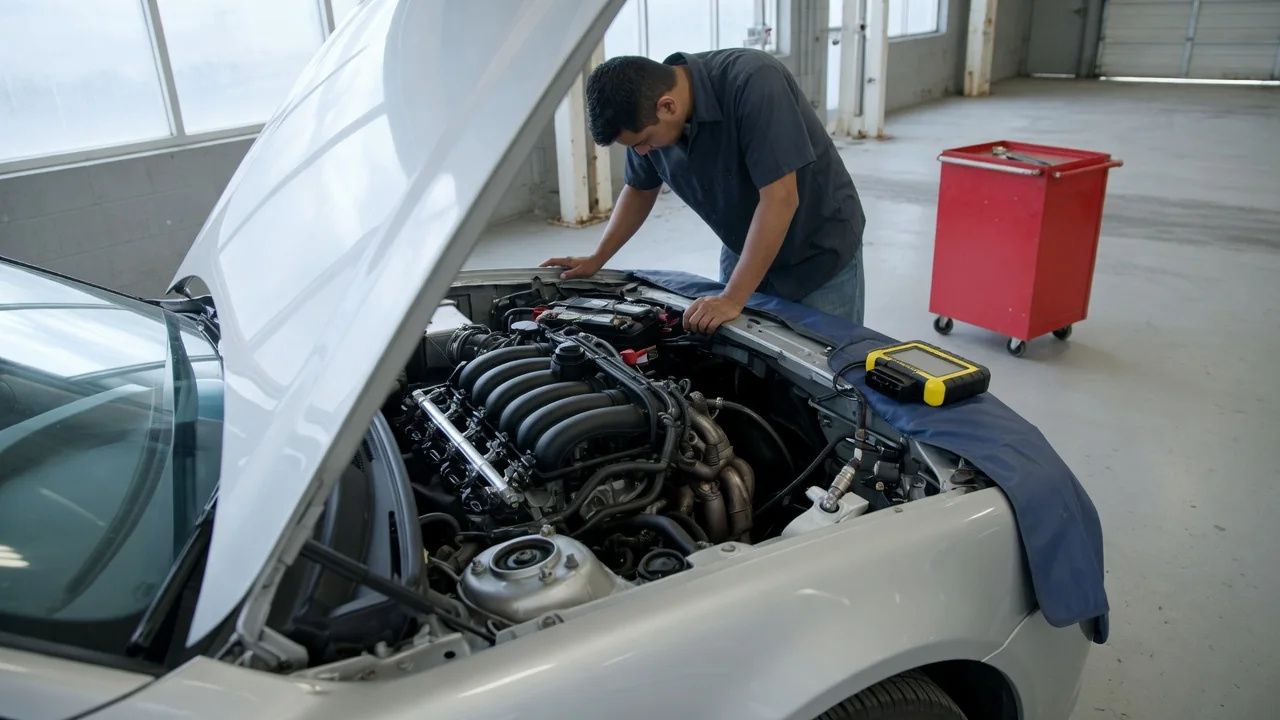
Long-term fuel trim is the correction an engine control module learns and stores so the air-fuel mixture stays close to its target over time. Shown as a percentage on a scan tool, it tells you how much fuel the computer has decided to add or remove compared with its base calculation. Understanding the long term fuel trim meaning helps owners read live data, recognize recurring mixture problems, and judge whether a lean or rich condition points toward air, fuel, or sensor faults.
Learned adjustment
A gasoline engine control module starts with a base fuel calculation. It estimates how much air is entering the engine from a mass airflow sensor, a manifold pressure sensor, or both, then factors in engine speed, coolant temperature, and other inputs to decide how long to open the injectors. Once the engine is warm and running in closed loop, the upstream oxygen or air-fuel ratio sensor reports whether combustion is actually lean or rich. The computer responds immediately through short-term fuel trim, a fast correction that changes constantly as the sensor signal moves around the target mixture.
Long-term fuel trim is the slower, learned layer built on top of that feedback. If short-term trim keeps leaning in the same direction for a sustained period, the module gradually shifts the long-term value to absorb the difference. The base calculation is then adjusted by that learned amount, and short-term trim can return toward zero, ready to handle small moment-to-moment changes. A positive long-term value means the computer has learned to add fuel because it keeps seeing a lean mixture. A negative value means it has learned to remove fuel because it keeps seeing a rich mixture. The learned value is kept in memory, so the engine starts the next drive already compensated.
Many engine computers store separate learned values for different operating regions, such as idle, light cruise, and heavier load, and for each cylinder bank on V-type or horizontally opposed engines. A generic scan tool usually displays only the value currently in use for each bank. How many regions exist, how fast learning happens, and whether clearing codes or disconnecting the battery erases the learned data all depend on the vehicle, so the factory service information is the authority for a specific model.
Patterns in long-term fuel trim readings
Fuel trim is most informative when short-term and long-term values are read together, because their sum shows the total correction the computer is applying at that moment. A large long-term value with short-term trim near zero means the problem has already been learned. A large short-term swing with a modest long-term value can mean a change happened recently or the condition is intermittent. As a general rule of thumb, totals that stay close to zero are unremarkable, while totals that grow steadily or sit near the limit the manufacturer allows deserve a closer look.
Lean corrections, shown as positive trims, often follow recognizable patterns. When trims are strongly positive at idle but move closer to normal as engine speed and load increase, unmetered air is a common suspect. A vacuum leak admits a fixed amount of extra air, which matters a lot at idle when total airflow is small and much less at higher airflow. When trims are near normal at idle but climb positive under acceleration or sustained load, fuel delivery becomes more likely, such as low fuel pressure, a weak pump, a restricted filter, or injectors that cannot deliver enough. A mass airflow sensor that underreports air can produce positive trims across a wide range of conditions.
Rich corrections, shown as negative trims, point in other directions: a leaking injector, fuel pressure above specification, an evaporative purge valve that lets vapor in when it should not, an airflow sensor reading too high, or fuel diluting the engine oil and venting through the crankcase system. Comparing banks adds another clue. If only one bank shows the abnormal trim, the cause is usually something that affects that bank alone, such as an intake leak near its cylinders, a faulty injector, or an exhaust leak ahead of that bank's upstream sensor. If both banks move together, look first at shared components such as the airflow sensor, fuel pressure, or a leak common to the whole intake.
Diagnosis using fuel trim data
Useful readings come from a fully warmed engine running in closed loop, since trims are not actively corrected during cold starts or certain open-loop conditions. Record short-term and long-term values for each bank at idle, at a steady elevated engine speed, and during a road test under moderate load. If a diagnostic trouble code is stored, check its freeze-frame data, which captures engine speed, load, temperature, and trim values at the moment the fault was detected. The generic codes P0171 and P0174 indicate a lean condition on bank 1 and bank 2, while P0172 and P0175 indicate a rich condition. These codes describe what the computer saw, not the specific part that failed.
Trim patterns narrow the search, and targeted tests confirm the cause. For a suspected air leak, a smoke test of the intake and vacuum system is a common, controlled method. Fuel pressure and volume should be measured with suitable equipment and compared against the manufacturer's specifications. Airflow sensor readings can be compared with expected values listed in service information for given engine speeds and conditions. The upstream sensor itself should switch or respond normally, because a slow or biased sensor misleads the whole correction process. An exhaust leak before that sensor can draw in outside air, making the sensor report lean and pushing trims positive even though the cylinders are not truly lean. Confirming each step with data avoids replacing parts on assumption.
After a repair, watch short-term trim first. If it immediately swings in the opposite direction from the old long-term value, the fix has likely removed the original cause and the computer simply needs to relearn.
Practical implications and limits
Because long-term fuel trim is learned, it lags behind reality. An old correction can linger for some time after a problem is fixed, and a fresh fault may take several drives to appear in the stored value. Some vehicles allow the adaptive values to be reset with a scan tool, and on many, clearing codes or losing battery power also wipes them. Resetting does not repair anything; it only removes the history the computer was using, which can make an intermittent fault harder to catch until it relearns.
Fuel trim is only as accurate as the signals behind it. The computer corrects toward what its sensors report, so a contaminated airflow sensor or a biased oxygen sensor can produce trims that look like a fuel or air problem when the real fault is the measurement. Correction range is also finite. Once a trim reaches its limit, the computer can no longer compensate, which is usually when a lean or rich code sets and drivability may suffer. Not every shift signals a defect, either. Fuel with higher ethanol content needs more fuel for the same air, so non-flex-fuel engines may show modestly more positive trims on such blends. Aftermarket intake, injector, or tuning changes can also move trims if the calibration does not account for them.
Fuel trim is a strong screening tool rather than a final verdict. It shows the direction and size of a mixture correction, but specific limits, learning behavior, and test procedures vary by engine, so use the vehicle's service information before drawing conclusions or replacing parts.