What Is Hydroplaning?
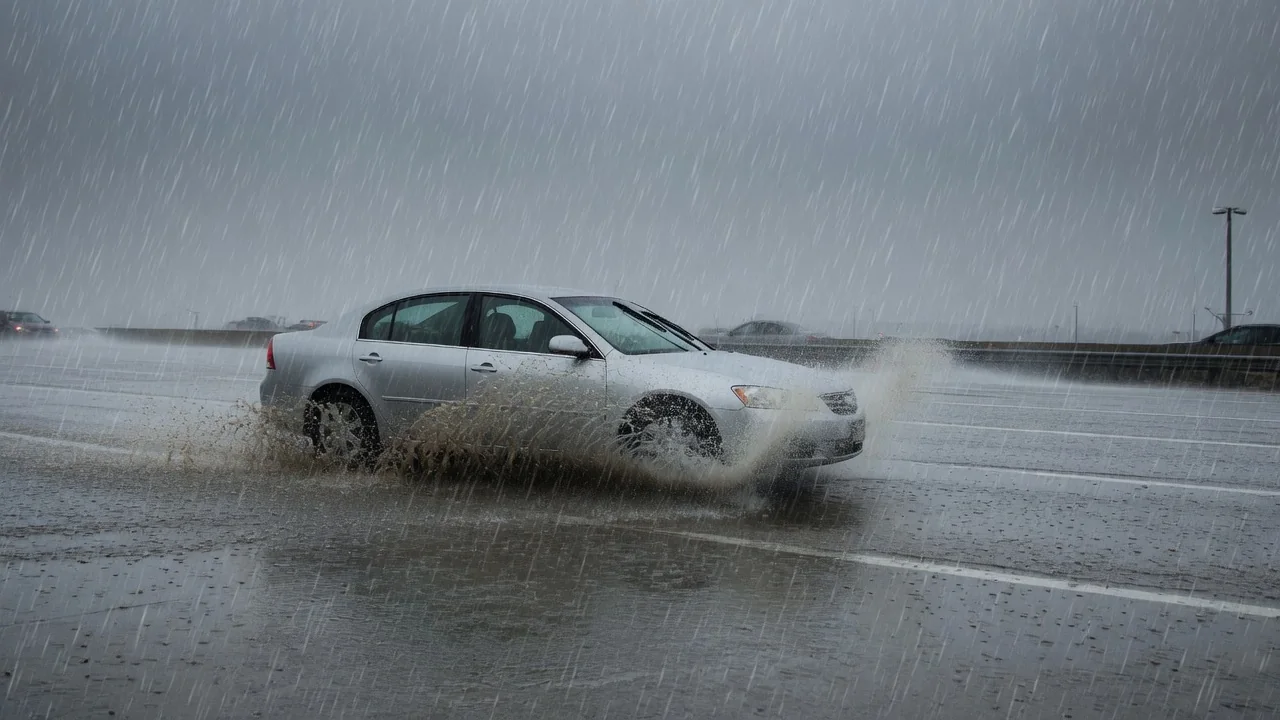
What is hydroplaning? It is the moment a tire stops touching wet pavement and starts riding on a film of water instead. With no rubber gripping the road, steering, braking and acceleration all lose their effect until contact returns. Understanding how that water layer forms, what it feels like from the driver's seat and how to respond calmly makes rainy driving far less unpredictable.
Water buildup
A tire's tread works like a set of drainage channels. As the tire rolls, grooves and small slits called sipes push water out to the sides and behind the contact patch so the rubber can press against the road surface. Hydroplaning, also called aquaplaning, begins when water arrives faster than those channels can clear it. A wedge of water builds ahead of the tire, pressure rises beneath the tread, and the tire lifts onto the film much like a water ski.
Several conditions make that buildup more likely. Standing water collects in worn wheel ruts, at the bottom of dips, along curbs and wherever drains are blocked, so depth can change sharply within a single lane. Speed matters because a faster tire has less time to move water aside. Shallow tread, low inflation pressure and wide tires on a light vehicle all reduce the pressure available to cut through the layer. The first minutes of rain can also be slick as oil and rubber residue mix with water.
Driver feel
From behind the wheel, the clearest sign is steering that suddenly turns light and vague, as though the front wheels were no longer connected to anything. The car may drift slightly without responding to small corrections, and road noise often changes as the usual hiss of tires on wet asphalt gives way to a muffled rushing sound. Hitting a deep puddle with one side of the vehicle can also tug the wheel toward that side as that tire drags through the water.
Drivetrain layout shapes the sensation. In a front-wheel-drive car, engine speed may flare briefly as the driven wheels spin freely, and the speedometer needle can jump. A rear-wheel-drive vehicle may feel the tail step sideways instead. With all-wheel drive, the feeling can be subtler, which sometimes hides how little grip is left. Traction control or stability control lights may flash on the instrument cluster, though these systems can only work with whatever grip the tires actually have at that moment.
Recovery basics
Recovery depends on giving the tires a chance to sink back through the water. The widely taught response is to ease off the accelerator smoothly, keep the steering wheel pointed where you want the vehicle to go and avoid sudden inputs. Abrupt braking or a sharp turn of the wheel accomplishes nothing while the tires are floating, and it can cause a violent reaction when grip returns unevenly. As speed falls, the tread reconnects and normal control comes back, often within a second or two.
If slowing further is necessary, vehicles with anti-lock brakes generally allow firm, steady pedal pressure once the tires are gripping again, while the system manages wheel lock. Older vehicles without that feature call for gentler braking. Cruise control deserves mention because it can try to maintain speed just when the car needs to slow, so many owner's manuals advise against using it in heavy rain. Behavior of adaptive systems varies by manufacturer, making the manual for your specific vehicle the right reference.
Everyday Use and Observations
Daily driving offers plenty of clues before any loss of contact occurs. Watch the vehicles ahead: heavy spray thrown from their tires signals a deep layer of water, and the tracks they leave behind show where the surface has been partly cleared. Following in those tracks, at a generous distance, puts your tires on less water. A glassy, reflective sheen across the lane, rain bouncing off the surface, or visible ripples in pooled areas all suggest slowing down before you reach them.
Tire condition is the part drivers can check at home. Tread grooves grow shallower with wear, and molded wear bars across the grooves become flush with the surface as the tire nears the end of its useful life. Wet-weather performance usually fades well before that point. Inflation pressure belongs on the same routine, using the figure on the door-jamb placard rather than the number molded into the sidewall. Uneven wear across the tread can point to alignment or suspension issues worth having inspected.
Limits and Next Steps
No tire design or electronic aid removes the risk entirely. Deep enough water at high enough speed will lift even a new tire, and stability control, all-wheel drive and anti-lock brakes cannot create grip that is not there. Heavier vehicles and narrower tires tend to resist floating somewhat better, yet differences between tire models, tread patterns and vehicle weights make any single safe speed impossible to state. Slowing down in rain remains the one measure that works across every car and truck.
After an unsettling moment on a wet road, a few follow-up steps are sensible. Measure tread depth and set pressures, then compare what you find with the guidance in the owner's manual and on the tire placard. If the car felt unstable in only light rain, or if the tires show uneven or advanced wear, a tire shop or technician can assess them and check alignment. When replacements are due, wet-traction ratings and tread designs aimed at water evacuation are worth weighing alongside price and tread life.