What Is Hydraulic Power Steering? How the Pump, Fluid and Rack Work
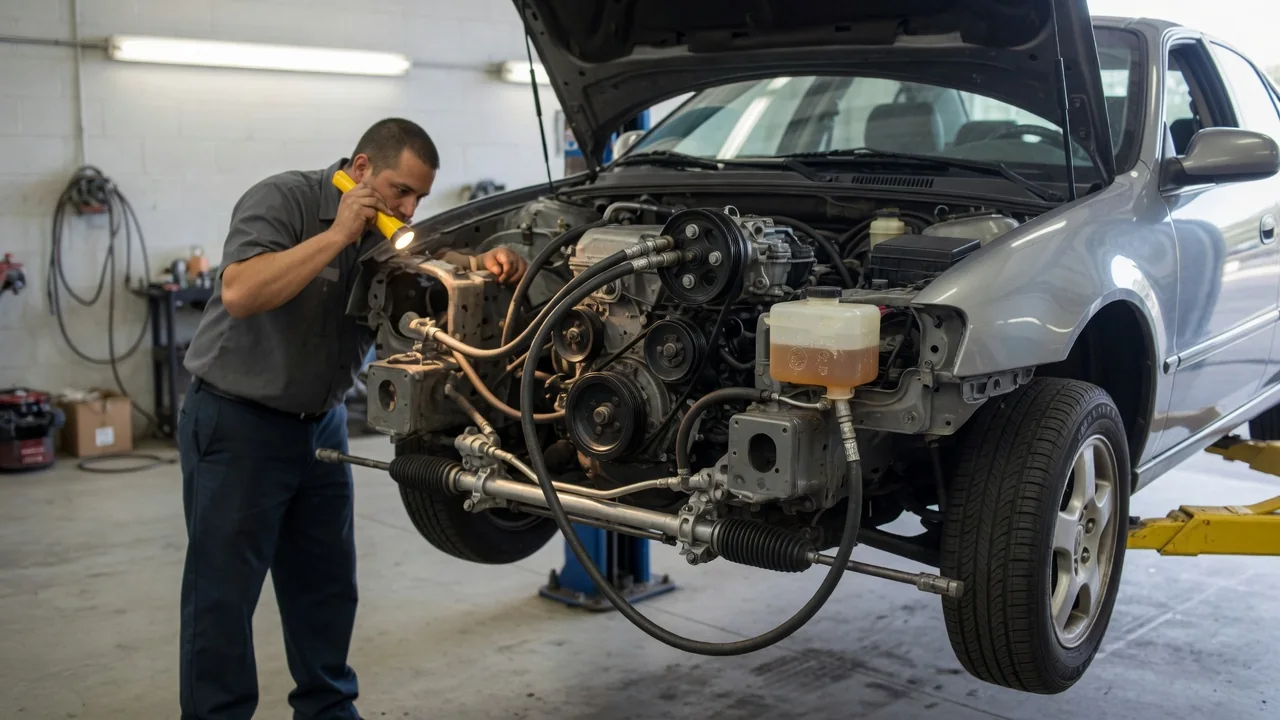
Hydraulic power steering uses pressurized fluid to help the driver turn the front wheels. The system does not rely only on arm strength and gear leverage. It adds a hydraulic push to the steering rack or gearbox whenever the steering wheel is turned. Knowing the basics of hydraulic steering assist helps you recognize normal behavior, spot early warning signs and follow the maintenance steps in a vehicle's owner's manual.
Pump and fluid
The heart of the system is the power steering pump. In a conventional setup, the engine drives the pump through a belt, so the pump spins whenever the engine runs. Most of these pumps use a vane design: a rotor with sliding vanes turns inside an oval chamber, drawing fluid in on one side and pushing it out under pressure on the other. Pump speed rises with engine speed, so the pump has a flow control valve that limits output at higher rpm. It also has a pressure relief valve that caps system pressure when the steering is held against its stops. Some vehicles use an electro-hydraulic arrangement instead, where an electric motor drives the pump so it can run only as much as needed.
The fluid does two jobs. First, it transmits force: liquid is nearly incompressible, so it carries pressure from the pump to the steering gear with little loss. Second, it lubricates the pump, valve and seals, and carries heat away from them. Fluid is stored in a reservoir, which may sit on the pump or be mounted separately, and often contains a filter screen. A high-pressure hose delivers fluid to the steering gear, and a low-pressure return line brings it back to the reservoir. Some systems route the return line through a small cooler, either a looped tube or a finned section placed in the airflow. Fluid specifications differ between manufacturers. Some systems call for a dedicated power steering fluid, others for a specific automatic transmission fluid. The correct type is whatever the vehicle's documentation lists.
Rack assist
Most modern cars with hydraulic assist use rack-and-pinion steering. The steering column turns a pinion gear that meshes with a toothed rack, moving the rack left or right to push the tie rods and turn the wheels. In a power rack, part of the rack housing forms a hydraulic cylinder. A piston fixed to the rack divides that cylinder into two chambers. Fluid pressure applied to one side helps push the rack in the direction the driver is steering.
A rotary control valve, usually built around the pinion shaft, decides which side gets pressure. Inside it, a slim torsion bar links the steering column input to the pinion. When the driver turns the wheel, the torsion bar twists slightly, in proportion to the effort required. This rotates the valve's inner spool relative to its outer sleeve. That small offset opens passages that send pressurized fluid to one chamber and let the other chamber drain to the return line. The harder the tires resist turning, the more the bar twists and the more assist the system delivers. When the driver stops applying effort, the torsion bar returns the valve to center, pressure equalizes, and fluid simply circulates back to the reservoir.
Larger trucks and some older vehicles use a recirculating-ball steering gearbox rather than a rack. The principle is the same: a control valve senses driver input and directs fluid to a piston that adds force. In either layout, the hydraulic assist only adds force to the existing mechanical linkage. It does not change steering geometry such as caster, camber or toe, which the suspension design and alignment determine.
Maintenance
Routine care centers on the fluid and the parts that contain it. You usually check the level at the reservoir, using either a dipstick in the cap or marks on a translucent tank. Many reservoirs show separate cold and hot ranges, so compare the reading with the matching mark. A level that keeps dropping points to a leak, commonly at hose connections, pump seals or the rack's boots and seals. Fluid condition matters too. Over time, heat and wear can darken the fluid and load it with fine debris. Some manufacturers specify periodic replacement or flushing, while others list no interval. The owner's manual or service schedule is the reliable reference. Mixing incompatible fluid types can harm seals, so topping off with an unknown product is a poor gamble.
The drive belt and hoses deserve attention as well. A glazed, cracked or loose belt can slip, causing reduced assist and a squeal during sharp turns. Hoses can soften, swell or seep at crimped fittings with age. Symptoms worth investigating include a whine or groan that rises when the wheel is turned, steering that feels heavy or uneven from side to side, foamy fluid that suggests air in the system, and wet residue under the front of the vehicle. After a component is replaced, the system usually needs to be bled of air using the manufacturer's procedure.
Practical implications and limits
A belt-driven pump runs whenever the engine is on, so conventional hydraulic steering draws some engine power even when the car is driving straight. That constant load is one reason many newer vehicles have moved to electric power steering, which uses power mainly when the driver applies steering input. Hydraulic systems remain common on older cars and many heavier vehicles. Many drivers associate them with a natural, consistent feel, because road forces travel back through the fluid and mechanical linkage to the steering wheel.
The assist depends on the pump turning. If the engine stalls or the belt fails, the steering does not lock, but it becomes much heavier, especially at low speed. Holding the wheel against full lock for long periods forces fluid through the relief valve and builds heat, which can speed up wear. It is better to ease off slightly once the wheels reach the stop. Very cold weather can thicken the fluid and make steering feel stiffer for the first moments after a start. Finally, this article describes how the system generally works. Exact fluid type, capacity, service intervals and diagnostic procedures vary by vehicle, so take them from that vehicle's repair or owner documentation.