What Is Hybrid Battery Cooling?
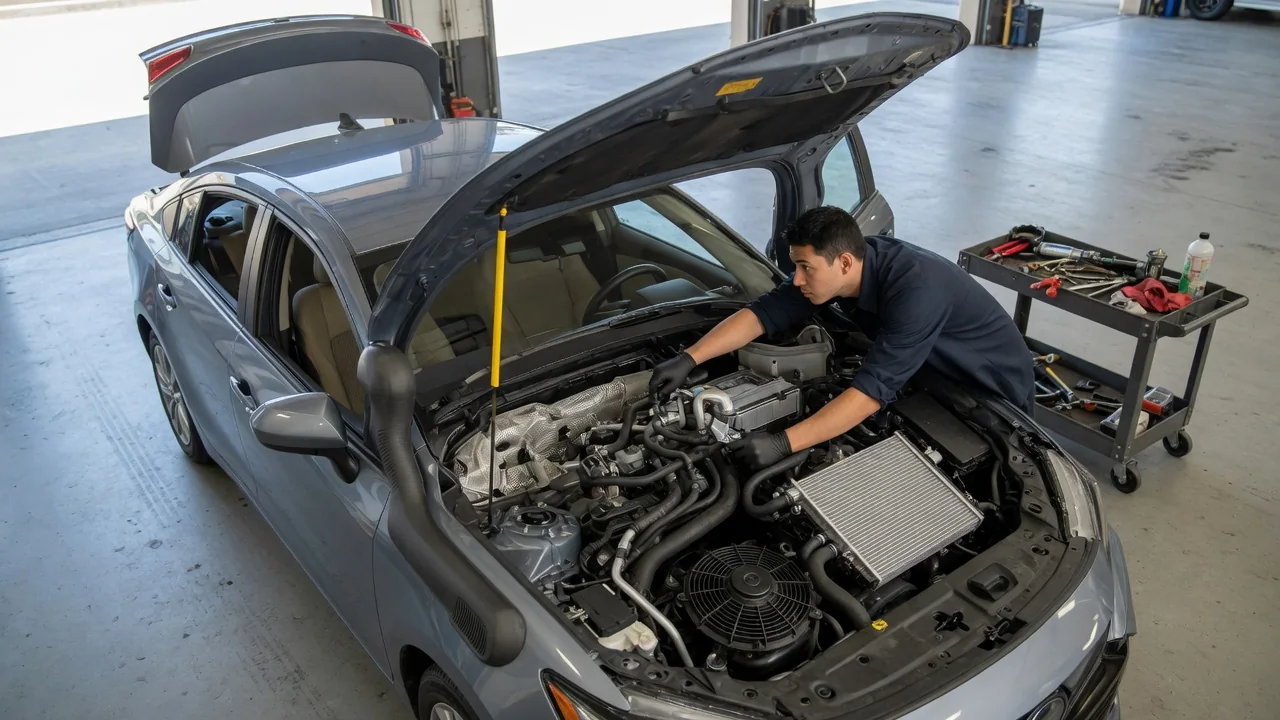
Anyone asking what is hybrid battery cooling is really asking how a hybrid keeps its high-voltage traction battery within a comfortable temperature range. Cells generate heat whenever they charge or discharge, and too much heat shortens their life and limits power. A dedicated thermal management system moves that heat away so the pack can keep working reliably.
Air or liquid cooling
Many hybrids use air cooling, in which a small electric blower draws cabin air across or through the battery modules and exhausts it elsewhere. The approach is simple and light, and it works because a conventional hybrid pack is fairly small and cycles in short bursts. Since the air comes from the passenger compartment, the battery benefits from the same conditioned air the occupants enjoy, which is why cabin temperature on a hot day has a direct effect on how well the pack sheds heat.
Liquid cooling circulates coolant through plates or channels alongside the cells, carrying heat to a radiator or to a chiller linked to the air conditioning circuit. It is more common on plug-in hybrids, whose larger packs sustain heavier loads during electric driving and charging. Some designs instead use refrigerant directly. Which layout a given vehicle has depends on the manufacturer, the model year and the battery chemistry, so the owner's manual or service information is the reliable place to confirm what sits under the seat or floor.
Vents and cleanliness
On air-cooled packs, the intake vent is the part owners are most likely to see. It is often a small grille beside or beneath the rear seat, on a side trim panel, or near the cargo area, though placement differs widely between vehicles. If a bag, coat, floor mat or child seat base covers that grille, the blower cannot pull in enough air, and the battery runs warmer than intended even though nothing is technically broken.
Cleanliness matters because the fan pulls in whatever floats through the cabin. Pet hair, lint and dust can collect on the intake grille, on a filter screen if one is fitted, and eventually on the fan blades and battery passages. A matted grille is often visible with a quick look, and a fan working harder than usual may become noticeably louder. Some vehicles have a serviceable filter with a maintenance reminder while others do not, so cleaning guidance should come from that vehicle's own documentation.
Alerts
When the control system decides the pack is running too warm, or that the cooling hardware is not responding as expected, it can alert the driver. Depending on the vehicle, this may appear as a message about hybrid battery cooling or filter maintenance, a general hybrid system warning, or a check engine light. The system typically bases its decision on several temperature sensors within the pack, along with feedback on fan speed or coolant pump operation.
A stored fault code related to battery temperature or cooling performance is a starting point for diagnosis rather than a verdict. The same code could follow from a blocked vent, a clogged filter, a weak fan, a sensor or wiring problem, low coolant on a liquid system, or genuine cell trouble. Many of these codes are also manufacturer-specific, so their meaning needs to be confirmed against information for that exact vehicle before anyone concludes that a particular part has failed.
Everyday Use and Observations
In normal driving, battery cooling works in the background and gives few signs. On an air-cooled hybrid, occupants may hear a faint whir from the rear seat area on hot days, after long climbs or during stop-and-go traffic, when the pack is cycling hard. That sound rising and falling with demand is generally normal behavior. A fan that roars constantly in mild weather, or one that has become much louder than it used to be, is worth noting.
Driver habits influence how hard the system has to work. Running the air conditioning on a hot day helps an air-cooled pack because it is breathing cabin air, while parking in direct sun with the windows closed leaves the battery heat-soaked before the trip begins. Drivers may also notice the gasoline engine running more often, or electric assist feeling weaker, when the pack is hot, because the vehicle limits battery use to protect the cells until temperatures come down.
Limits and Next Steps
There is a clear boundary between what an owner can reasonably do and what belongs with a trained technician. Keeping intake vents uncovered, looking for visible lint on the grille and following the manual's guidance on any accessible filter are sensible checks. Anything beyond the trim, however, sits close to high-voltage components, usually identified by orange cables and warning labels, and working around them without proper training and equipment carries a real risk of serious injury.
If a warning stays on, returns after the vents have been cleared, or is accompanied by reduced power, unusual smells or coolant loss, the next step is a professional diagnosis. A shop with hybrid experience can read the stored codes and live temperature data, test fan or pump operation, and compare readings between sensors to find what actually caused the alert. Acting early matters, since a pack that repeatedly runs hot tends to age faster, and battery replacement is a far larger job than restoring airflow.