What Is Hill-Start Assist in a Manual Car?
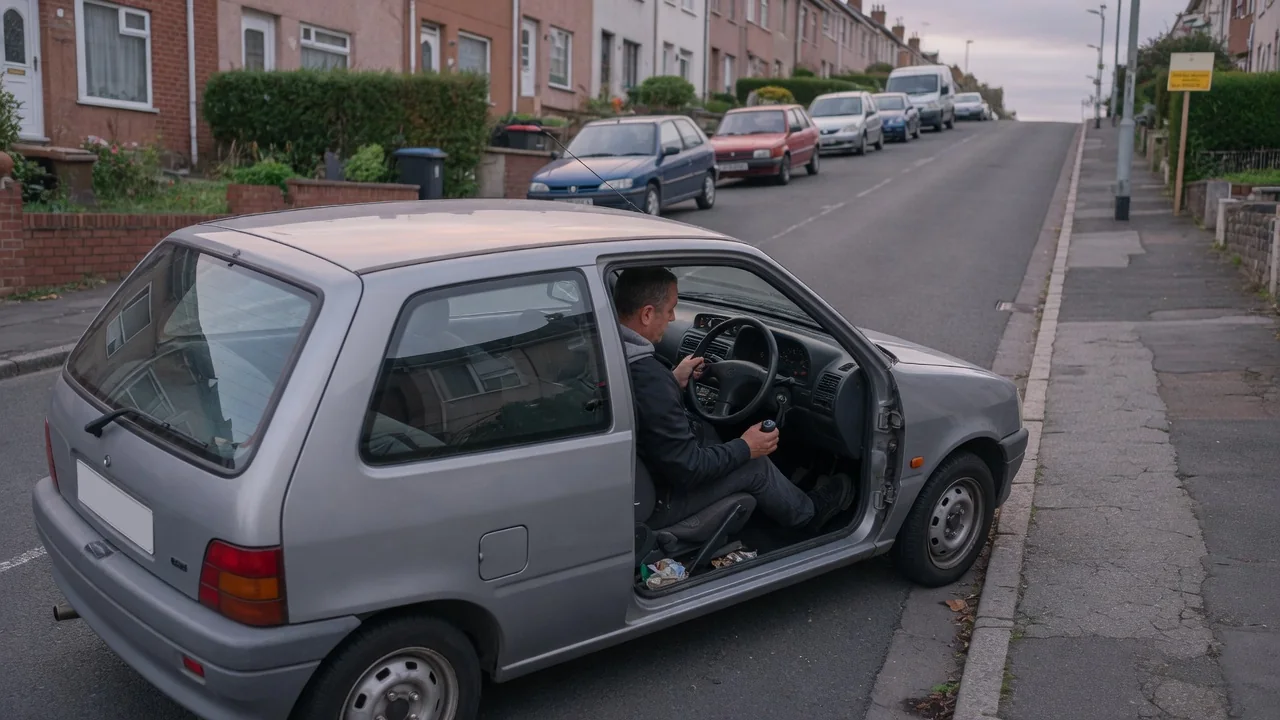
Anyone asking what is hill start assist in a manual car is usually picturing the same moment: stopped on a slope, right foot leaving the brake, and the car threatening to roll back before the clutch bites. Hill-start assist briefly holds the brakes during that gap, giving the driver time to find the bite point and pull away cleanly.
Activation
Hill-start assist normally arms itself without any button press. When the car comes to a complete stop on a gradient with the brake pedal pressed, the system uses information from sensors that detect the vehicle's angle, along with wheel speed and pedal position, to decide whether a rollback is likely. If the slope is steep enough, the brake control unit prepares to keep hydraulic pressure trapped in the brake lines once the driver's foot comes off the pedal.
The conditions that trigger the function differ between manufacturers. Many systems want the clutch pedal pressed and a gear selected that matches the direction of travel, so first gear when facing uphill or reverse when backing up a slope. Some cars show a small indicator in the instrument cluster when the hold is active, while others give no visible sign at all. A few vehicles let the driver switch the feature on or off through a menu, so the owner's manual is the best guide to how a particular car behaves.
Release
The hold is deliberately short. Once the brake pedal is released, the system keeps the car stationary for a brief window, commonly described as a couple of seconds, though the exact duration depends on the vehicle. During that time the driver moves the right foot to the accelerator and begins raising the clutch. The brakes are not locked on indefinitely, so the feature should be thought of as a bridge between pedals rather than a parking function.
Release happens in one of two ways. On many cars the system senses that the engine is producing enough torque to move the vehicle forward and lets the brake pressure go smoothly as the clutch engages. If the driver does nothing, the timer simply runs out and the pressure bleeds away, at which point the car can start to roll. Some drivers notice a faint click or a slight change in feel as the brakes let go, and a well-timed start often produces no noticeable sensation at all.
Driver coordination
The system does not replace clutch control; it only removes the rush. A driver still has to bring the clutch up to the bite point, add enough throttle to prevent a stall, and continue releasing the pedal progressively. What changes is the pace. Without the assist, the right foot has to jump from brake to accelerator while the left foot is already catching the car. With it, each movement can be made in sequence and with less urgency.
Good coordination also means not fighting the hold. Applying heavy throttle against brakes that have not yet released wastes clutch material and can make the launch jerky when the pressure finally drops. A steady rise in engine speed paired with a smooth clutch release usually lets the system hand over cleanly. Drivers who learned on cars without the feature may reach for the handbrake out of habit, and that technique still works alongside the assist on most vehicles, though the interaction can vary by design.
Everyday Use and Observations
In daily driving the feature shows its value at uphill traffic lights, on steep driveways, in multi-story parking ramps, and in stop-and-go queues on a grade where another car sits close behind. The typical observation is simple: the brake pedal is released and the car stays put for a moment instead of settling backward. On gentle slopes the system may not intervene at all, because the gradient falls below the threshold it is programmed to recognize.
Behavior can feel slightly different from one car to the next. Some systems hold firmly and release abruptly, while others ease off so gradually that the driver barely registers the transition. Load matters too, since a car full of passengers or towing a trailer places more demand on both the brakes and the clutch during the start. It is also worth knowing that hill-start assist is distinct from an auto-hold function, which keeps the car stopped for as long as the driver waits rather than for a short timed interval.
Limits and Next Steps
Hill-start assist has clear limits. It will not hold the car once its time window ends, it cannot add grip on ice, wet leaves, or loose gravel, and it does not secure a parked vehicle, which still requires the parking brake and an appropriate gear. A stall can also cancel the hold on some cars, leaving the driver to catch the vehicle with the foot brake. Treating the feature as a convenience rather than a guarantee keeps expectations realistic.
If the system stops working as expected, a warning light or message may appear, often alongside stability control or anti-lock brake indicators because these functions share sensors and hardware. A stored fault code helps point toward the affected circuit, but it is evidence to interpret rather than proof that a specific part has failed, and its meaning can depend on the manufacturer. The sensible next steps are to check the owner's manual for the car's specific operating conditions and to have a qualified technician diagnose any persistent warning.