What Is Ground Effect in Motorsport?
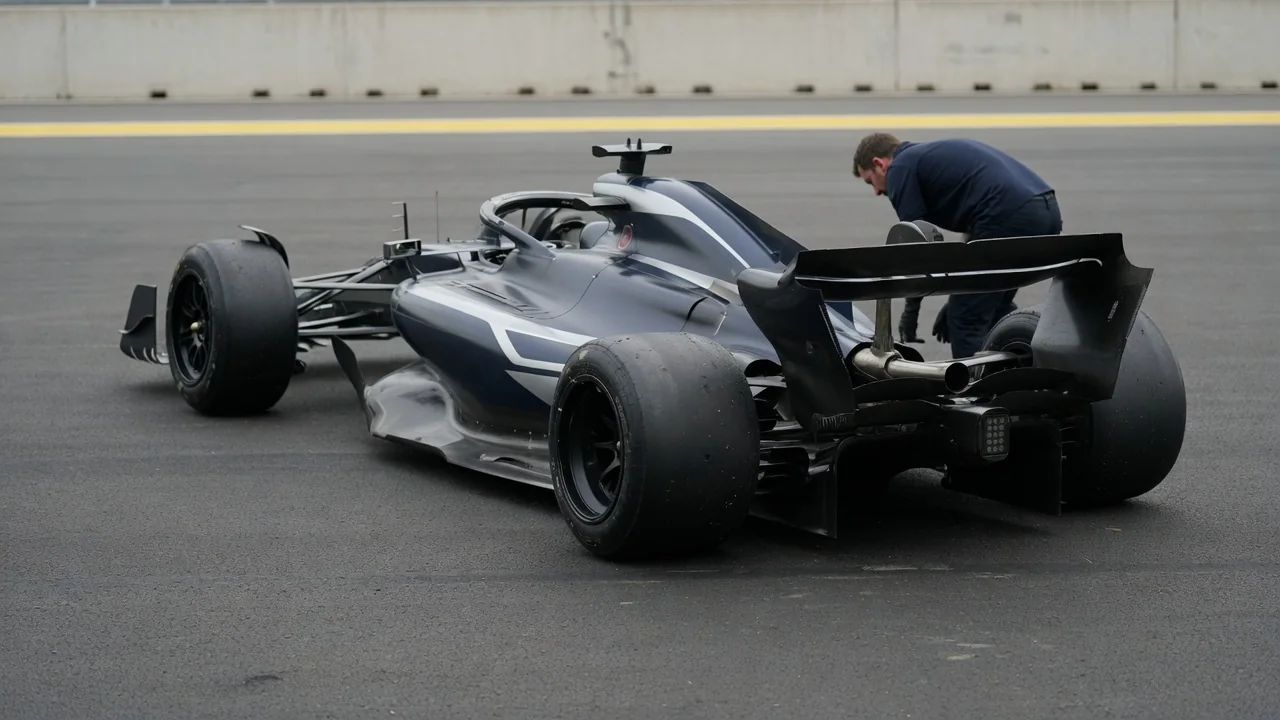
Ground effect is a way of generating downforce by using the underside of a race car, rather than only wings mounted above it, to press the car onto the track. In motorsport, ground effect means a carefully shaped floor that speeds up the air beneath the car and lowers its pressure. The higher pressure above the car then pushes it down. This guide explains the airflow, why ride height matters so much, and the safety issues involved.
Underfloor airflow: how the floor creates downforce
Every car moving at speed has air flowing over, around, and under it. On an ordinary vehicle, the underbody is usually a cluttered surface that disturbs that flow and can even create lift. A race car ground effect design treats the floor as an aerodynamic device. The gap between the floor and the track forms a channel. Designers shape that channel to narrow and then widen, so the air accelerates as it passes through the tightest section. Faster-moving air has lower static pressure, a relationship described by Bernoulli's principle and commonly called the Venturi effect. The result is a pressure difference: lower pressure under the car, comparatively higher pressure above it, and a net force pushing the car down.
The rear of the floor typically ends in a diffuser. This upswept section lets the fast air slow down and expand gradually back toward the pressure of the surrounding air. A well-designed diffuser helps draw more air through the underfloor, which strengthens the low-pressure region. Some designs use shaped tunnels running along the floor, while others rely on a mostly flat floor with a diffuser at the back. The sides matter too, because high-pressure air leaking in from the edges weakens the suction. Designers manage this with sidewall shapes, edge features, or vortices that act as invisible barriers. Some earlier designs used physical skirts that slid down to touch the track.
The appeal is efficiency. Wings produce downforce, but they also add drag. A floor can deliver a large share of total grip with a comparatively smaller drag penalty. The exact balance depends on the specific design and on the rules it is built to.
Ride height: why a few millimeters matter
Ride height is the distance between the floor and the track surface, and it is the single most important variable for ground effect. As the floor moves closer to the ground, the channel narrows, the air accelerates more, and downforce generally rises. That relationship does not continue indefinitely. If the gap becomes too small, the airflow can choke or separate from the floor surfaces, and downforce can drop suddenly instead of increasing. Engineers therefore look for an operating window where the floor works strongly without falling off this aerodynamic cliff.
The difficulty is that ride height is never constant on track. Under braking, the nose dives and the rear rises, and under acceleration the opposite happens. Downforce itself compresses the suspension as speed increases, which lowers the car further. Bumps, kerbs, and changes in track surface add sudden movements. Floor performance depends heavily on both height and pitch angle, so the car's aerodynamic behavior can change from corner to corner and even within a single corner.
One visible consequence is porpoising, a bouncing oscillation at speed. The floor gets closer to the ground and generates more downforce, which pulls the car lower until the flow stalls. Downforce then collapses, the suspension pushes the car back up, the flow reattaches, and the cycle repeats. Teams typically counter this with stiffer suspension, higher ride heights, or floor changes. Each of these remedies costs something in grip, comfort, or overall performance.
Safety: risks of relying on the floor
Ground effect can generate a large share of a car's grip, so losing it suddenly is a serious risk. A car may hit a kerb, run over debris, or lose its seal at the edges of the floor. When that happens, downforce can disappear almost instantly, often mid-corner and at high speed. The driver may then find the car has far less grip than a moment earlier. A car that spins or turns sideways may also expose its underside to oncoming air, which in some circumstances can contribute to the car lifting off the ground.
Holding a stable ride height requires very stiff suspension, which transfers more of the track's bumps directly to the driver. Persistent porpoising or bottoming can subject drivers to repeated vertical loads. These loads affect comfort, vision, and concentration, and they raise concerns about longer-term physical strain. Repeated contact with the track can also wear or damage the underside of the car.
Sanctioning bodies have responded in different ways over the years. Rulebooks in various series have banned or restricted sliding skirts, mandated flat sections of floor, and set minimum ride heights. Others have required wear planks under the car or limited diffuser dimensions. Some regulations also include measures intended to limit excessive vertical oscillation. The approach varies by series and changes as regulations are revised, so the rules of each championship define what is permitted.
Practical implications and limits
For anyone watching races, ground effect helps explain why setup discussions focus so heavily on ride height, suspension stiffness, and how cars handle kerbs and bumpy tracks. A car can look fast on a smooth circuit and struggle on an uneven one simply because its floor cannot stay in its ideal operating window. Aerodynamic downforce also grows with speed, so its benefit is greatest in fast sweeping turns. In slow hairpins, mechanical grip from tires and suspension does most of the work.
Ground effect also matters when cars follow each other closely. Downforce from the floor tends to be less affected by turbulent air from a car ahead than downforce from exposed wings. This is one reason some regulations have shifted emphasis toward the floor. How well that works in practice depends on the full package of rules and car design, not on the floor alone.
For road cars, the limits are clear. Public roads have speed bumps, potholes, steep driveways, and varied loads, so road vehicles need generous ground clearance and compliant suspension. Many performance road cars use flat underbody panels and rear diffusers to reduce lift and drag. However, the very low ride heights and stiff setups that make full ground effect powerful on a race track are generally impractical for everyday driving. Owners should not assume that aftermarket underbody parts will produce racing-level downforce, because the effect depends on the whole vehicle's shape, speed, and ride height.