What Is Fuel Injector Cleaner Supposed to Do?
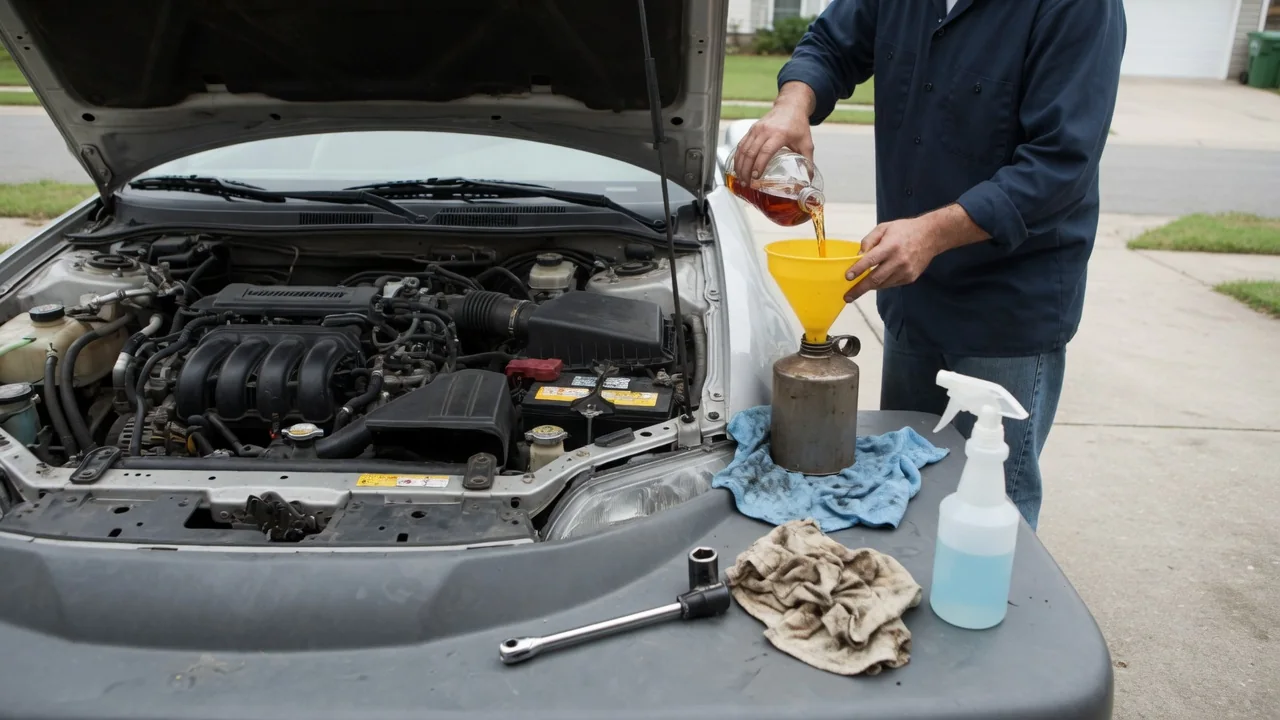
Drivers often ask what fuel injector cleaner is supposed to do before pouring a bottle into the tank. In simple terms, it is a fuel additive intended to loosen deposits inside the fuel system as the engine runs. Understanding that proposed function, and the limits around it, helps set realistic expectations about what a bottle can and cannot change.
Deposit concept
A fuel injector meters gasoline through very small openings and shapes it into a fine spray. Over time, heat and fuel residue can leave varnish or carbon around the nozzle tip. Even a thin layer may alter the spray pattern, so fuel leaves in uneven streams rather than a well-atomized mist. Injector cleaner is designed around this idea: detergent chemistry carried in the fuel is meant to soften and dissolve those deposits gradually, so they pass through the engine and burn during normal combustion.
Where deposits form depends heavily on engine design. In port injection engines, fuel sprays onto the back of the intake valves, so treated fuel washes across those surfaces as well as the injector tips. In direct injection engines, the injector sprays straight into the combustion chamber, so a tank additive never touches the intake valves at all. That difference means the same product can have a very different reach from one vehicle to another, and the owner's manual is the best guide to which layout an engine uses.
Vehicle condition
The condition of the vehicle shapes how much a cleaner has to work with. An engine that has run mostly on quality gasoline with adequate detergent content, and that sees regular highway driving, may have little deposit buildup to remove. In that case a driver is unlikely to feel any difference after a treatment. A higher-mileage vehicle used mainly for short trips, where the engine rarely reaches full operating temperature, is a more plausible candidate for the kind of light buildup these additives are meant to address.
Mechanical health matters just as much. A cleaner works only on deposits that fuel can reach, so it cannot restore a worn injector, repair a leaking seal, or correct an electrical fault in the injector circuit. A weak fuel pump, a restricted fuel filter, aged spark plugs, or a vacuum leak can all produce symptoms that resemble dirty injectors. If any of those conditions is present, the engine will behave the same after treatment, which is useful information in itself rather than a sign that the product was defective.
When diagnosis matters
Diagnosis matters most when symptoms are distinct, persistent, or accompanied by a warning light. A steady or flashing check engine light, a noticeable misfire, hard starting, a fuel smell, or stalling all deserve proper testing rather than a bottle of additive. A flashing light in particular usually signals an active misfire that can overheat the catalytic converter, so continued driving on the hope that a cleaner will help can make the eventual repair larger. Testing identifies the cause before money is spent on guesses.
Stored fault codes need careful reading. A misfire or fuel trim code points to an area of concern, but it does not prove an injector is clogged or has failed. The same code can stem from ignition, air metering, fuel pressure, or wiring problems, and some codes are manufacturer-specific, so their meaning should be confirmed for the exact vehicle. A technician can compare fuel trim data, check fuel pressure, and perform injector balance testing to see whether one cylinder is truly underdelivering before any cleaning or replacement is considered.
Everyday Use and Observations
In everyday use, a tank additive is poured into the fuel filler, usually before refueling so that incoming gasoline mixes it thoroughly. The treated fuel then works slowly as the tank is consumed. The product label sets the amount per quantity of fuel, and following it is worthwhile, because a stronger mixture is not a faster one. The vehicle's owner's manual may also state whether the manufacturer recommends, permits, or discourages aftermarket fuel additives, which is worth checking before the first use.
What a driver can observe is usually subtle. If mild deposits were affecting spray quality, the idle may feel slightly smoother, throttle response a little cleaner, or cold starts less hesitant over the course of a tank or two. Fuel economy changes are hard to judge, since weather, tire pressure, traffic, and driving style shift the numbers constantly. Many drivers notice nothing at all, which often means the injectors were not meaningfully restricted to begin with. Keeping notes on symptoms before and after gives a fairer comparison than memory.
Limits and Next Steps
The limits are worth stating plainly. A pour-in cleaner is a maintenance aid for light deposits, not a repair for a failed component. It cannot clear heavy carbon on the intake valves of a direct injection engine, free a mechanically stuck injector, or fix a problem outside the fuel system. Repeating treatments back to back when the first changed nothing rarely produces a different outcome. Results also vary with fuel quality, engine design, and how the vehicle is driven, so one owner's experience does not predict another's.
When symptoms remain after a treated tank, the sensible next step is inspection rather than another bottle. A shop can scan for codes, review live data, and test the fuel and ignition systems to locate the actual fault. If the injectors are confirmed as restricted, professional options such as pressurized on-vehicle cleaning or off-vehicle ultrasonic cleaning and flow testing exist, with replacement reserved for units that fail testing. For prevention, consistent use of good-quality gasoline and attention to scheduled maintenance generally do more than occasional additives.