What Is Four-Wheel Steering? How a Rear Wheel Steering System Works
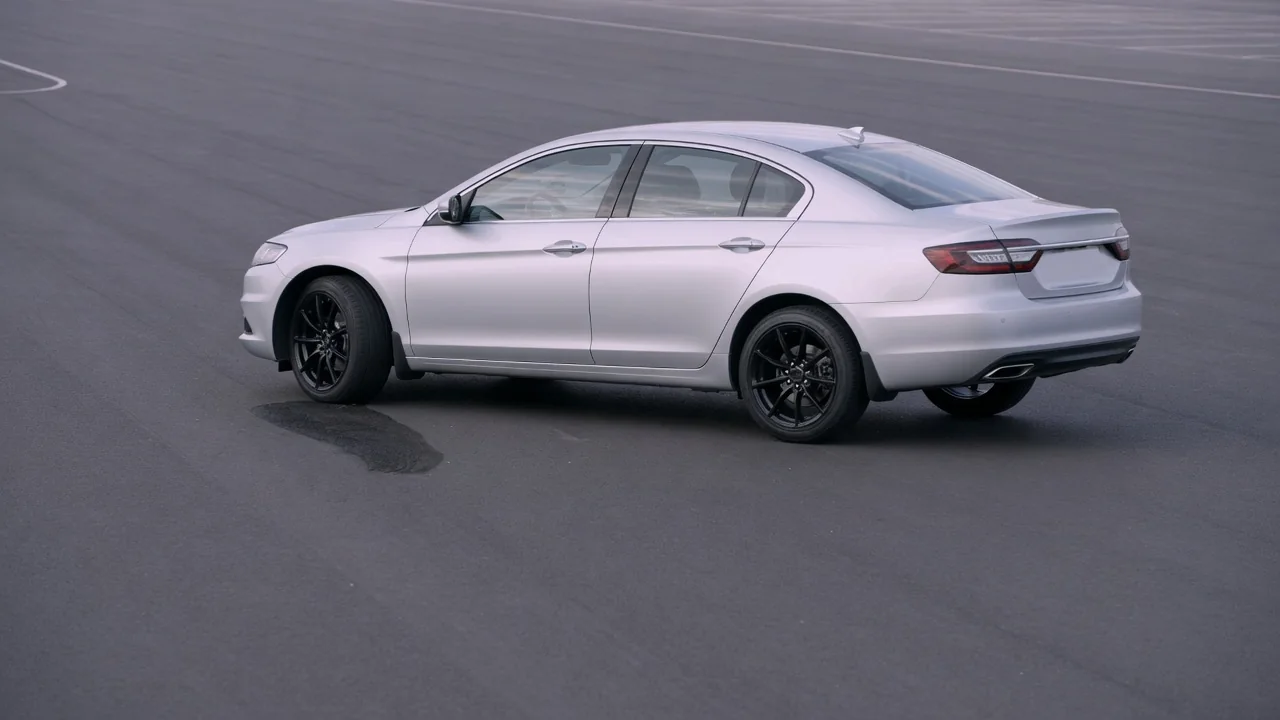
Four-wheel steering is a system that lets the rear wheels turn by a small, controlled amount in addition to the front wheels. Often called a rear wheel steering system, it changes how a vehicle pivots in corners, maneuvers in tight spaces and responds during lane changes. It is not the same as four-wheel drive, which sends engine power to all four wheels. This article explains the rear steering angle, how behavior differs at low and high speed, and how designs vary.
Rear steering angle
In a conventional vehicle, the rear wheels point straight ahead apart from small alignment settings such as toe. When the driver turns the steering wheel, the vehicle rotates around a point roughly in line with the rear axle. Four-wheel steering adds a mechanism that can turn the rear wheels on command. The rear steering angle is usually much smaller than the front angle, often only a few degrees, because a small change at the rear has a large effect on the vehicle's path and because space in the rear suspension and wheel wells is limited.
What matters most is the direction of the rear wheels relative to the front. When the rear wheels turn opposite to the front wheels, called counter-phase or opposite-phase steering, the center of the turn moves forward and the vehicle rotates more tightly for a given front steering angle. When the rear wheels turn in the same direction as the front, called in-phase steering, the turn center moves away from the vehicle, and the car moves more sideways with less rotation. In both cases, the geometry of the turn is reshaped rather than simply sharpened.
In most modern systems, the driver does not steer the rear wheels directly. A control unit calculates the rear angle from inputs such as vehicle speed and front steering angle, and in some designs yaw rate and lateral acceleration, then commands an actuator at the rear axle to set that angle. The result is that the rear wheels follow a programmed strategy rather than a fixed mechanical ratio.
Low-speed and high-speed
At low speed, systems generally turn the rear wheels opposite to the front. This makes the vehicle behave as if its wheelbase were shorter, so the turning circle shrinks and the driver needs fewer turns of the steering wheel for parking, U-turns and tight parking structures. The benefit tends to be most noticeable on vehicles with a long wheelbase, where a fixed rear axle would otherwise force wide, multi-point maneuvers.
At higher speed, the strategy usually reverses and the rear wheels turn in the same direction as the front by a small amount. This makes the vehicle behave as if its wheelbase were longer. The rear tires begin generating cornering force sooner, which reduces the delay between a steering input and the vehicle's response and limits the tendency of the body to overshoot in yaw. Lane changes and quick avoidance maneuvers can feel more settled because the car tracks toward its new path instead of pivoting sharply around its center.
Between these two regimes, the system blends its behavior, and the rear angle may pass through zero as speed rises. The speed at which the strategy changes, the maximum angle in each direction and the smoothness of the transition are set by the engineers for each vehicle. There is no universal switchover speed, so any specific figure must come from the documentation for that particular vehicle.
Variation
Four-wheel steering has been built in several ways. Some earlier designs used mechanical linkages that connected the rear wheels to the front steering gear, so the rear angle depended on how far the steering wheel was turned. In such layouts, small inputs typically produced in-phase rear steering and large inputs produced opposite-phase steering. Other designs used hydraulic actuation. Many recent systems rely on electronically controlled electromechanical actuators, which allow the rear angle to depend on speed and other driving conditions rather than on steering-wheel position alone.
Hardware layouts also differ. One approach uses a single central actuator that moves both rear wheels together through tie rods. Another uses a separate actuator at each rear wheel, which can allow more individual control. Systems can also differ in available angle range, in how closely they work with stability control, and in whether drive mode settings change the calibration. Separately, nearly every suspension produces small passive toe changes under load through its geometry and bushings, often called compliance steer. That effect influences handling, but it is not active four-wheel steering.
Because manufacturers use different trade names, the name alone does not reliably reveal how a given system works. Rear steering may also be standard on some versions of a model and optional or absent on others. The owner's manual, equipment list or service information for the specific vehicle is the dependable way to confirm whether it is fitted and how it behaves.
Practical implications and limits
In daily driving, the most noticeable change is usually at parking speeds, where the steering can feel quicker than expected. When the rear wheels turn opposite to the front during a sharp turn, the rear corner of the vehicle swings outward more than a driver might anticipate. This matters near pillars, curbs and parked cars. Most drivers adapt with practice, but it helps to watch the rear corners when maneuvering closely. At road speeds, the effect is typically subtle and is felt more as stability than as an obvious steering change.
Service work deserves extra attention. A wheel alignment on a vehicle with active rear steering involves the rear steering system as well as conventional settings, and the actuator may need to be centered or calibrated with diagnostic equipment after an alignment, suspension repair or component replacement. The exact procedure depends on the vehicle, so the manufacturer's service information should be followed. If the system detects a fault, a warning is generally displayed, and the system's fallback behavior should be checked in the owner's manual rather than assumed.
Four-wheel steering does not create extra grip. Tire condition, inflation and road surface still set the limits of cornering and braking, and the system cannot overcome a worn or misaligned chassis. It also adds parts, weight and repair complexity compared with a fixed rear axle. Whether the benefits in maneuverability and stability justify those trade-offs depends on the vehicle's size, how it is driven and how well the system is calibrated for that application.