What Is Feathered Tire Wear?
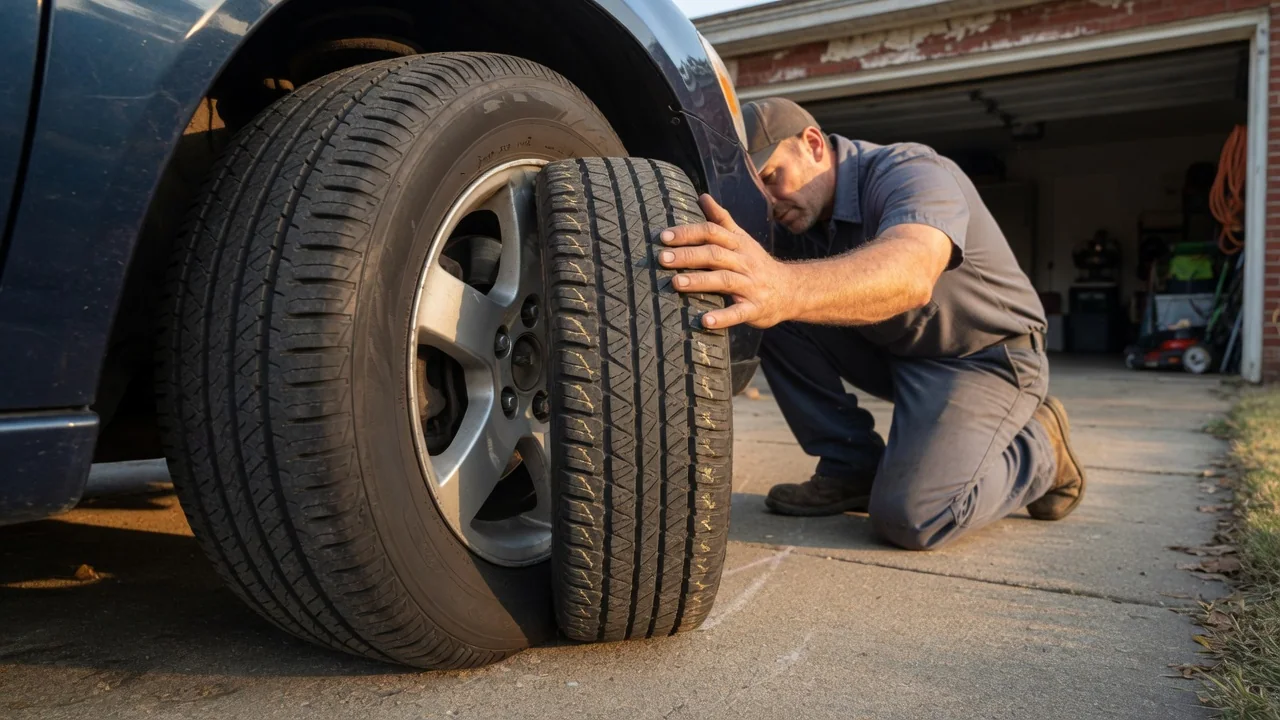
What is feathered tire wear? It is a pattern in which each tread rib or block wears smooth on one edge and stays sharp on the other, so the tread feels different depending on which way a hand moves across it. The pattern usually points toward a tire being scrubbed sideways as it rolls, which makes alignment the natural place to start looking.
Feel carefully
Feathering is often easier to feel than to see. With the vehicle parked, the engine off, and the parking brake set, a flat palm drawn lightly across the tread from the outer shoulder toward the inner shoulder may glide smoothly, while the return stroke catches on raised, sharp edges. That one-way roughness, similar to stroking a saw blade or the edge of a feather, is the defining trait. Go slowly and use light pressure, because worn tires can expose steel cords or hold embedded debris that cuts skin.
The direction of the sharp edges matters, so note which way the tread feels smooth on each tire and compare left to right across the same axle. Check several spots around the circumference, since a pattern that appears everywhere suggests a constant geometry problem rather than a single flat spot. Tread design changes the sensation: wide ribs on a highway tire show a subtle ramp, while aggressive blocks on an all-terrain tire can feel sharp even when the wear is fairly mild.
Toe and suspension
Toe describes whether the fronts of two tires on an axle point slightly toward each other or away from each other when viewed from above. When toe is outside the manufacturer's specification, the tire no longer rolls straight along its path; it is dragged slightly sideways with every rotation. That lateral scrub pushes rubber across each rib, rounding one edge and leaving the opposite edge raised. Many technicians read the direction of the sharp edges as a clue to whether the tire is toed in or out.
Toe does not go out of range by itself, so the suspension and steering deserve attention. Worn tie rod ends, loose ball joints, tired control arm bushings, or a bent component after a pothole or curb strike can let the wheel shift under load, so the toe angle changes while driving even if it measures acceptably at rest. Rear axles can feather too, particularly on vehicles with independent rear suspension and adjustable rear toe. Adjustment points and specifications differ by vehicle, so the correct figures must come from data for that specific model.
Correct cause
Feathering is evidence, not a diagnosis, and it is worth separating from other patterns before paying for a fix. Cupping or scalloping shows dips around the circumference and often points toward weak dampers or imbalance. Heel-and-toe wear ramps each block from front to back in the direction of rotation rather than side to side, and is common on some block tread designs. Wear confined to one shoulder with a smooth surface leans toward camber. Mixed patterns happen, and a tire can show feathering along with another form of wear.
Fixing the cause means inspecting before adjusting. An alignment performed on loose parts will not hold, so a careful shop checks steering and suspension joints for play, confirms ride height and tire pressures, and then measures the angles against the vehicle's specification. If a bent arm or worn bushing is found, it is addressed first and the alignment follows. Asking for the before and after measurement printout gives a record of what was actually out of range, rather than relying on the tread pattern alone.
Everyday Use and Observations
On the road, feathered tires often announce themselves through sound before anyone touches the tread. A humming or droning noise that rises with speed, sometimes mistaken for a wheel bearing, is a common companion. A steering wheel that sits off-center on a straight, level road, or a vehicle that feels darty and needs frequent small corrections, fits the same picture. None of these signs is conclusive individually, since road crown, tire pressure differences, and tire construction can produce similar sensations.
Simple habits make the pattern easier to catch early. Running a hand across the tread during a pressure check or a car wash takes seconds and reveals changes long before the tread looks odd. Tire rotation is another useful moment, because a feathered tire moved to a different position may get noisier for a while as it wears against its old pattern. Vehicles that carry heavy loads, tow, or have been lowered or lifted may show the wear sooner, because altered ride height shifts the alignment angles.
Limits and Next Steps
A hand check has limits. It cannot measure toe, cannot tell which component is loose, and cannot rule out damage inside the tire. Mild feathering may gradually even out after the underlying cause is corrected and the tires are rotated, though the noise may linger for some time. Heavier wear is permanent, and a tire worn near its tread wear indicators, showing cords, or carrying bulges or cuts should be replaced rather than monitored, regardless of how the remaining tread looks.
The practical next step is a professional inspection and alignment measurement, ideally soon after the pattern is noticed, since scrubbing continues with every mile and shortens tire life. Mention any recent impacts, suspension work, or new noises, because that history helps narrow the search. When new tires are fitted, having the alignment checked at the same time protects the investment. Rotation timing and pressure settings should follow the owner's manual and the door-jamb placard for that vehicle rather than a general rule.