What Is Exhaust Backpressure?
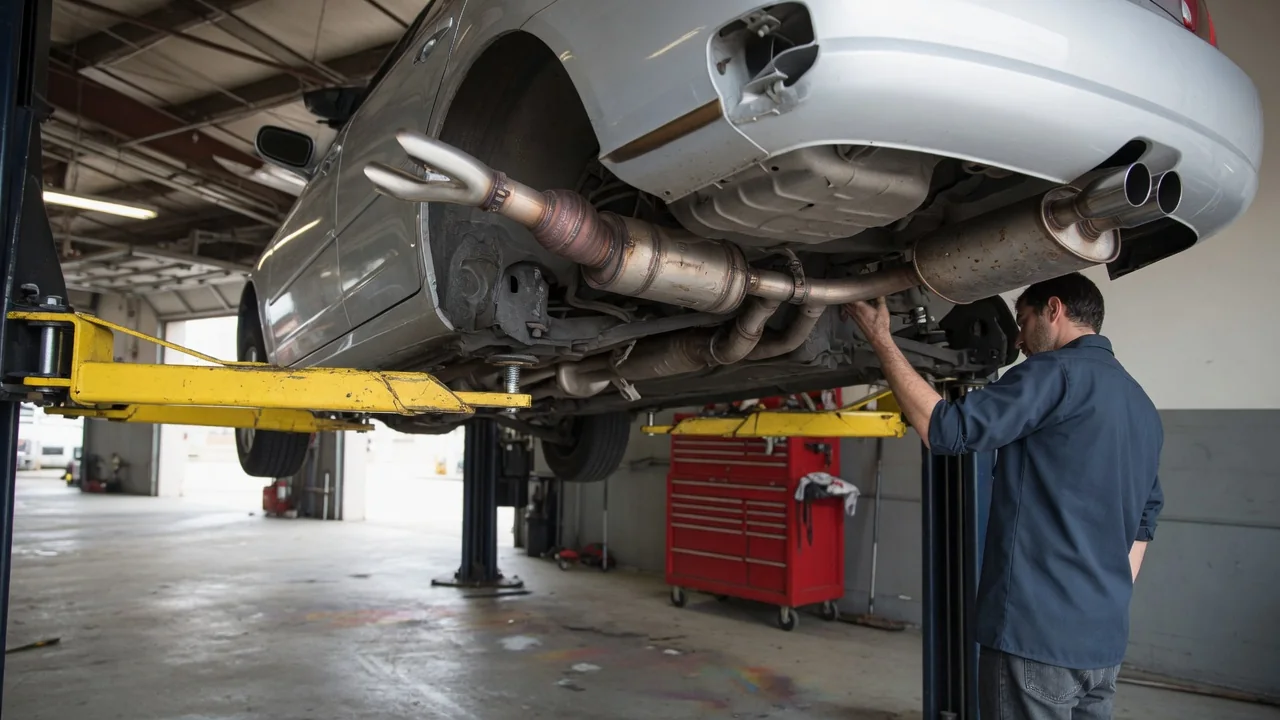
What is exhaust backpressure? It is the resistance that burned gases meet as they leave the engine and travel through the exhaust system to the tailpipe. Every pipe, bend, catalytic converter and muffler adds some resistance, and the engine has to push against it on each exhaust stroke. Understanding that resistance helps explain how an engine breathes, why restrictions matter and what symptoms deserve attention.
Exhaust path
When an exhaust valve opens, hot gas rushes out of the cylinder into the exhaust manifold or header, where pulses from several cylinders merge. From there the stream typically passes an oxygen sensor, one or more catalytic converters, sometimes a resonator, then a muffler and tailpipe. Turbocharged engines add a turbine housing near the manifold, and many diesels include a particulate filter. Each component the gas passes through slows it slightly, and the combined resistance measured upstream is what technicians call backpressure.
The layout differs widely between vehicles. A compact four-cylinder car may have a single short path with one converter mounted close to the engine, while a V-configuration engine often uses two banks that join further back or stay separate as a dual system. Pipe diameter, the tightness of bends and the internal design of the muffler all shape how freely gas moves. Looking under a vehicle, readers can usually trace this route from the engine bay to the rear bumper, though heat shields hide some parts.
Restrictions
Some restriction is designed in. A catalytic converter forces gas through a fine honeycomb coated with catalyst, and a muffler routes it through chambers or perforated tubes to cancel noise. Engineers size these parts so that pressure stays modest across the engine's operating range while emissions and sound targets are met. The idea that an engine needs backpressure to make torque is a common simplification; what helps is well-timed gas velocity and pulse scavenging, which properly sized pipes provide without excessive resistance.
Problems arise when resistance grows beyond the design. A converter substrate can melt or break apart after prolonged misfires or contamination from oil or coolant, blocking passages. A pipe can be crushed by a road impact, an internal muffler baffle can collapse, or a double-walled pipe can fail inward where nothing shows from outside. On diesels, a particulate filter loaded with soot or ash raises pressure as well. Spent gas then lingers in the cylinder, displacing fresh air and fuel and raising heat near the engine.
Diagnostic context
Technicians confirm excessive backpressure by measuring, not guessing. Common approaches include fitting a low-pressure gauge at an upstream oxygen sensor port, watching intake manifold vacuum on a gasoline engine to see whether it sags as revs are held, and comparing temperatures or pressures before and after a suspect component. Many diesels have a differential pressure sensor across the particulate filter, so scan tool data shows the restriction directly. Acceptable readings depend on the engine and test condition, so the manufacturer's service information sets the reference.
Fault codes need careful reading in this context. A catalyst efficiency code, a misfire code or a diesel filter pressure code is evidence that points toward an area of the system; it does not prove that a part is blocked or has failed. A sensor fault, an exhaust leak or a fueling problem can set similar codes, and some codes are manufacturer-specific, with meanings that must be confirmed for the exact vehicle. A sound diagnosis also asks why a restriction formed, since an unresolved misfire can damage a replacement converter too.
Everyday Use and Observations
On the road, a restricted exhaust usually shows up as an engine that feels strangled. Acceleration may be acceptable at low speed but fade as revs rise, hills need more throttle, and top-end power seems to hit a wall. Fuel consumption often worsens because the driver presses harder for the same result. Some drivers notice a hissing or muffled exhaust note, a rattle from loose converter material, unusual heat from under the floor or, in severe cases, an engine that starts and then stalls.
These signs are not unique to backpressure. A clogged air filter, weak fuel delivery, ignition faults, a slipping transmission or a turbocharger boost problem can feel much the same from the driver's seat. Vehicle design also changes what is noticed: a turbocharged engine may lose boost response early, while a large naturally aspirated engine may mask a partial blockage until heavy load. Diesel owners who make mostly short trips may see filter warning lights, because regeneration needs sustained heat to burn off the accumulated soot.
Limits and Next Steps
A general explanation can describe how flow resistance behaves, but it cannot say what pressure is normal for a particular engine or which component is at fault. Those answers depend on the vehicle's design, its emissions equipment and the test method used. Modifications bring limits as well: larger pipes or freer mufflers may lower resistance, yet they can change noise, affect low-speed response and, where emissions components are altered or removed, break regulations. Gains on an otherwise standard engine are often smaller than expected.
If symptoms suggest a restriction, the sensible next step is a professional inspection rather than continued driving under load. Severe blockage can overheat the converter and nearby parts, and exhaust components stay hot enough to burn long after shutdown, so hands-on checks are best left to a workshop with a lift and the right gauges. Noting when the power loss occurs, any warning lights and recent misfire or oil consumption history gives the technician a useful head start and helps target the cause.