What Is Engine Torque?
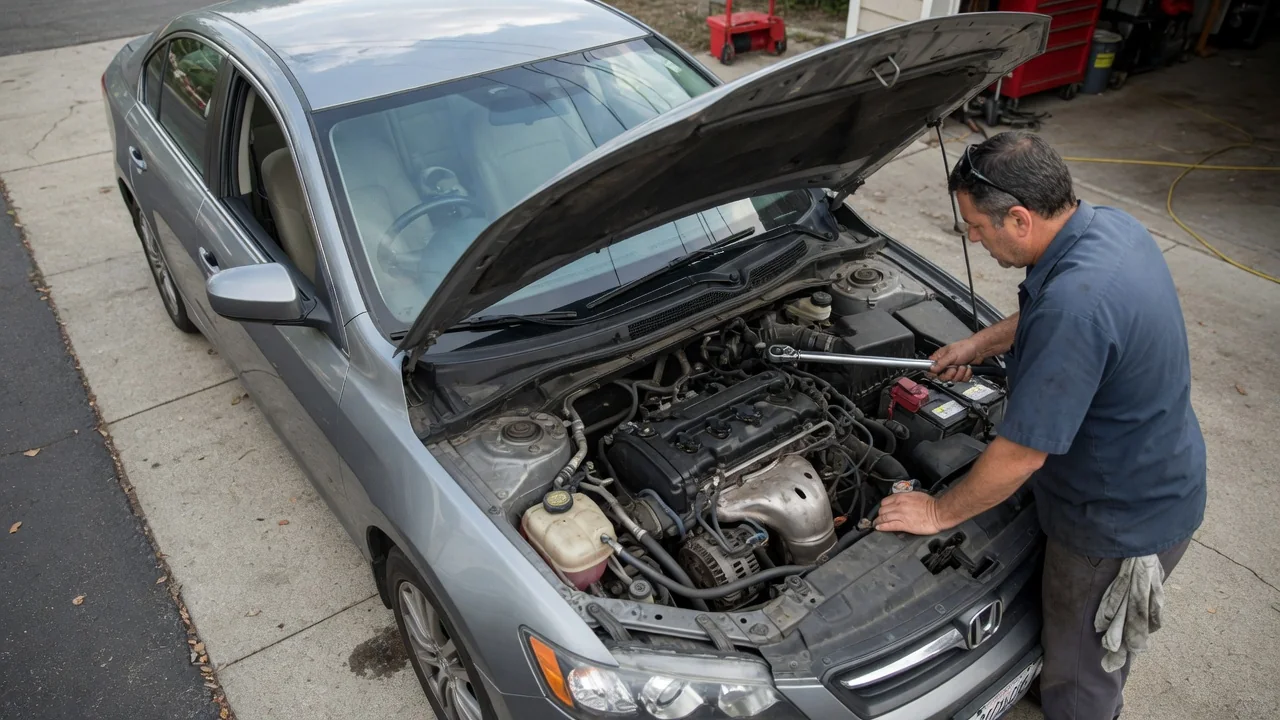
What is engine torque? Put simply, it is the turning force an engine produces at its crankshaft, the twist that eventually rotates the wheels. Drivers feel it as the shove when pulling away from a stop or climbing a grade. This guide explains where that force comes from, how gearing reshapes it, and what it means behind the wheel in everyday driving.
Torque at crankshaft
Inside a combustion engine, burning fuel and air pushes each piston down its cylinder. A connecting rod links the piston to an offset journal on the crankshaft, so that straight-line push becomes rotation, much like a leg pressing a bicycle pedal around its crank. Torque is the strength of that twist, a force acting at a distance from the center of rotation. In the United States it is usually expressed in pound-feet, while many manufacturers also publish newton-meters.
Crankshaft torque is not a single fixed number. It rises and falls across the rev range depending on how well the cylinders fill with air, how the fuel burns, and how much friction the engine must overcome. Published figures normally quote the peak, but the shape of the whole curve matters more on the road. Turbocharged engines and diesels often deliver strong twist at low revs, while some naturally aspirated gasoline engines need more rpm to do their best work. Electric motors behave differently again, offering strong twist from a standstill.
Gearing effect
The twist leaving the crankshaft is not the twist that reaches the tires. A transmission and final drive sit in between, and gears trade rotational speed for turning force. In a low gear, the engine spins many times for each wheel revolution, multiplying torque at the axle so the vehicle can launch or climb. In a high gear, multiplication drops, the wheels turn faster for a given engine speed, and the engine runs more quietly at cruising speed.
This is why the same engine feels eager in second gear and lazy in top gear at the same road speed. Downshifting before a pass does not make the engine stronger; it raises revs and increases the leverage applied to the drive wheels. Automatic transmissions add a torque converter that can further multiply twist when pulling away. Gear ratios, axle ratios, and tire diameter vary widely between vehicles, so two models with similar engine output can respond quite differently.
Everyday feel
From the driver's seat, torque shows up as the push in your back when you press the accelerator. An engine with generous low-rpm twist moves off smoothly with little throttle, holds speed on a hill without a downshift, and feels relaxed in traffic. One that builds its torque higher in the rev range may feel soft at first, then pull harder as the tachometer climbs, rewarding a driver who is willing to use lower gears.
Torque and horsepower are related rather than rival ideas. Horsepower describes how quickly work gets done, and it is calculated from torque multiplied by engine speed. Torque is the force available at any instant; power reflects how fast that force can keep being delivered. That is why a vehicle can feel muscular around town yet run out of breath at highway speeds, or feel modest at low revs and come alive when the engine is spinning quickly.
Everyday Use and Observations
Towing and hauling make torque easy to notice. With a trailer attached or a bed full of gravel, the engine needs more turning force to hold speed, so the transmission stays in lower gears longer and downshifts sooner on grades. Merging onto a freeway with a full load of passengers produces a similar effect. If the vehicle holds its gear and gains speed steadily, the engine is working in a part of its range where torque is plentiful.
A tachometer offers a simple window into this behavior. Watching where the engine pulls hardest, and where it begins to feel strained or sluggish, reveals the usable band for that particular vehicle. Drive modes, throttle mapping, and transmission programming also shape the sensation, since software decides how quickly the requested torque arrives. Hybrids blend electric motor assistance at low speed, which can mask a small gasoline engine's weaker bottom end. The owner's manual and manufacturer data give the specifics for any given model.
Limits and Next Steps
More torque is not automatically better. Tires can only transmit so much force before they slip, which is why traction control trims engine output on wet or loose surfaces. Driveline components such as clutches, transmissions, and axles are engineered around the torque the engine is expected to produce, and manufacturers set towing and payload ratings with those limits in mind. Altitude, heat, and fuel quality can also reduce what an engine delivers on a given day.
A noticeable loss of pulling power deserves attention, yet the cause is not always obvious. Restricted airflow, fueling or ignition problems, a slipping clutch, or a transmission concern can all feel like weak torque. A warning light or stored fault code is evidence to interpret, not proof that a particular part has failed, and some codes are manufacturer specific. A qualified technician with vehicle-specific information can confirm the cause. For shoppers, a test drive on familiar roads reveals more than a peak figure.