What Is Engine Braking?
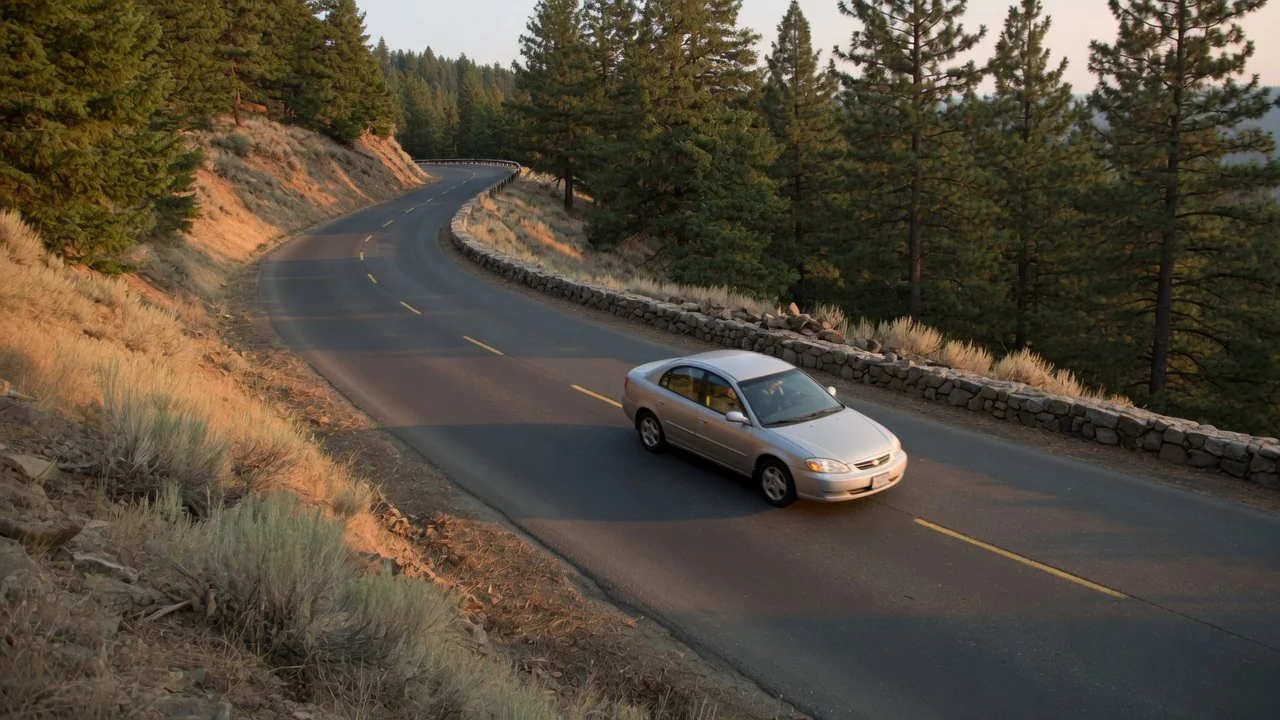
Lift your foot off the accelerator in a moving car and it begins to slow before you ever touch the brake pedal. So what is engine braking? It is the retarding force an engine produces when the throttle closes while the wheels remain connected to it through the transmission, turning the engine from a source of power into a source of drag.
Where resistance comes from
In a gasoline engine, most of the resistance comes from pumping losses. When the throttle plate closes, the pistons keep moving because the wheels are still turning the crankshaft, yet they must pull air past a nearly shut opening. That creates strong vacuum in the intake manifold, and each intake stroke becomes work the engine has to do against that vacuum. The energy for that work comes from the vehicle's own momentum, so road speed falls even though no friction brake is applied.
Internal friction adds to the effect. Piston rings sliding in the cylinders, bearings, the valvetrain, the oil pump and belt-driven accessories all absorb energy as they turn. Diesel engines behave differently because many have no throttle plate in the conventional sense, so their natural retardation is often weaker, which is why heavy trucks frequently use exhaust brakes or compression release systems. Hybrids and electric vehicles produce a similar sensation through regenerative braking, though the mechanism there is electrical rather than mechanical.
Gear choice
Gear selection determines how strongly the effect is felt. A lower gear multiplies the engine's resistance through the drivetrain, and it also spins the engine faster for a given road speed, which increases both pumping and friction losses. Lifting off in a high gear on the highway produces a gentle, gradual slowing, while lifting off in second gear at city speeds produces a much firmer tug. Drivers can watch the tachometer rise after a downshift and feel deceleration increase with it.
With a manual transmission, the driver chooses the gear directly and should match the downshift to road speed so the engine is not pushed past its safe rev range. Automatics vary considerably. Some hold a lower gear when the selector is moved to a low or manual position, some downshift on their own when they sense a descent, and others upshift or let the torque converter slip, reducing the effect. Continuously variable transmissions may simulate lower ratios. The owner's manual describes how a particular vehicle behaves.
Practical use
The most valuable use is on long downhill grades. Friction brakes convert motion into heat, and constant pedal pressure on a mountain descent can raise temperatures enough to cause fade, where the pedal feels softer and stopping distances grow. Selecting a lower gear before the descent lets the engine hold speed in check, so the brakes are needed only for occasional firm applications and have time to cool between them. This matters even more when towing a trailer or carrying a heavy load.
It also helps on slippery roads, where a smooth lift of the accelerator slows the vehicle more gently than a sudden brake application. The caution is that the retarding force reaches only the driven wheels, so an abrupt downshift on ice or wet pavement can break traction at that axle and unsettle the car. Gentle, early gear changes are the safer habit. Some vehicles offer hill descent control or tow modes that manage this automatically, and their operation differs by manufacturer.
Everyday Use and Observations
In ordinary driving, the effect shows up every time traffic slows ahead. Lifting off early and letting the car decelerate in gear smooths the approach to a red light or a slower vehicle and reduces how hard the brake pads must work. On most modern fuel-injected engines, the engine computer cuts fuel delivery during closed-throttle deceleration above a certain engine speed, so coasting in gear can use less fuel than coasting in neutral, where the engine must burn fuel to keep idling.
The signs are easy to notice. Engine speed stays above idle while the car slows, the engine note changes to a lower, steadier hum, and vacuum-related sounds may become audible. Some vehicles show instantaneous fuel economy climbing to its maximum reading during this phase. One point worth remembering is that brake lights do not illuminate when slowing by engine alone in most conventional cars, so a light touch on the pedal helps warn drivers following closely.
Limits and Next Steps
Engine braking supplements the brake system and does not replace it. It cannot bring a vehicle to a complete stop, it provides far less force than the friction brakes in an emergency, and it fades as engine speed drops toward idle. Used within the normal rev range it does not harm a healthy engine, since the loads involved are modest compared with acceleration. The real risk is a badly chosen downshift at high speed, which can over-rev the engine and strain the clutch and driveline.
Drivers who want to use it well should start by reading how their own vehicle handles low-gear selection, grade logic or regenerative settings, then practice on a familiar hill at moderate speed. A noticeable change in behavior deserves attention: slowing that feels much weaker than usual, harsh jolts on lifting off, or a clutch that slips during deceleration can point to transmission, mount or engine concerns. A qualified technician can assess those symptoms, since the same feel can arise from several different causes.