What Is Electric Power Steering? Motor Assist, Sensors and Fault Signs
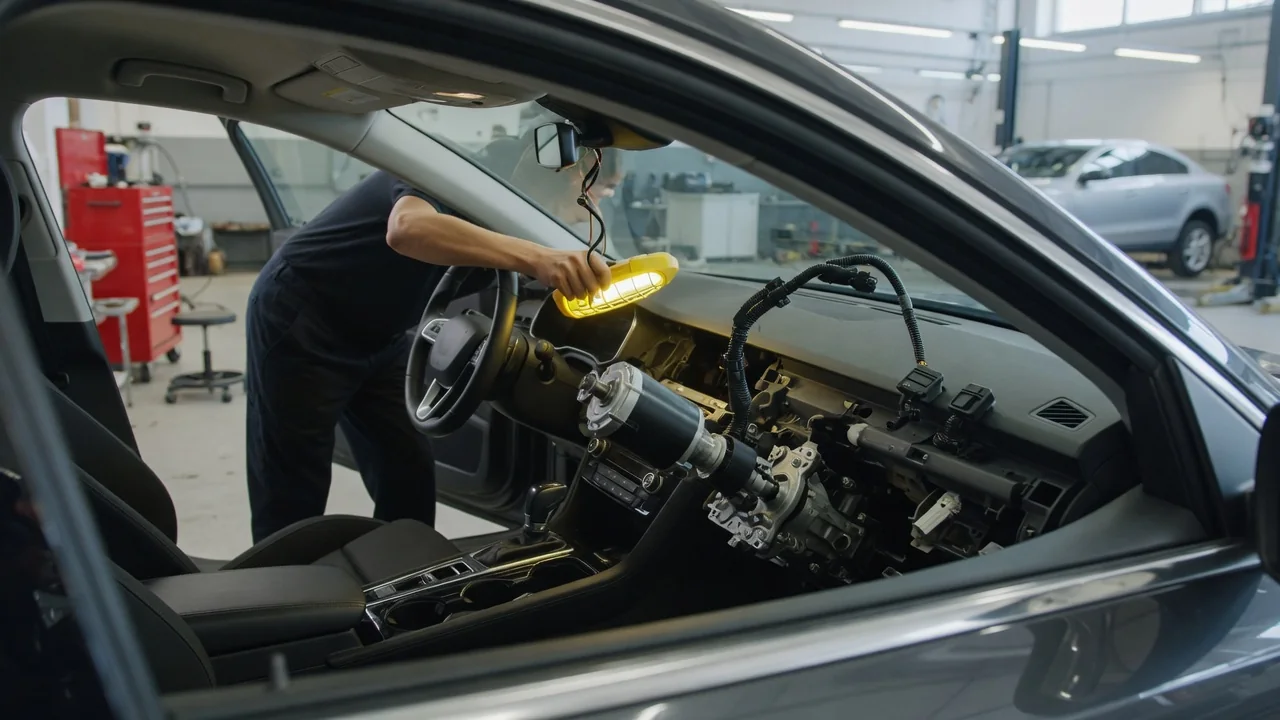
Electric power steering, usually shortened to EPS, is a steering assist system that uses an electric motor instead of a hydraulic pump to reduce the effort needed to turn the steering wheel. In short, a control module reads how hard and how far you are turning, then commands a motor to add just enough force. The sections below explain the motor assist, the sensors behind it, and the warning signs of a problem.
Motor assist: how the electric motor helps you steer
In a conventional hydraulic system, an engine-driven pump keeps fluid under pressure, and that pressure helps push the steering rack. EPS removes the pump, hoses and fluid. Instead, a motor is mounted somewhere along the steering path and connected through a reduction gear. In a column-mounted design, the motor sits near the steering column and usually drives it through a worm gear. In pinion-mounted designs, the motor acts on the steering pinion. In rack-mounted designs, it drives the rack directly, often through a belt and ball-nut mechanism. The layout depends on the manufacturer, the vehicle's size and the steering loads it must handle. The owner's manual or service information is the right place to confirm which layout a vehicle uses.
The electric steering assist function works on demand. When you turn the wheel, the control module calculates how much help is needed and sends a matching current to the motor, which adds torque in the same direction you are steering. Assist is typically tuned to change with conditions. It is generous at parking speeds, where the tires resist turning most, and lighter at highway speeds, where a firmer feel supports stability. The motor draws significant power mainly while it is actively assisting, so EPS avoids the constant load of a belt-driven pump. Other systems can also command the same motor. That is why many driver-assistance functions, such as lane centering or automated parking, rely on electric steering.
Sensors that tell the system what you want
The most important input is the torque sensor. In many designs, a short torsion bar links the upper and lower parts of the steering shaft. When you apply effort at the wheel, the bar twists very slightly. The sensor measures that twist to determine both the direction and the amount of force you are using. Depending on the design, this measurement may use magnetic, Hall-effect or other contactless sensing methods. The control module treats this signal as the driver's request: more twist means more assist is needed, and no twist means the motor should not be pushing.
Several other signals refine the result. A steering angle sensor reports the wheel's position and how quickly it is moving. This helps the wheel return to center and is often shared with stability control. The motor itself typically has a position sensor so the module can drive it smoothly and precisely. Vehicle speed usually arrives over the vehicle's data network from wheel speed sensors or another module. The system also monitors supply voltage and its own temperature. If a key signal is missing or implausible, the module may reduce or shut off assist and store a diagnostic trouble code rather than risk unpredictable steering.
Fault signs to watch for
The clearest sign is a power steering warning light or message on the instrument cluster, often together with steering that suddenly feels heavy. The steering wheel stays mechanically connected to the wheels, so losing assist does not mean losing steering. However, the effort can rise sharply, especially at low speed. Other symptoms include: • assist that comes and goes; • effort that feels uneven or notchy through part of the turn; • a steering wheel that does not return to center as it normally would; • a pull that appears without any change to the tires or suspension; Knocking or clunking felt through the column can point to wear in the reduction gear or intermediate shaft. Grinding or whining can come from the motor or gear assembly.
Some symptoms are not failures. Many systems deliberately reduce assist if the motor gets hot, for example during a long series of parking maneuvers, and full assist returns once it cools. A weak battery, a poor ground connection or a charging problem can also reduce assist, because the motor depends on stable voltage. Heavy steering can also come from low tire pressure, worn suspension joints or misalignment, which have nothing to do with the electric system. Confirming the cause usually requires a scan tool that can read the steering module's codes and live data.
Practical implications and limits
For everyday ownership, EPS changes what maintenance looks like. There is no reservoir to top up and no fluid to leak, but the electrical system becomes part of steering health. Keeping the battery, terminals and charging system in good condition supports consistent assist. Holding the wheel at full lock for long periods adds unnecessary load and heat, so it is reasonable to avoid it. If the warning light appears while driving, slow down, expect extra steering effort, and stop somewhere safe. Restarting the vehicle may temporarily clear the fault, but the stored code still deserves attention.
After a wheel alignment, a battery disconnection or replacement of steering parts, some vehicles need the steering angle sensor reset or the system to relearn its center position. The procedure varies by manufacturer, so follow the service information for the specific vehicle. Electric assist also cannot correct poor geometry. Caster, toe and camber still determine much of the vehicle's straight-line stability and self-centering; EPS simply adds force on top of them. Steering feel in an EPS vehicle is largely set by software calibration. A lighter or more filtered feel than a hydraulic system is a design characteristic, not by itself a sign of a fault. Depending on how the manufacturer supplies parts, repairs may involve replacing a complete column or rack assembly.