What Is Double-Wishbone Suspension? Arms, Wheel Control, and Packaging
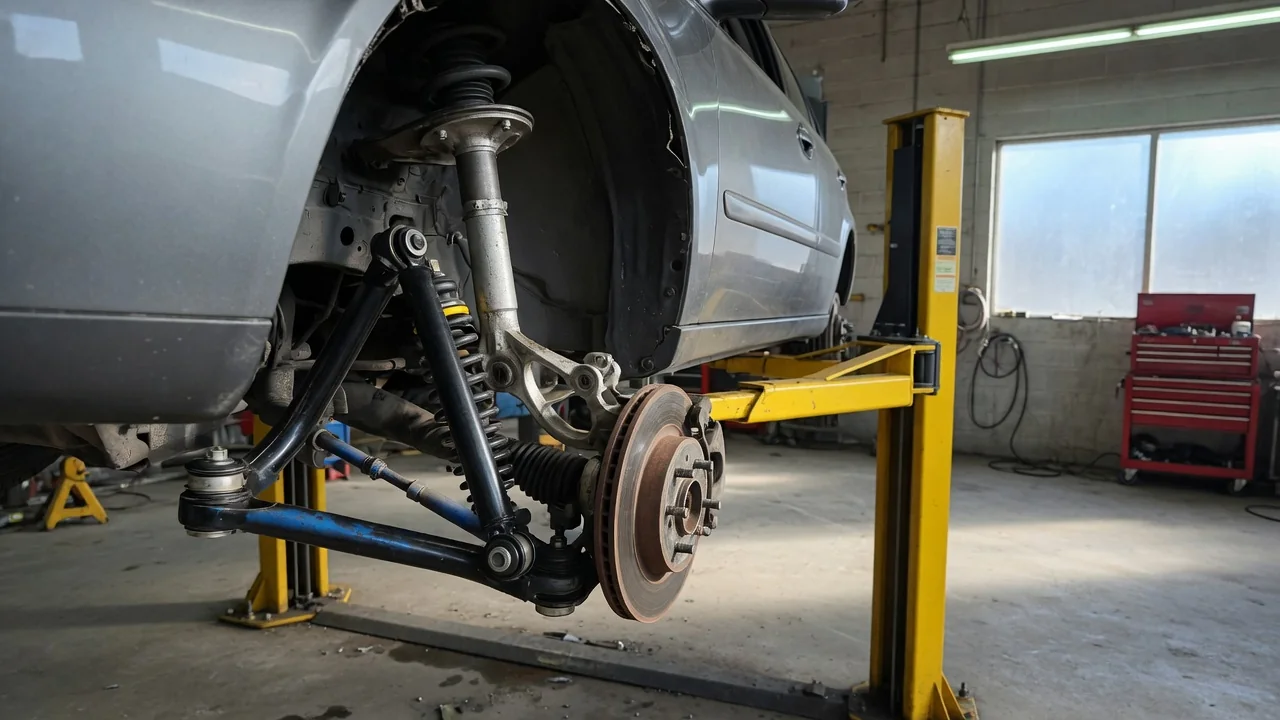
Double-wishbone suspension, also called double A-arm suspension, is an independent suspension design that locates each wheel with two separate control arms, one above the other. Each arm pivots on the body or subframe at its inner end and connects to the wheel carrier, or knuckle, at its outer end. Engineers can choose the length, angle, and mounting points of both arms independently, so the layout gives them wide freedom to shape how the wheel moves. This guide explains how the arms work, what they control, and how much space they need.
Upper and Lower Arms
In a double-wishbone car suspension, each wheel is held by an upper control arm and a lower control arm. The name comes from the traditional shape of these arms: a triangle or A-shape, with two inner pivot points mounted to the chassis or a subframe and a single outer point joined to the steering knuckle or hub carrier. The inner pivots usually run through rubber or polyurethane bushings. The outer connection is typically a ball joint, which lets the knuckle move up and down and, on a steered axle, rotate for steering. Together, the two arms and the knuckle form a closed linkage that defines the path of the wheel as the suspension compresses and extends.
The arms are rarely identical. In most road-car applications the upper arm is shorter than the lower one, an arrangement often called short-long arm, or SLA, suspension. The arms are also usually not parallel, and their angles relative to the ground and to each other are chosen deliberately. The spring and shock absorber generally act on one of the arms, most often the lower one, or on the knuckle itself, while the arms do the job of locating the wheel. Some designs replace a one-piece wishbone with two separate links. That blurs the line between double-wishbone and multilink suspension, so terminology varies between manufacturers.
Wheel Control
The main reason engineers choose two arms is control over wheel geometry through the suspension travel. Camber, the inward or outward tilt of the tire, is a good example. When the body rolls in a corner, the outside wheel moves up relative to the chassis. With a shorter upper arm, the top of the knuckle is pulled inward more than the bottom as the wheel rises, which adds negative camber. This camber gain can partly offset the lean of the body and help keep the tread flatter on the road, which supports grip. The amount of gain is a tuning choice, because too much can increase tire wear and affect stability over bumps.
The steering axis runs through the upper and lower ball joints, so designers can also set caster, kingpin inclination, and scrub radius with considerable freedom. The angles of the arms viewed from the side influence anti-dive under braking and anti-squat under acceleration. Their angles viewed from the front determine the instant center and the roll center height. These points affect how much the body rolls and how load transfers between the tires. In practice every one of these parameters interacts with the others, so the final geometry is a balance of compromises rather than a single ideal.
Toe control matters as well. On a steered axle, the tie rod must sweep an arc that closely matches the arms. If it does not, the wheel steers itself as the suspension moves, a behavior called bump steer. Bushing stiffness adds another layer: soft bushings improve comfort and isolation, but they allow the arms to shift slightly under cornering and braking loads, so the real geometry departs from what the static design predicts.
Packaging
The flexibility of double-wishbone geometry comes at a cost in space. The upper arm and its mounts need room above or beside the tire inside the wheel well. That space has to come from somewhere: the engine compartment at the front, or the cargo area and rear seat region at the rear. A MacPherson strut, by comparison, uses the strut itself as the upper locating member, which takes up less width and leaves more room for a transversely mounted engine. Some double-wishbone designs place the upper arm high above the tire to reduce intrusion. That requires a tall knuckle and changes the loads the knuckle must carry.
A double-wishbone setup also uses more parts: two arms, additional bushings, an extra ball joint per corner, and often a stiffer mounting structure or subframe to carry the loads. That adds manufacturing cost and assembly time, and it can add weight, although lighter materials such as aluminum arms can offset part of the mass. These packaging and cost factors help explain why the design is generally favored where handling precision, load capacity, or wheel control are priorities, and why simpler layouts remain common where space and cost dominate. The choice for any particular vehicle depends on its own engineering targets.
Practical Implications and Limits
For a driver, the benefits of double-wishbone geometry show up indirectly, in how consistently the tires stay planted and how predictable the steering feels. The layout alone does not guarantee good handling or ride comfort. Spring rates, damper tuning, bushings, anti-roll bars, tires, and alignment settings all shape the result, and a well-tuned strut suspension can outperform a poorly executed double-wishbone design. Treat the suspension type as one clue about the engineering priorities of a vehicle, not a verdict on how it drives.
Ownership involves more wear points. Each corner has upper and lower ball joints and several arm bushings, and worn components can cause clunking over bumps, wandering steering, vague response, or uneven tire wear. Camber and caster are set by arm positions, so many designs provide adjustment through eccentric bolts, shims, or slotted mounts, while others offer limited or no adjustment for some angles. Whether a parameter can be changed, and how, is specific to each vehicle. Alignment and repair work should follow the factory service information for that model rather than general assumptions.
Finally, be cautious with labels. Specification sheets and marketing materials do not always use the term consistently, and some systems described as double-wishbone use separate links or mount the damper in ways that differ from the classic layout. If you need to know exactly what a car has, check its service manual or parts diagrams, or look at the suspension directly. The defining feature is two distinct arms meeting the knuckle, one above the hub and one below it.