What Is Coast Mode in an Electric Car? How It Works and When to Use It
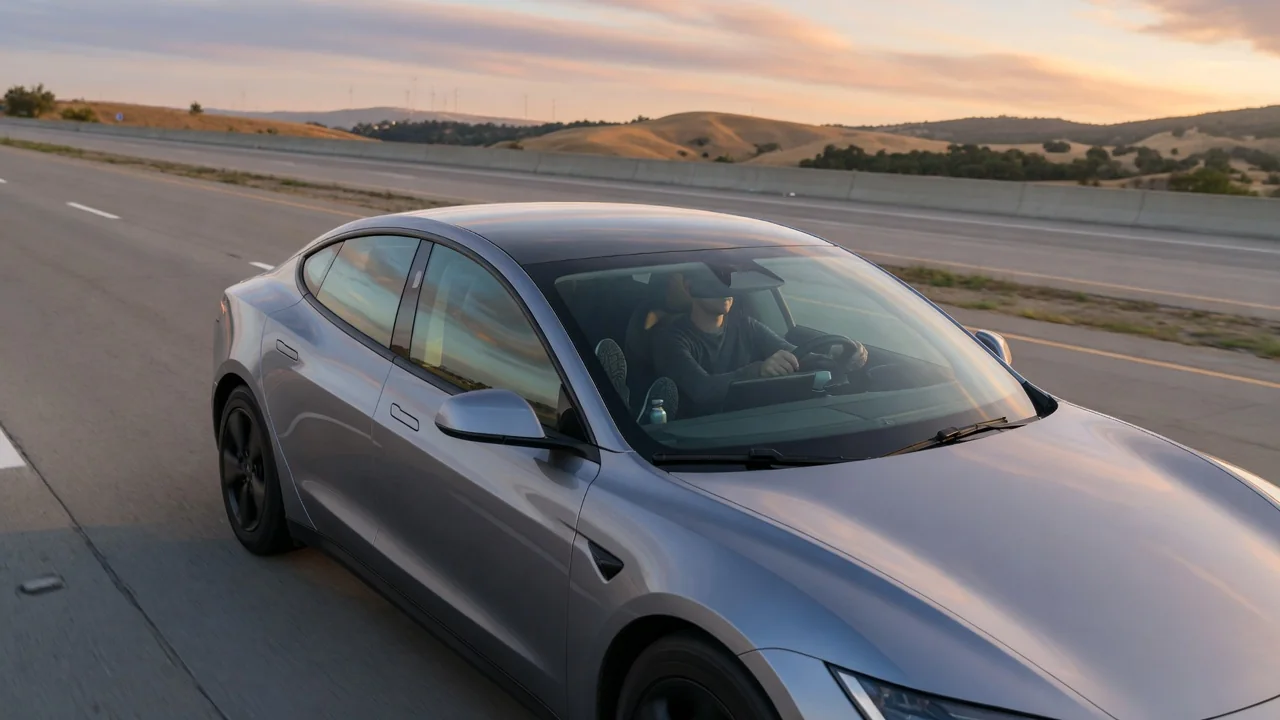
Coast mode in an electric car lets the vehicle glide freely when you lift off the accelerator instead of slowing through strong regenerative braking. The EV coast mode meaning is close to what gasoline-car drivers know as rolling in neutral, although the electric motor usually stays connected to the wheels. Three things explain when coasting helps and when it does not: how the motor's torque is managed, how vehicle speed affects gliding, and the choices you make behind the wheel.
Low Torque: What the Motor Does When You Lift Off
In an electric vehicle, releasing the accelerator does not automatically mean the motor stops influencing the car. The drive control electronics decide what torque to request at every moment. When regenerative braking is active, the inverter commands negative torque, so the motor works as a generator. It converts some of the car's kinetic energy into electricity for the battery, and that conversion slows the car. In coast mode, the control target is near-zero torque. The motor neither pushes the car forward nor drags it back in any meaningful way.
The word near matters. In most electric cars the motor is permanently geared to the wheels, so it keeps spinning whenever the car moves. Depending on the motor design, a spinning motor can create some resistance from magnetic effects and internal friction. To make the car feel like it is freewheeling, a control system may supply a small amount of current to cancel that resistance. Some drivetrains can physically disconnect a motor from the wheels, but whether a given vehicle does this is a design detail that varies. Manufacturers also define coasting differently. Some deliberately keep a light regenerative effect in their coast setting to imitate the gentle engine braking of a conventional car, so the owner's manual is the best guide to what a particular setting actually does.
With motor torque held close to zero, the forces that slow the car come mainly from aerodynamic drag, tire rolling resistance, and small frictional losses in bearings and gears. Because these forces are modest, deceleration is gradual, and the car feels as though it is floating rather than braking.
Vehicle Speed and How Far the Car Glides
Speed shapes how coasting feels on the road. Aerodynamic drag grows roughly with the square of speed, so at highway speeds a coasting car sheds speed noticeably faster than it does around town. At lower speeds, rolling resistance becomes the larger share of the remaining drag, and because it is relatively small, the car can roll a surprisingly long way. Road grade adds another layer: a slight uphill shortens the glide, while a gentle downhill can keep the car moving at a steady pace or even let it gain speed.
Speed also connects coasting to efficiency. Regeneration is never lossless. Energy recovered through regenerative braking passes through the motor, inverter, and battery, and then travels back through the same chain when you accelerate again, with some loss at every step. If you lift off and will soon need that speed again, coasting keeps the energy as momentum and skips that round trip. If you must stop shortly, lifting off early and letting drag do the slowing uses the car's momentum to cover distance. Coasting too late and then braking hard pushes the stopping work onto the brake pedal. In many electric cars, pressing the brake pedal still blends in some regeneration before the friction brakes take over, but the exact balance depends on the vehicle.
Behavior at very low speeds is a separate matter. Many electric cars add a creep function that moves the car slowly when the brake is released, and some change how deceleration is handled as the car approaches a stop. Whether a coast setting affects creep or low-speed behavior varies from one vehicle to another.
Driver Choice: Selecting and Using Coast Mode
Coast mode is usually one point on a range of regenerative braking settings rather than a standalone feature. Depending on the vehicle, drivers may select it through a touchscreen menu, a drive mode, steering-wheel paddles, or a gear selector position. Names and the number of levels differ widely, and some vehicles do not offer true coasting at all. Some systems can also adjust regeneration automatically based on traffic ahead or road conditions, which may override or replace a fixed coast setting. Because of these differences, general descriptions only go so far, and the owner's manual explains the options for a specific car.
Drivers who prefer coasting often mention smoothness. With little deceleration when lifting off, the car behaves more like a conventional automatic, and passengers feel less of the forward pitch that strong regeneration can create. Coasting suits open roads and steady traffic, where you can lift off early and let the car roll toward a slower speed. Other drivers favor strong regeneration or one-pedal driving in stop-and-go traffic, because it reduces switching between pedals and slows the car predictably whenever they lift off.
Neither approach is universally better. Coasting rewards anticipation: reading the road, spotting a red light or slower traffic early, and lifting off well in advance. Drivers who tend to react late may find that strong regeneration does more of the slowing work for them, while attentive drivers can use coast mode to keep momentum and drive more smoothly.
Practical Implications and Limits
Long descents are the clearest limit. Without regenerative resistance, a coasting car can gain speed on a steep hill, so you will need the brake pedal or a stronger regeneration setting to hold a safe pace. Relying more on the pedal can also mean more friction brake use than in a strong regeneration setting, which matters for heat on long grades and for brake wear over time. Another point concerns signaling to other drivers: in many vehicles, strong regenerative deceleration can switch on the brake lights, while the gentle slowing of coasting generally does not, so following traffic receives less warning if you lift off abruptly.
Range effects depend on the route, traffic, and driving habits, so there is no fixed figure for how much coast mode helps or hurts. The vehicle's condition also plays a role. Many electric cars limit regeneration when the battery is nearly full or cold, which means the car may coast more than usual regardless of the selected setting. Driver assistance features such as adaptive cruise control typically manage acceleration and deceleration on their own, so a coast setting may not apply while they are active.
The most useful way to think about coast mode is as a tool rather than a rule. Use it where steady roads and good visibility let momentum do the work, switch to stronger regeneration when terrain or traffic calls for more control, and always stay ready to brake, since coasting changes how the car slows but never removes the need to stop it safely.