What Is Cavity Wax After Body Repair?
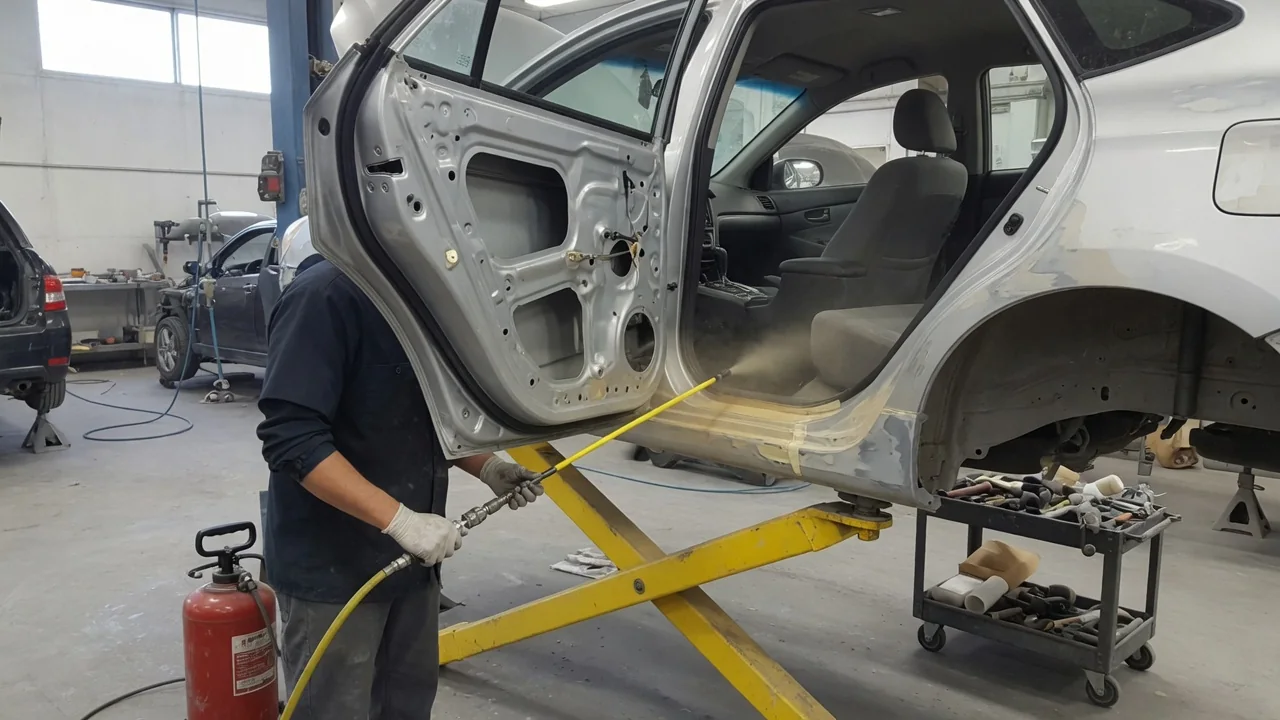
Cavity wax is a corrosion-inhibiting compound sprayed into the enclosed sections of a car body, such as rocker panels, pillars, door bottoms, and frame rails. After body repair, it restores protection inside panels that were cut, welded, replaced, or straightened. Those operations can remove the coatings that originally shielded the inner surfaces, and new joints may never have had them. Three things explain why this step matters: where the hidden metal is, how moisture behaves inside it, and what good coverage looks like.
Hidden metal
Modern unibody structures contain many boxed sections formed by joining two or more stamped panels. Once these panels are assembled, their inner faces cannot be seen. They are still exposed to air and water that enter through drain openings, seams, and gaps. At the factory, these surfaces are typically protected by processes such as electrocoating, in which the body is immersed so the coating reaches many enclosed areas. Some vehicles also receive a wax or similar compound afterward.
Collision repair disturbs that protection. Welding burns away coatings on both sides of a joint, including the inside face, which a paint gun cannot reach. Replacement panels may arrive primed, but after they are fitted and welded, the inner seam area and the heat-affected zone around it are bare or damaged. Other repair steps can also crack or scrape internal coatings: • drilling out spot welds; • sectioning a rail or rocker; • pulling a damaged structure back into shape; Cavity wax puts a protective film back on these surfaces after the structural and refinish work is done.
Cavity wax is usually a soft, wax-based formula that carries corrosion inhibitors. It is often thinned with solvent so it can be sprayed and can flow into narrow gaps. As the solvent evaporates, it leaves a film that stays pliable instead of hardening like paint. That flexibility is deliberate: the film tolerates body flex and vibration and can creep slightly into small gaps. Composition and film behavior vary by product, so the manufacturer's data sheet governs how each one should be used.
Moisture
Enclosed body sections are not sealed. Rain, road spray, and wash water get in through seams and openings, and temperature swings cause condensation on inner surfaces. Body cavities have drain holes so this water can leave, but drainage is rarely complete. Water can sit in seam joints, low corners, and along pinch welds. Dirt and road salt carried in with it can hold moisture against the metal for long periods. Bare steel kept damp this way corrodes from the inside out, and the damage often shows only when rust bubbles through the paint or perforates a panel.
Cavity wax counters this by forming a water-repellent barrier on the metal. Many formulas are water-displacing, meaning they get underneath thin moisture films and coat the metal surface directly. The inhibitors in the film slow corrosion where small gaps in coverage remain. A soft wax film can also partly flow back over minor scratches, which is why it is sometimes called self-healing, though that effect is limited.
Moisture also sets a key rule for application: drain holes must stay open. Wax that pools and hardens over a drain can trap water inside the cavity and make corrosion worse. Wax applied to wet or heavily contaminated surfaces may not adhere well, so cavities are normally cleaned and dried as far as practical before treatment.
Coverage
Coverage is the hardest part because the person applying the wax cannot see the surfaces being treated. In car cavity wax application, the product is typically sprayed through long, flexible wands. The wand's nozzle sprays a fine mist in all directions or at an angle. The applicator inserts the wand through factory access holes, drain openings, or plug holes, pushes it to the far end of the cavity, and withdraws it steadily while spraying so the mist reaches every inner face. Some procedures call for drilling and plugging an access hole where no opening exists. The vehicle manufacturer's repair information determines whether that is acceptable and where.
Good coverage means a continuous film on all internal surfaces near the repair. Welded seams, flanges, and overlapping joints need particular attention because corrosion tends to start there. The goal is to wet every surface, not to fill the cavity or leave heavy runs. Coverage usually extends beyond the immediate repair zone, because a new weld sits next to original metal whose protection may also have been disturbed during the work.
Temperature and timing affect how well the product flows. Cold wax and cold panels make the material thicker and reduce how far it creeps into seams, so product directions often specify application conditions. Cavity wax is generally applied after refinishing for two reasons: paint operations, including any baking, will not affect the wax, and wax overspray will not contaminate surfaces that still need paint. Some wax dripping from openings in the following days is common and is simply wiped off.
Practical implications and limits
After a structural or panel repair, it is reasonable for an owner to ask whether cavity wax was applied. A missing treatment cannot be seen from outside, and the resulting problems may take years to appear. Many vehicle manufacturers include corrosion protection steps in their published body repair procedures. Those documents, not general shop habit, define which cavities need treatment and what type of material to use. Applied wax may be visible as a film at drain holes or along seam edges, though its appearance varies by product.
Cavity wax has clear limits: • It does not stop rust that is already established. Corroded metal must be repaired or replaced before treatment. • It does not replace the other protective layers used in repair: weld-through primer between joined panels, seam sealer on joint edges, and primer and paint on exposed surfaces. It works only as one part of that system, protecting the surfaces the other layers cannot reach.
Some areas need care during application. Wax should be kept off certain sensors, electrical connectors, and parts near exhaust heat, and some repair procedures restrict where it may go. Because the film stays soft, it can wash or wear away over time in exposed areas. Periodic inspection and reapplication may be appropriate, depending on climate, road salt exposure, and the product's guidance.