What Is Camber on a Car?
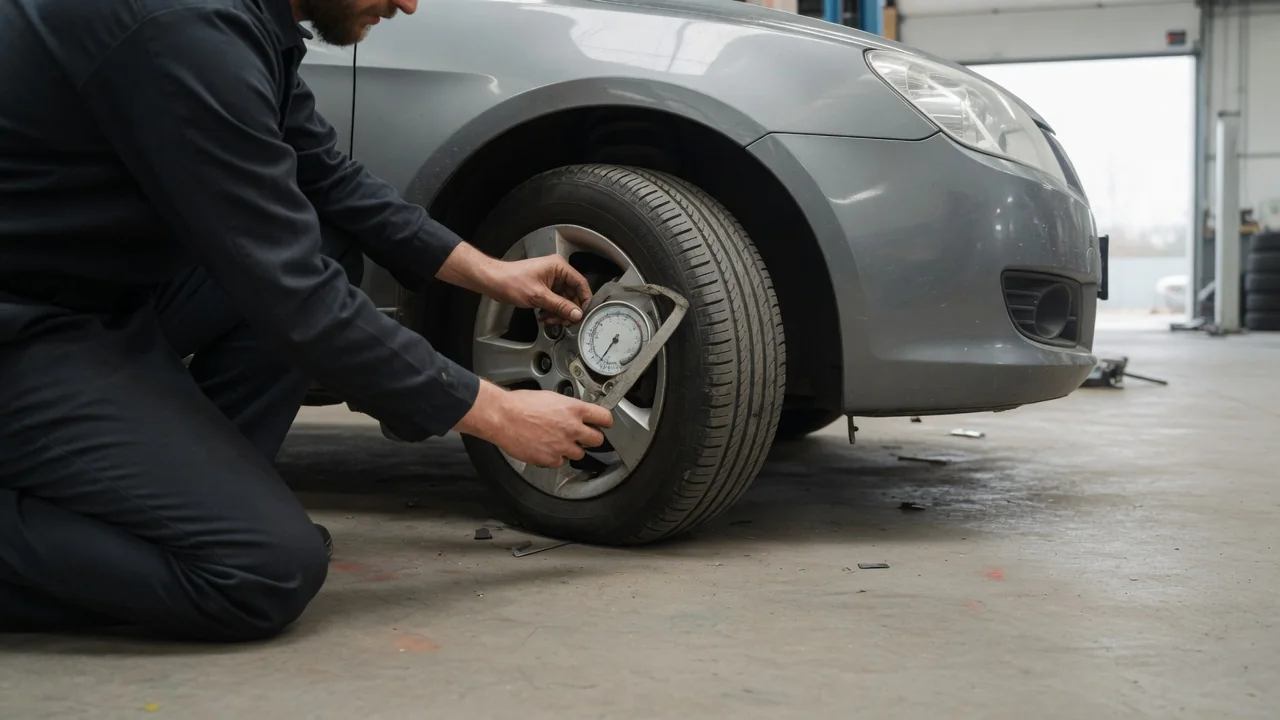
Anyone asking what is camber on a car is really asking about wheel tilt. Camber is the angle at which a wheel leans inward or outward when you look at the vehicle from directly in front or behind. It is measured in degrees from true vertical, and even a small amount shapes how the tire meets the road, how the car corners, and how evenly the tread wears.
Positive and negative
Positive camber means the top of the wheel leans away from the car, so the tires look slightly splayed outward at the top when viewed from the front. Negative camber is the opposite: the top of the wheel tips in toward the body, and the bottom sits farther out. Zero camber describes a wheel standing perfectly upright. These directions are defined relative to the vehicle's centerline, so the left and right wheels mirror each other rather than leaning the same way in space.
Most modern passenger cars are set up with a small amount of negative camber, because the body rolls in a corner and the outside tire needs to stay flat against the pavement as the load shifts onto it. Performance cars often carry more of it for that reason. Positive camber is less common today but appears on some heavy-duty trucks, older designs, and agricultural equipment, where it can lighten steering effort. The correct figure differs by manufacturer, axle, and suspension design.
Tire wear
Camber decides which part of the tread carries the most load. A wheel leaning inward at the top presses harder on the inner shoulder of the tire, while a wheel leaning outward loads the outer shoulder. When the angle is beyond what the vehicle was designed for, that edge scrubs away faster than the rest of the tread. The result is a tire that looks healthy across most of its width but is worn thin along one side.
This pattern is easy to miss because the inner shoulder is hidden under the fender. Turning the steering wheel fully to one side exposes the front tread for a proper look, and running a hand across the tire can reveal a smooth, sloped edge. One-sided wear is a clue rather than a verdict, though. Incorrect toe often wears tires faster than camber does and can produce a similar look, so measurements are needed before blaming any single angle.
Alignment context
Camber is one of three main alignment angles, alongside caster and toe. Toe describes whether the wheels point inward or outward when viewed from above, and caster describes the tilt of the steering axis when viewed from the side. The three interact: changing ride height or camber usually shifts toe as well, which is why a shop measures everything together and typically sets toe last. A camber reading on its own tells only part of the story.
On an alignment printout, camber appears as a value in degrees for each wheel, compared against a specified range for that vehicle. Technicians also look at the difference between left and right, since a large side-to-side split can make a car drift even when both readings fall inside the range. Not every vehicle offers factory camber adjustment at every wheel. Some use eccentric bolts or slotted mounts, while others have fixed geometry that needs aftermarket parts to change.
Everyday Use and Observations
In normal driving, correct camber is invisible. The car tracks straight, the steering returns to center after a turn, and the tires wear evenly. When the angle is off on one side, the vehicle may pull gently toward the side with more positive camber, and the driver ends up holding the wheel slightly off center to compensate. Excessive negative camber on both sides can make a car feel nervous over ruts and grooves in the road surface.
A simple visual check is possible on level ground with the steering straight. Standing several feet in front of the car, compare how the two front wheels sit against the fender openings. A wheel that leans noticeably more than its partner deserves attention. Keep in mind that load changes the picture: many suspensions gain negative camber as they compress, so a full trunk, a heavy trailer tongue, or lowered springs can make the wheels tip inward more than usual.
Limits and Next Steps
Eyeballing wheel tilt has clear limits. Factory settings are often a fraction of a degree to a degree or so, which is too small to judge by sight, and a sloped driveway or uneven tire pressure can distort the impression. Camber that has changed on its own is also a symptom worth tracing. Worn ball joints, tired control arm bushings, sagging springs, a bent strut, or damage from a pothole or curb strike can all shift the angle.
The sensible next step after spotting uneven wear, a persistent pull, or a visibly leaning wheel is a professional alignment check on proper measuring equipment. A good shop inspects the suspension and steering components first, because adjusting angles around a worn or bent part will not hold. The readings should be compared with the specifications for that exact vehicle, including any changes from modified ride height. Replacing tires without correcting the underlying cause usually just repeats the same wear on the new set.