What Is Butyl Tape in Automotive Work?
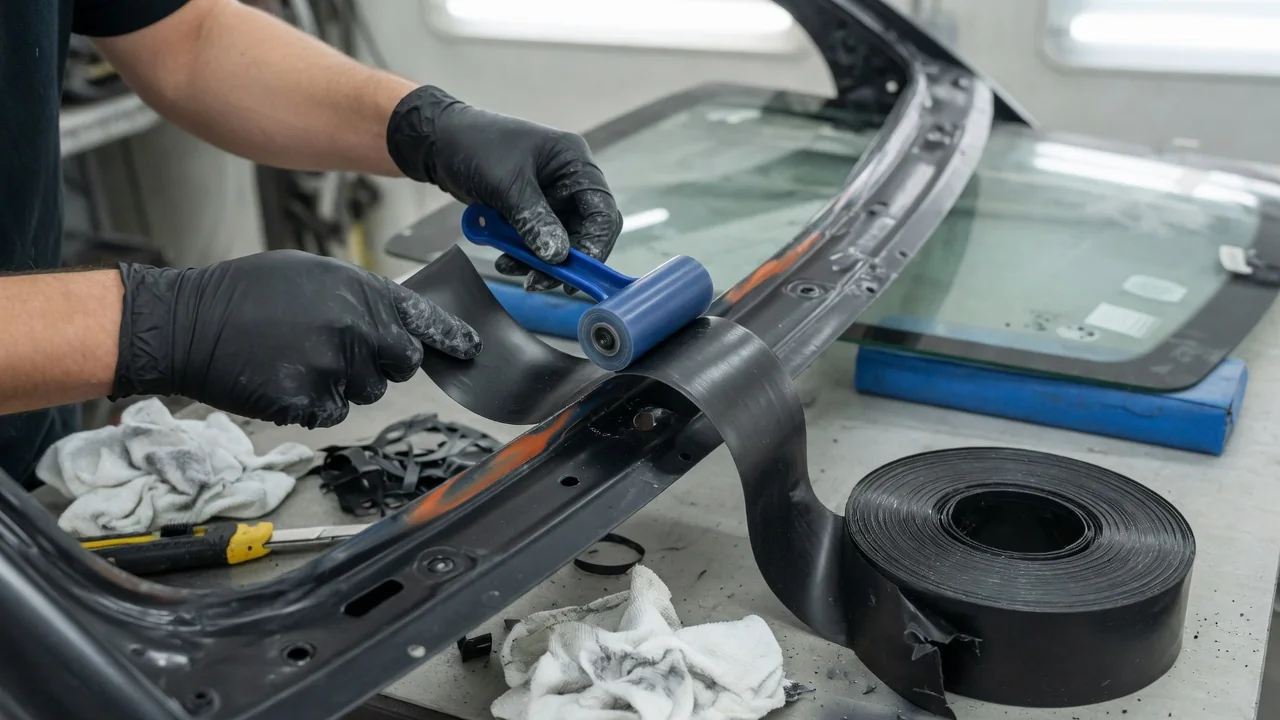
Butyl tape is a soft, non-curing sealant made from butyl or similar synthetic rubber compounds. It usually comes as a flat ribbon or a round bead on a release liner. In automotive work it is used where a joint needs to stay sealed against water, air, and dust while still allowing parts to move slightly or come apart later. Knowing what it does well, and where it falls short, helps car owners recognize it during repairs and use it appropriately.
Flexible sealing: how butyl tape keeps joints closed
The defining trait of butyl tape is that it does not fully harden. Urethane, silicone, and two-part seam sealers cure through a chemical reaction or exposure to moisture. Butyl, by contrast, stays a tacky, putty-like mass for much of its service life. When two parts are pressed together with a strip of butyl between them, the material flows into small gaps, surface scratches, and uneven edges, forming a continuous barrier. Because it stays pliable, it can tolerate the small movements caused by vibration, temperature swings, and body flex without cracking the way a brittle sealant might.
This makes butyl a common choice for components that are bolted or clipped on rather than permanently bonded. Typical car butyl tape uses include sealing lamp housings, taillight and marker light bases, accessory mounts, and other exterior fittings where water must be kept out of a cavity. Some headlamp designs join the lens to the housing with a butyl-type bead that can be softened with heat for service. Other designs use permanent adhesives or welding and are not meant to be opened. Whether a particular vehicle uses butyl at a given joint depends on its design, so the factory service information is the best reference.
Butyl acts mainly like a gasket rather than a structural bond. The tape sticks well to clean metal, glass, painted surfaces, and many plastics, and its tackiness keeps it in place during assembly. Fasteners and clamping pressure do most of the work of holding parts together, while the butyl fills the space between them. The amount used also matters. A bead that is too thin may leave voids, while too much can squeeze out of the joint and collect dirt.
Interior barriers: vapor shields and door panels
Inside many vehicles, butyl's most familiar role is holding the moisture barrier behind a door trim panel. Doors are designed to let water enter past the window opening and drain out the bottom. The inner door skin has access holes, and without a cover, that water could reach the trim panel, speakers, and cabin. A plastic or foam sheet, often called a vapor barrier or watershield, covers those holes. A bead of butyl around its edge holds it against the metal and seals the perimeter.
Because the butyl stays sticky, the barrier can be peeled back for repairs to window regulators, locks, or speakers and then pressed back into place. Reusing the original bead works when it is still intact and clean. If it is stretched, torn, or contaminated, it may leave gaps, and laying fresh butyl tape along the original path restores the seal. Gaps in this barrier can let water, drafts, and road noise into the cabin. Over time, moisture reaching the carpet or wiring can cause odors or electrical problems.
Butyl compounds also appear in other interior applications. Many self-adhesive sound-damping sheets use a butyl-based layer bonded to a foil skin. On some designs, butyl also seals wiring grommets, cable pass-throughs, or panels covering openings in the floor or firewall. In each case the material serves as a flexible, waterproof gasket rather than something that carries weight.
Cleanup: removing old butyl and residue
Butyl's tackiness helps during assembly but makes cleanup slow. The material tends to string and smear rather than peel off cleanly, and it readily transfers to hands, tools, upholstery, and carpet. A plastic trim tool or scraper is safer than a metal one because it is less likely to scratch paint or gouge plastic parts. One useful technique is to roll a ball of butyl across the residue. Because butyl sticks to itself, the ball can lift much of the remaining film.
Temperature changes how the material behaves. Warming butyl with a heat gun on a low setting or a hair dryer softens it, which is how some lamp assemblies are separated. Cooling it makes it firmer and less stringy, which can help when scraping off bulk material. Too much heat can damage paint, plastic lenses, and nearby wiring, so moderate heat applied gradually is the safer approach.
Remaining film usually comes off with an adhesive remover or a mild petroleum-based solvent such as mineral spirits, applied with a cloth. Solvent compatibility varies by surface. Some plastics, including clear polycarbonate lenses, can craze or cloud when exposed to aggressive solvents, and some removers may affect certain paints or interior materials. Testing the product on a hidden area first and following its label directions reduces that risk. Before applying new butyl, make sure surfaces are clean, dry, and free of oil so the fresh tape sticks properly.
Practical implications and limits of butyl tape
Butyl tape is best treated as a serviceable seal, not a permanent bond. It holds parts in position only weakly and can creep or sag under sustained load or heat. It should not replace mechanical fasteners, structural adhesives, or the urethane used to bond modern windshields and other fixed glass. Where a manufacturer specifies a particular adhesive, seam sealer, or gasket, substituting butyl may compromise water sealing, safety, or crash performance. Butyl generally cannot be painted the way seam sealers can. It can also soften or swell on contact with fuel, oils, and many solvents, so it is unsuitable near fuel system components or other areas exposed to petroleum fluids.
Products sold as butyl tape vary in formulation, width, thickness, and temperature tolerance, and the label or technical data sheet is the reliable source for those properties. Before a repair, check which material the vehicle originally used at that joint and whether the joint was designed to be reopened. When a water leak has an unclear source, finding the actual entry point usually matters more than adding sealant. Extra butyl in the wrong place can trap moisture rather than keep it out. Used within its intended role, butyl tape is a simple, forgiving way to restore flexible seals that may need to be opened again.