What Is Brake Slide-Pin Lubrication? Movement, Grease, and Wear
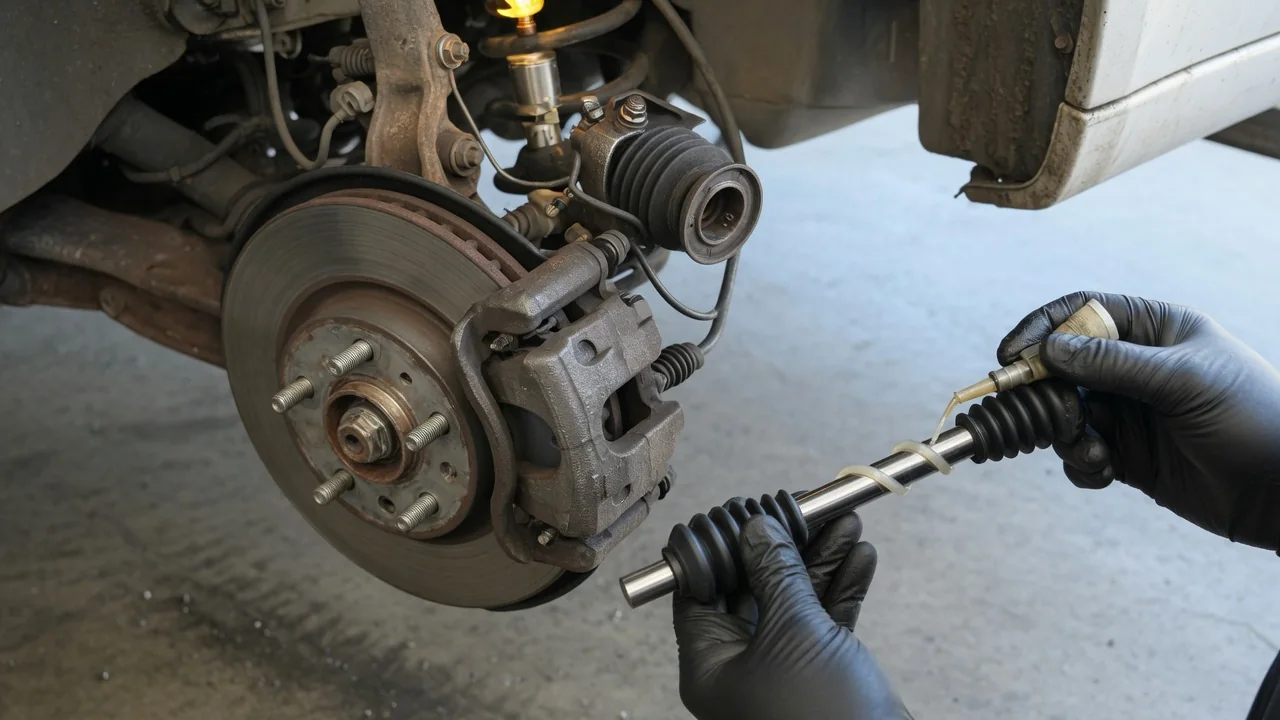
Brake slide-pin lubrication means coating the guide pins of a floating brake caliper with a suitable grease so the caliper can shift freely as the pads clamp the rotor. It looks like a small step in a brake job, but the condition of these pins affects how evenly the pads press, how quickly they wear, and whether the brake releases cleanly after every stop.
Movement: Why a Floating Caliper Needs to Slide
Many passenger vehicles use floating, or sliding, calipers. In this design the hydraulic piston sits on only the inboard side of the rotor. When the driver presses the brake pedal, fluid pressure pushes the piston outward, and the piston presses the inner pad against the rotor. The reaction force then pulls the caliper body inward along a pair of pins, which draws the outer pad against the opposite face of the rotor. The pins are bolted to the caliper or its mounting bracket and slide inside machined bores, and each bore is sealed by a flexible rubber boot. The travel is small, roughly the running clearance between pads and rotor, but it happens on every brake application, and both pins need to allow it smoothly and equally.
Movement matters on release as well. When pedal pressure drops, the piston seal pulls the piston back slightly, and a freely sliding caliper can relax so neither pad keeps pressing hard on the rotor. Over the life of the pads, the caliper also creeps gradually along the pins to keep up with lining wear. The grease film on the pins reduces friction during this movement, prevents direct metal-to-metal contact inside the bores, and helps keep moisture away from the steel. Some designs fit a rubber sleeve or bushing on one pin to damp vibration and noise. The exact pin arrangement differs from one caliper design to another, so the service manual for the vehicle describes which configuration is used.
Correct Grease for Brake Caliper Slide Pins
Brake caliper slide pin grease has to cope with three demands at once: heat from braking, exposure to water and road contaminants, and constant contact with rubber boots and bushings. Products sold for this job are commonly silicone-based or synthetic greases labeled as compatible with rubber brake components. Rubber compatibility is the critical point. General-purpose chassis grease and other petroleum-based lubricants can cause some rubber compounds to swell or soften. A swollen boot or bushing grips the pin and produces the very sticking the lubrication was meant to prevent, sometimes weeks after the brake job looked successful.
How the grease is applied matters as much as which grease is chosen. Old grease, dirt, and corrosion should be cleaned from the pins and bores first, and then a thin, even film applied rather than packing the bore full. In a closed bore, excess grease has nowhere to go, so it can resist pin travel or push the boot out of its seat. Grease must stay off the pad friction material and the rotor surface. Anti-seize compounds and lubricants meant for threads or pad backing plates are not automatically suitable for slide pins. The correct choice is whatever the caliper or vehicle manufacturer specifies, and some replacement hardware kits include a small packet of the intended lubricant.
Wear: What Happens When Slide Pins Stick
A sticking or seized slide pin changes how the pads contact the rotor, and the evidence usually shows up as uneven pad wear. If the caliper cannot slide, the piston still pushes the inner pad, but the outer pad is not pulled in fully, so one pad wears much faster than the other. If only one of the two pins binds, the caliper can tilt slightly, and the pad wears into a tapered shape, thicker at one end than the other. A caliper that cannot relax after braking keeps the pads lightly dragging. That drag generates extra heat, which speeds pad wear, can glaze the friction surface, may discolor the rotor, and adds rolling resistance. Drivers sometimes notice a pull to one side, a hot or smelly wheel after a drive, or noticeably shorter pad life at one corner.
The pins and bores wear too. A torn or displaced boot lets water and road salt reach the pin, which washes out the grease and allows corrosion to pit the surface. A rough, pitted pin grips the bore and resists sliding even after fresh grease is applied. The opposite problem also occurs: when a pin or bore has worn enough to develop excess clearance, the caliper can rattle or clunk, especially over rough pavement. Grease can reduce friction, but it cannot restore lost metal or smooth out pitting.
Practical Implications and Limits
In practice, slide pins are usually serviced whenever the caliper comes off, most often during pad replacement. A typical check involves removing each pin, wiping it clean, and looking for pitting, bending, or uneven wear, then inspecting the boots for cracks, tears, or swelling. After lubrication, a healthy pin should slide by hand with light resistance from the boot and no binding along its stroke. Pins should go back into their original positions, because some calipers use pins of different lengths or with different sleeves on the upper and lower sides. Mounting fasteners are then tightened to the manufacturer's torque value. How often the pins need attention depends on the vehicle and conditions; climates with road salt or frequent wet driving tend to be harder on them.
Lubrication has clear limits. It keeps a sound pin working, but it does not repair a pitted pin, a torn boot, a worn bore, or a damaged bracket, which need replacement parts. Uneven pad wear and pulling can also come from other causes, such as a sticking piston, a deteriorated brake hose that holds pressure, worn or misfitted pad clips, or rotor problems, so freshly greased pins do not confirm the diagnosis. Fixed calipers, which have pistons on both sides of the rotor, do not rely on sliding pins at all. Grease specifications, pin layouts, and torque values are vehicle-specific and belong to the service manual. Because brakes are a safety-critical system, anyone unsure about the procedure should have the work done or checked by a qualified technician.