What Is Brake Pad Taper Wear? Causes, Caliper Movement and Inspection
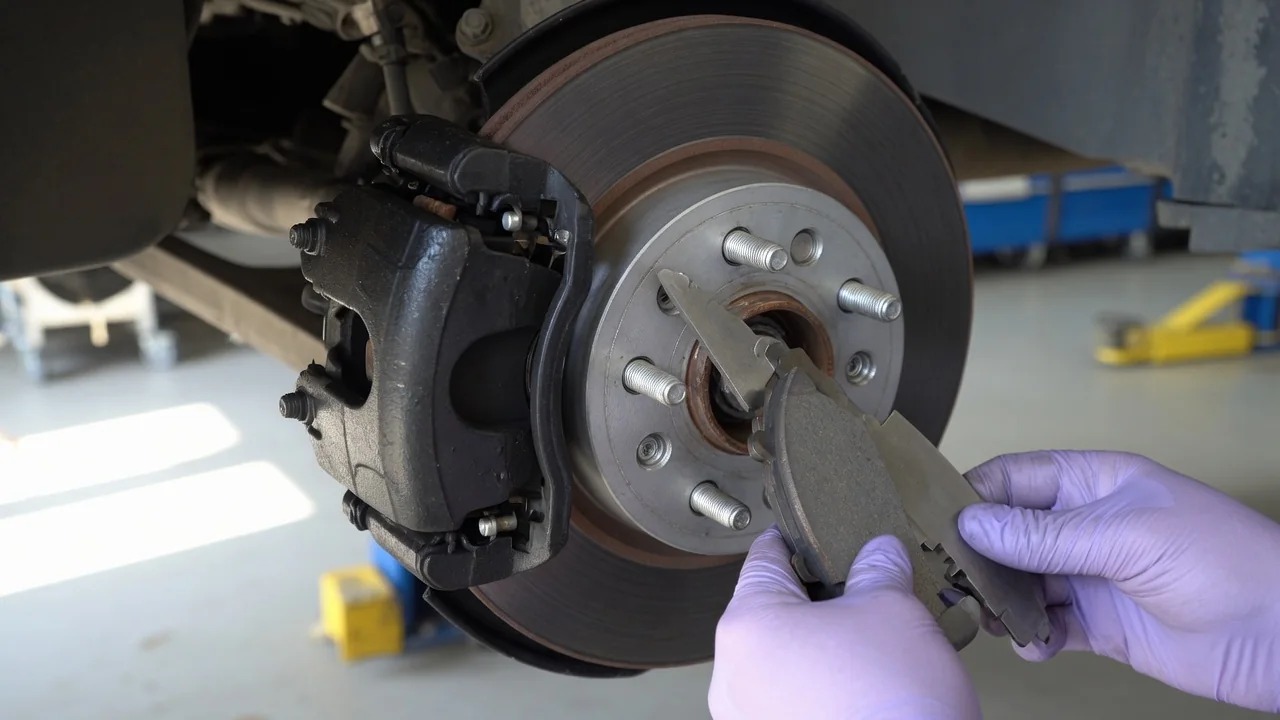
Brake pad taper wear is a condition in which a pad's friction material wears unevenly, leaving the lining thicker at one end or edge than at the other. Instead of a flat, uniform slab, the pad takes on a wedge shape. Tapered brake pad wear is usually a symptom, not a fault in itself. It shows how the pad has been contacting the rotor and how freely the caliper and pads have been able to move.
Uneven contact
A disc brake works best when the pad presses against the rotor with roughly even pressure across its whole face. Taper wear develops when that pressure stays concentrated in one area over many stops. Material in the high-pressure zone wears faster, and the pad gradually takes on a slope. There are two broad patterns. In circumferential taper, one end of the pad, along the direction of rotor rotation, is thinner than the other. In radial taper, the edge near the outer diameter of the rotor wears differently from the edge near the hub.
Some unevenness is built into how brakes operate. When the pad grips a moving rotor, friction drag pulls it toward its abutment. The pad can tilt slightly as a result, loading its leading or trailing end more heavily, depending on how the pad is supported and pushed. The outer part of the rotor also travels farther per revolution than the inner part, so the friction surface does not see identical rubbing conditions across its height. Pad and caliper designers account for these effects through piston placement, pad shape, chamfers and backing plate design. For that reason, a small amount of taper can be normal on many systems. Pronounced taper, however, usually means something has disturbed the intended contact pattern.
Caliper movement
Caliper movement is central to taper wear because the pads must be free to move squarely toward and away from the rotor. On a common floating, or sliding, caliper, the piston pushes the inner pad directly. The caliper body slides on guide pins to pull the outer pad into the rotor. A slide pin can be corroded, dry, bent or swollen by the wrong lubricant. When that happens, the caliper may stick or cock at an angle instead of sliding straight. The pad then meets the rotor at a slight angle, and one end carries more load than the other.
The pads also move within the caliper bracket. The ears of each backing plate sit in abutment slots, which are often lined with stainless clips. Rust buildup under those clips, debris in the slots or a deformed clip can make a pad hang up at one end. That end stays in heavier contact while the other end is held off, and over time the lining wears into a wedge. The inner and outer pads are guided by different parts of the assembly, so they may not taper the same way. That difference helps narrow down the cause.
Fixed calipers, which have pistons on both sides and do not slide, are not immune. A piston that drags or returns unevenly can shift pressure toward one area of the pad. So can seals in uneven condition across multiple pistons, or flex in the caliper body under high clamping force. Other factors also change how the pads meet the disc: loose or improperly torqued mounting hardware, worn wheel bearings that let the rotor move, and excessive rotor runout. Which of these matters most depends on the specific brake design.
Inspection
Inspecting for taper wear starts with measuring, not guessing. With the pads removed, check lining thickness at both ends of each pad and, where possible, at the inner and outer edges. A brake pad gauge or a measuring caliper gives a more reliable reading than a visual check through the wheel spokes, which often shows only part of one pad. Compare the readings on each axle: inner pad against outer pad, and leading end against trailing end. Note the direction of the taper, because the pattern often tells you more than the amount.
Next, examine the parts that control movement. On a sliding caliper, remove and clean the guide pins. Check them for rust, scoring, bends and lubricant condition, and inspect the rubber boots for tears that let water in. Once the pins are serviced, the caliper should slide by hand without binding. Check the abutment areas of the bracket for corrosion, and make sure the pad clips are properly seated and still have their spring tension. Look at the piston and its dust boot for damage, and confirm the piston retracts smoothly.
The rotor deserves attention too. Look for uneven surface texture, grooves, a lip at the outer edge or signs of uneven deposits. Where the vehicle's service information lists runout and thickness variation limits, measure against them. Finally, verify that the caliper and bracket fasteners are tight and that the wheel bearing has no noticeable play. Allowable taper limits, minimum pad thickness and the correct slide pin lubricant are vehicle-specific. The manufacturer's repair manual remains the reference for any pass or fail decision.
Practical implications and limits
In everyday driving, taper wear mostly shortens pad life. A pad counts as worn out when its thinnest point reaches the minimum thickness. A wedge-shaped pad may therefore need replacement while much of its lining remains on the thicker end. Mechanical wear indicators and electronic sensors sit at one specific location on the pad. If that location is on the thicker end, the warning may come after the thin end has already reached its limit. Heavy taper can also contribute to brake noise, a less consistent pedal feel or a slight pull. Those symptoms have many other possible causes, though, and do not confirm taper wear on their own.
The key practical limit is that new pads do not fix the reason the old ones tapered. If a sticking slide pin or a corroded abutment caused the problem, fresh pads will usually develop the same pattern. The best chance of even wear comes from correcting the cause first, then replacing the pads as a set across the axle. Keep expectations realistic as well. A single inspection can show where the contact pattern went wrong but cannot always prove which factor started it, and some designs naturally show more taper than others. If the pattern is severe, keeps coming back or appears with pulling or overheating, have a qualified technician with the vehicle's service data judge whether it is within normal limits.