What Is Brake Hold Versus a Parking Brake?
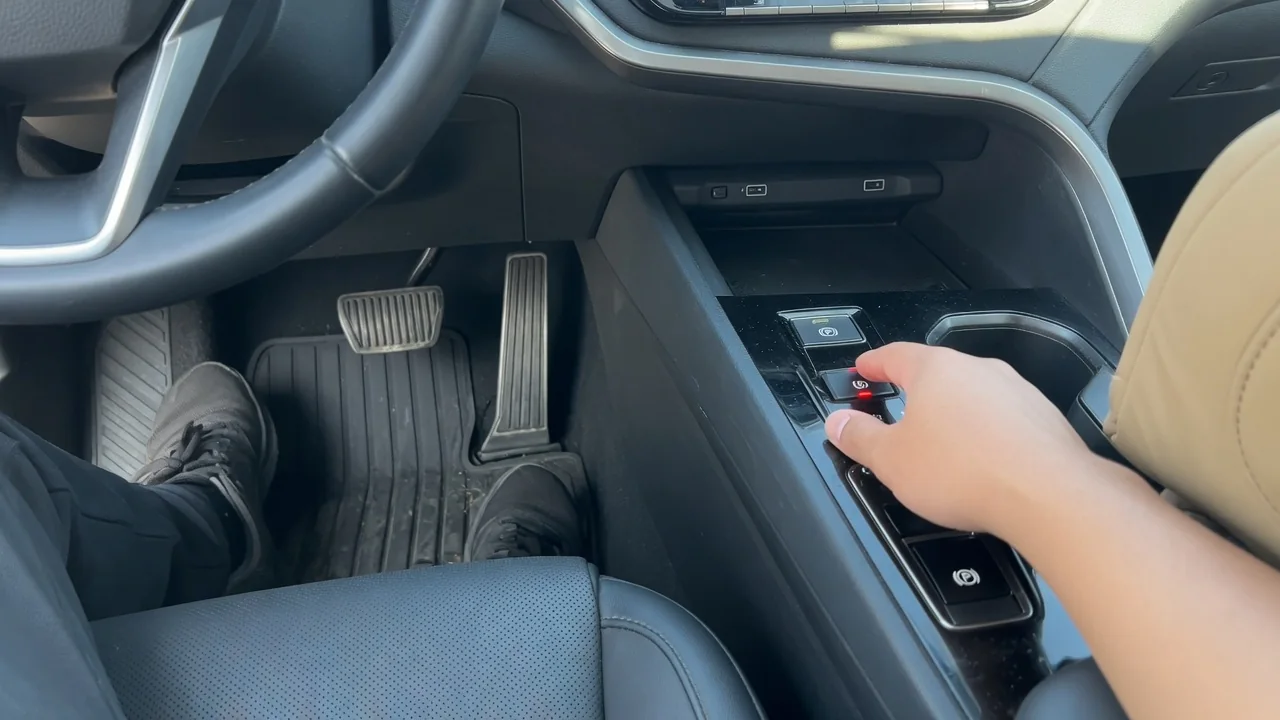
Brake hold and the parking brake can both keep a stopped car from moving, so it is easy to treat them as the same feature. They are not. Brake hold, often labeled auto hold, is a convenience function that keeps the service brakes applied during short stops in traffic. A parking brake is a separate mechanism designed to secure the vehicle when it is left stationary. Knowing the separate auto hold and parking brake roles helps drivers use each one correctly and avoid relying on the wrong system.
Temporary hold: what brake hold actually does
Brake hold uses the same hydraulic system that slows the car during normal driving. When the function is switched on and the driver brings the vehicle to a full stop with the brake pedal, the hydraulic unit shared with the anti-lock brakes and electronic stability control keeps pressure in the brake lines. The calipers stay clamped even after the driver lifts their foot off the pedal. When the system detects a request to move off, usually through accelerator input, it releases that pressure in a controlled way so the car pulls away smoothly instead of rolling back. The purpose is comfort and less fatigue at traffic lights, in stop-and-go congestion, and on gentle slopes where holding the pedal for long periods becomes tiring.
Because brake hold depends on active hydraulic pressure and electronic control, it is designed for temporary use. Many systems only operate when certain conditions are met, such as the vehicle being switched on, the driver's door closed, and the seat belt fastened. The exact conditions vary by manufacturer and are described in the owner's manual. In many vehicles with an electric parking brake, the system hands the job over to the parking brake if a stop lasts too long, if the driver unbuckles or opens the door, or if the vehicle is switched off. That handover exists precisely because a pressurized hydraulic hold is not meant to be the long-term means of keeping a car still. Where no such handover is fitted, or where the driver cannot confirm that it happened, brake hold should never be treated as a way of parking the vehicle.
Secure parking: why the parking brake is a separate system
A parking brake is designed to keep the vehicle stationary without relying on hydraulic pressure that could slowly bleed away or on electronics that may power down. Traditional designs use a hand lever or foot pedal connected by cables to the rear brakes, which mechanically clamp the pads or expand the shoes. Electric parking brakes replace the lever with a switch and use small electric motors, often mounted on the rear calipers, to drive a mechanism that clamps the brake and then holds that position mechanically. Once applied, the clamping force is retained with the ignition off, because it is held by mechanical means rather than by continuous fluid pressure.
This is why the parking brake carries the parking role and brake hold does not. A parked car may sit for hours or days, possibly on a slope, with the driver absent. The parking brake is engineered for exactly that situation. On vehicles with an automatic transmission, the Park position adds another layer: a parking pawl locks the transmission output. The pawl and the parking brake complement each other, and applying the parking brake reduces the load placed on the pawl when parked on an incline. Some electric parking brakes apply automatically when the transmission is placed in Park or when the vehicle is switched off, but this behavior is vehicle-specific and can sometimes be changed in settings, so drivers should not assume it.
Driver checks: confirming which system is holding the car
The most useful habit is learning the indicators. Brake hold typically shows a lamp or message, often reading HOLD or AUTO HOLD, to show that the function is armed, and may show a different indication while it is actively holding the car. The parking brake has its own warning lamp, commonly a circled P or the word BRAKE, which lights when the parking brake is applied. Seeing only the hold indicator means the car is being held hydraulically for the moment; it does not mean the car is parked. Symbols and colors differ between manufacturers, so the instrument cluster section of the owner's manual is the authority for any particular vehicle.
Before leaving the driver's seat, confirm that the transmission is in Park, or in the gear the manual recommends for a manual transmission, that the parking brake indicator is lit, and that the vehicle is switched off or in the state the manufacturer specifies. Even if an electric parking brake normally applies by itself, a quick look at the indicator confirms it did so. Drivers should also pay attention to any warning related to the brake system, stability control, or the parking brake, because brake hold commonly becomes unavailable when those systems report a fault. A fault message is a reason to rely on the parking brake and transmission and to have the system inspected, not to keep using the hold function. If the car creeps while brake hold is active or the parking brake will not release, stop where it is safe, secure the vehicle, and consult the manual or a qualified technician.
Practical implications and limits
In daily driving, brake hold is most valuable where stops are frequent and brief. It lets the driver relax at a red light without the car creeping, and it can make hill starts easier because the car stays put until the accelerator is pressed. It also changes some habits. A driver who expects an automatic to creep forward at idle may be surprised when it stays still, and slow maneuvering in a parking lot or garage can feel different, which is why many drivers switch the function off for tight low-speed work. Whether brake hold remembers its on or off setting between trips also varies by vehicle.
Neither system replaces the driver's judgment. Both depend on tire grip, so on ice or loose gravel the wheels can be held while the car still slides. A parking brake usually acts on only one axle, often the rear, so its holding ability on a very steep or slippery grade is limited; turning the wheels toward the curb on a hill and choosing a level spot where practical remain sensible precautions. Electric parking brakes need electrical power to release, so a flat battery can leave the brake applied until power is restored or a manufacturer-specified release procedure is followed. Both functions also rely on healthy brake components. Worn pads, contaminated discs, or a stretched cable on lever-operated designs reduce holding force, so routine brake inspections support both. In short, brake hold manages pauses while driving, and the parking brake secures the car once the driver is done driving.