What Is Brake Fluid Hygroscopicity?
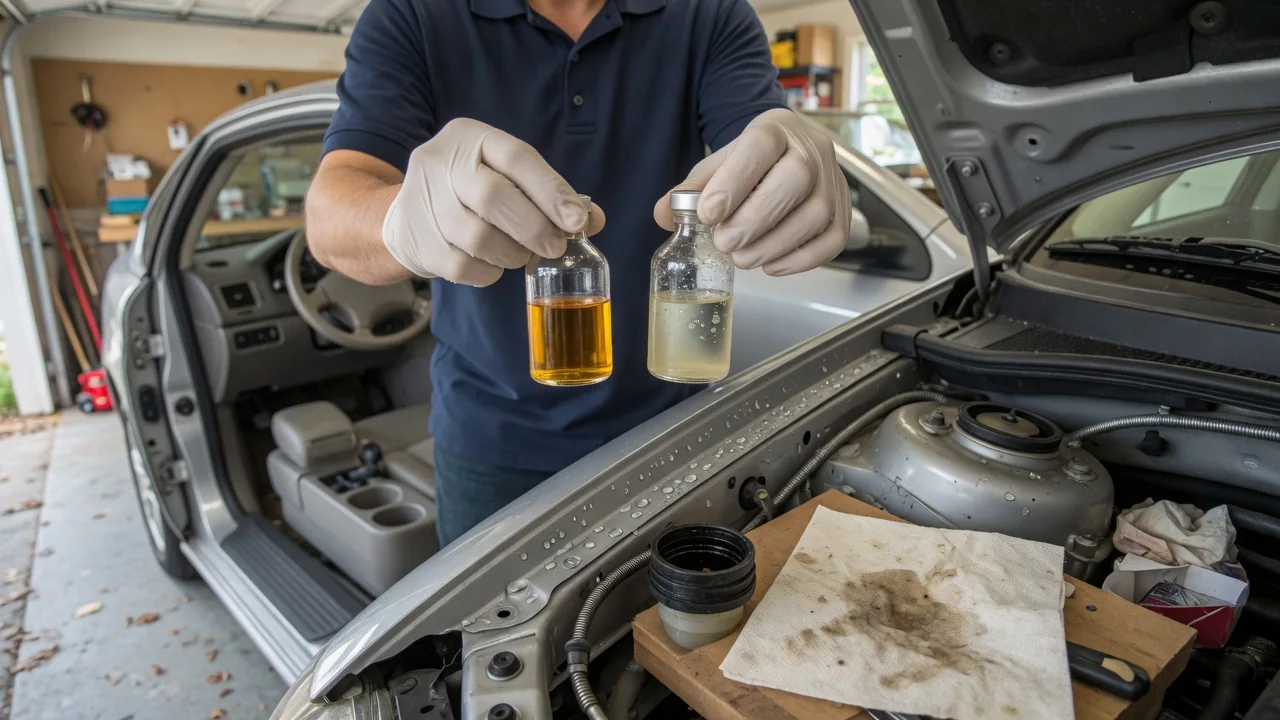
Anyone asking what is brake fluid hygroscopicity is really asking why a sealed hydraulic system still needs periodic fluid changes. Hygroscopicity is the tendency of a substance to attract and hold water from its surroundings. Most common brake fluids are glycol-ether based and behave this way, which shapes how they age, how they perform under heat, and how they should be maintained.
Moisture entry
A brake hydraulic system looks sealed, yet it is not perfectly airtight. The master cylinder reservoir needs a vented or diaphragm-style cap so the fluid level can drop as pads wear, and humid air reaches the fluid surface through that path. Water vapor also migrates slowly through the walls of flexible rubber brake hoses and past seals at calipers and wheel cylinders. None of this requires a leak or a fault; it is gradual permeation that continues whether the vehicle is driven daily or parked.
Human handling adds more exposure. Each time the reservoir cap is removed for inspection or topping up, fresh air contacts the fluid, and a container of new fluid that has been opened and stored on a shelf begins absorbing moisture as well. Climate matters too, since a vehicle kept in a damp coastal region generally takes on water faster than one in a dry inland area. Reservoir design, hose materials, and cap sealing differ between manufacturers, so the rate of absorption is never identical from one vehicle to another.
Performance effect
The main consequence of absorbed water is a lower boiling point. Fresh glycol-based fluid resists boiling at the high temperatures generated near calipers during hard stops, but water dissolved in the fluid drags that threshold down. This is why fluid standards describe both a dry boiling point for new fluid and a wet boiling point for fluid that has taken on moisture. If fluid boils, vapor bubbles form, and because vapor compresses while liquid does not, pedal travel grows and braking force falls away.
That condition, often called vapor lock or fluid fade, tends to appear when brakes are worked hardest, such as a long mountain descent, towing a trailer, or repeated heavy stops. Moisture also affects the system more quietly over time. Fluid contains corrosion inhibitors that are gradually depleted, and water encourages rust and pitting inside steel lines, caliper bores, master cylinders, and the fine valves of an anti-lock braking unit. The practical upside of hygroscopic fluid is that water disperses through it rather than pooling in one spot where it could freeze or corrode locally.
Service intervals
Because moisture uptake is driven largely by time rather than distance, brake fluid replacement is usually scheduled by age, sometimes with a mileage figure alongside it. A low-mileage car that sits in a garage can therefore hold fluid just as degraded as that in a vehicle driven regularly. Manufacturers set different schedules, and some specify none at all in their routine maintenance tables, so the owner's manual or official service documentation for the specific vehicle is the right reference rather than a universal rule.
Usage and environment justify adjusting within that guidance. Vehicles that tow, carry heavy loads, see track days, or operate in humid climates place more thermal demand on fluid that is absorbing water faster, and many workshops recommend testing or shorter intervals for them. Fluid type matters as well. The specification printed on the reservoir cap or in the manual, commonly a DOT grade, should be followed, since silicone-based fluid is not hygroscopic in the same way and is not interchangeable with glycol-based products in systems designed for them.
Everyday Use and Observations
In normal driving, moisture-laden fluid rarely announces itself. The pedal can feel entirely normal during gentle commuting because the fluid never gets hot enough to boil. Drivers may notice fluid in the reservoir darkening from a pale amber toward brown, although color reflects contamination and age in general and is not a reliable measure of water content. A pedal that turns soft or sinks further after sustained heavy braking, then recovers once everything cools, is a more meaningful hint worth having investigated.
Workshops can assess condition more objectively. Electronic testers estimate moisture through conductivity, boiling point testers heat a small sample directly, and chemical test strips indicate how far the corrosion inhibitors have been depleted. Each method has limitations, and a sample drawn from the reservoir may not represent fluid sitting at the calipers, where heat and moisture exposure are greatest. Readings are best treated as one piece of evidence alongside the fluid's age and the vehicle's service history rather than a definitive verdict.
Limits and Next Steps
Hygroscopicity explains a good deal, but not every braking complaint. A spongy or sinking pedal can also come from air in the lines, an external leak, a deteriorated hose, worn friction material, or a failing master cylinder, and a warning lamp or stored fault code points toward an area to examine rather than proving any single component has failed. Changing the fluid will not cure those conditions, so a persistent change in pedal feel or stopping distance calls for a proper inspection before the vehicle is relied on.
For routine care, the sensible steps are simple. Keep the reservoir cap closed, use only the fluid grade specified for the vehicle, and take new fluid from a freshly opened, sealed container. Brake fluid damages paint and irritates skin, and correct bleeding on modern vehicles may require particular sequences or equipment, especially with anti-lock and stability systems. Having a qualified technician carry out the flush, record the date, and confirm the manufacturer's schedule gives the clearest basis for planning the next change.