What Is Brake Fade?
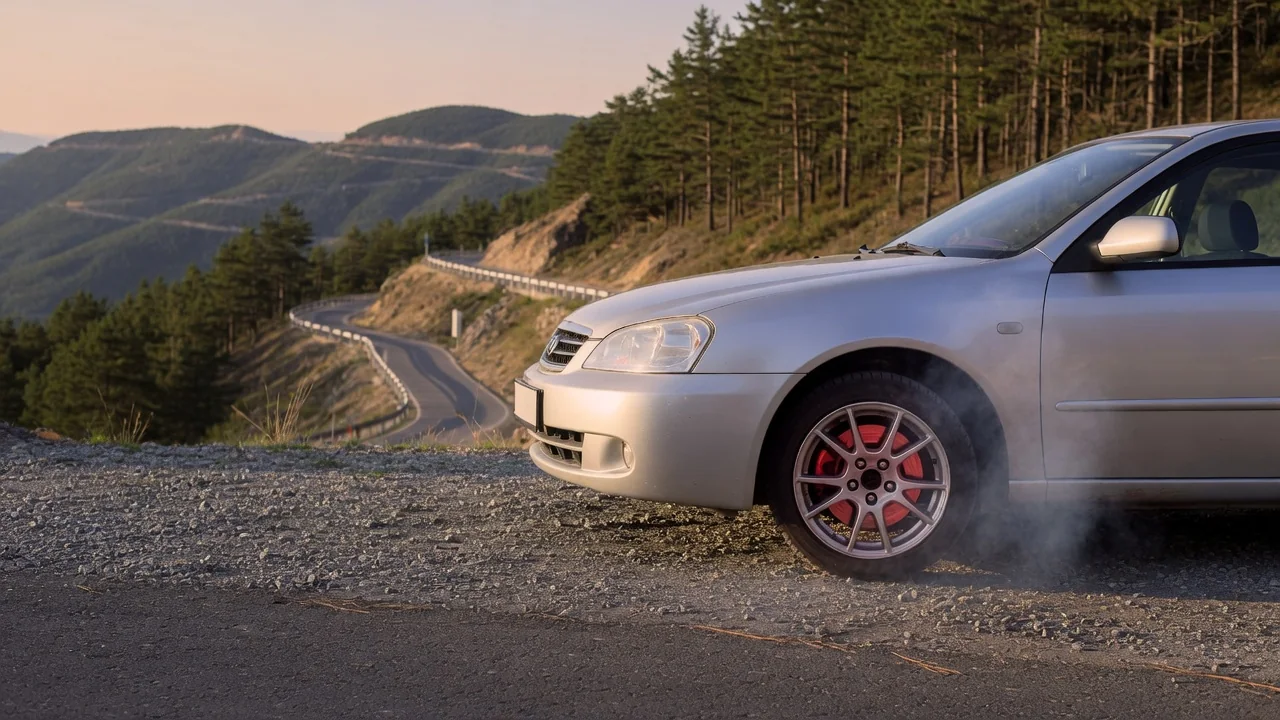
Anyone asking what is brake fade is really asking why brakes that worked a minute ago suddenly feel weaker. Brake fade is a temporary loss of stopping power caused by heat buildup in the braking system. It tends to appear after long or repeated hard stops, and understanding how it develops helps drivers recognize it early and respond calmly.
Heat and friction
Brakes slow a vehicle by turning its motion into heat. When the pads clamp the rotors, or shoes press against drums, friction converts kinetic energy into thermal energy that the hardware must shed into the surrounding air. A single stop from moderate speed produces heat the system handles easily. Trouble starts when heat arrives faster than it can leave, such as during a long mountain descent with the pedal held down, repeated hard stops in quick succession, or towing a heavy trailer through hilly terrain.
Once temperatures climb past what the friction material is designed for, the grip between pad and rotor drops. Resins in the pad can release gases that form a thin layer between the surfaces, and the material itself becomes less effective. Separately, extreme heat can travel into the calipers and boil the brake fluid, creating compressible vapor in the hydraulic lines. How quickly either happens depends on the vehicle's weight, rotor size, pad compound, cooling airflow, and fluid condition, so two vehicles on the same road may behave very differently.
Driver signs
The clearest sign of pad fade is a pedal that still feels firm but delivers less deceleration than expected. The driver pushes harder and the vehicle keeps rolling farther than it should, as if the brakes have lost their bite. Stopping distances grow with each application. This often comes with a sharp, acrid burning smell, and in severe cases light smoke may drift from the wheel areas after the vehicle stops.
Fluid fade feels different. When overheated fluid forms vapor, the pedal turns soft or spongy and travels farther toward the floor before the brakes respond, because some of the pedal effort is spent compressing gas rather than moving the pads. Some drivers also notice vibration or shudder through the pedal or steering wheel when the rotors are very hot. Vehicles with rear drum brakes may show fade as a longer pedal stroke, since drums expand away from the shoes as they heat.
Recovery and service
When fade appears, the priority is reducing the heat load. Easing off speed, downshifting to let engine braking carry more of the work, and leaving a much larger gap to traffic all help. When it is safe, pulling over and letting the brakes cool in still air allows temperatures to fall. Resting the vehicle with the pedal held firmly against very hot rotors is best avoided where conditions permit, since concentrated heat can affect the pads and rotor surface where they touch.
Mild pad fade usually clears as the system cools, and normal pedal response returns. Still, a serious episode deserves a professional inspection. Overheated pads can glaze, leaving a hard, shiny surface with reduced grip, and rotors may develop discoloration, hot spots, or uneven deposits that cause vibration. Fluid that has boiled, or old fluid that has absorbed moisture, may need replacement. A technician can check pad condition, rotor surfaces, fluid quality, and whether a sticking caliper or dragging brake contributed to the heat.
Everyday Use and Observations
Most commuting never generates enough heat to cause fade, which is why many drivers first meet it in unfamiliar conditions. A vacation drive down a long grade, a fully loaded vehicle with passengers and luggage, or a towing trip can push ordinary brakes harder than daily errands ever do. Spirited driving on winding roads and track days create similar demands. In each case the common thread is repeated or sustained braking with too little time for cooling between applications.
Driving technique makes a noticeable difference. Selecting a lower gear before a descent lets the engine hold speed so the brakes are used in shorter, firmer applications with cooling time between them, rather than being dragged lightly the whole way down. Drivers of hybrids and electric vehicles may notice that regenerative braking takes over much of the routine slowing, though the friction brakes still do the heavy work in hard stops. Transmission behavior, tow ratings, and available driving modes vary, so the owner's manual is the right reference.
Limits and Next Steps
Every braking system has a thermal limit, and fade is the signal that the limit has been reached. It is not necessarily proof that a part has failed, but it does show the current setup was overwhelmed by the conditions. Fade that appears during ordinary driving, however, points to something else, such as worn pads, contaminated or aged fluid, a dragging caliper, or restricted cooling, and that pattern should be diagnosed rather than tolerated.
Drivers who regularly tow, carry heavy loads, or travel steep routes can discuss suitable options with a qualified shop, including pad compounds and fluid that match the vehicle manufacturer's specifications. Keeping up with the brake maintenance schedule in the owner's manual helps preserve the heat margin the system was designed with. If the pedal stays soft after cooling, warning lights appear, or stopping power does not fully return, the vehicle should not be driven normally until the braking system has been inspected.